








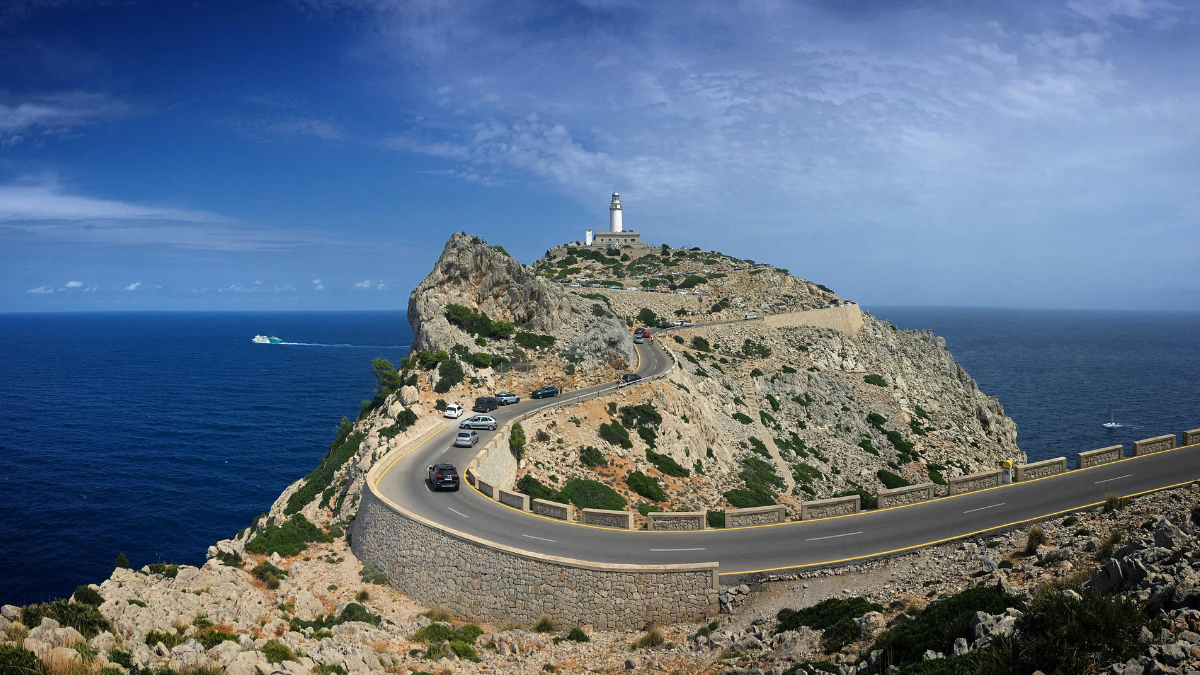
The Consell de Mallorca approved a bill on Friday during an extraordinary plenary session to regulate vehicle traffic, a measure that limits the number of cars entering the island through its ports. The measure, a first in the entire country, has been supported by all parties except Vox, the PP’s coalition partner in the island’s government.
The initiative, therefore, was approved with the votes of the PP, PSIB, Mes per Mallorca, and El PI. Although Vox was expected to vote against it, it ultimately abstained, arguing that it acknowledges the problem of traffic congestion but does not have “the solution” to resolve it. The next step is to send the new regulations to the Parliament for processing, at which point the various political groups will be able to submit their amendments.
The new regulation, similar to the one already in place in Ibiza and Formentera, sets an annual cap on the number of vehicles and an entry fee. Although the Consell ruled out its entry into force this summer, the plan is for it to take effect before the end of the legislative term, which would make the restriction a reality in 2027.
The text stipulates that shipping companies are responsible for managing entry authorizations and collecting fees, as well as approving exemptions for residents and temporary workers. In addition, the installation of video cameras in ports is planned to identify license plates. Fines will range from 300 to 30,000 euros.
In addition to residents and temporary workers, non-residents who own a home in Mallorca are exempt from the restriction, although they may bring in only one vehicle. The ban also does not apply to residents of other islands in the Balearic archipelago who must travel to Mallorca for medical reasons, as well as residents of Mallorca who are away for various reasons. People with reduced mobility, official and public service vehicles, as well as those used for the transport of goods and merchandise or commercial distribution, are also exempt.
The island’s Minister of Land Use, Mobility, and Infrastructure, Fernando Rubio, highlighted the groundwork that had been done through a traffic study which determined that there were between 90,000 and 120,000 too many vehicles on the island. He also announced that work is already underway on a second traffic study that will set the annual cap on the number of vehicles allowed to enter Mallorca. Rubio has called on all political groups to support this initiative, arguing that “this is not about ideology, but what the public demands: it is a matter of state and a plea that Mallorcans are making to us with increasing urgency every day.”
Socialist Regional Minister Cati Cladera has accused the governing team of failing to push for the law “until the president of the regional government, Marga Porhens, told them to ‘press the button.’” For her part, the spokesperson for Mes, Catalia Inés Perelló, has highlighted the role of the eco-sovereignist party in advocating for a measure like this for quite some time.
Despite support from the left, tensions and ideological clashes have been evident in recent days. The PSIB has accused the PP of making “strategic use” of the law to distinguish itself from Vox for electoral reasons. The Socialists also criticize the PP for rejecting their support to pass the regulation via a decree-law in the Regional Government, thereby bypassing the lengthy parliamentary process.
In response to these accusations, the vice president and spokesperson for the regional government, Antoni Costa, commented on the matter this Friday, stating that opting for that procedure would constitute “an attack” on the Consell’s autonomy. In statements reported by Europa Press, Costa emphasized that the regional government wishes to be respectful of the island’s institution, while expressing doubts about the viability of that process as an alternative. “They didn’t want to do anything when they were in power, and now they’re in a tremendous hurry,” he criticized, pointing to the PSIB.


