







The summer season kicks off in the Balearic Islands with a clear message: more quality, more levels, and a tourism model that seeks to balance success with sustainability. By 2026, a total of 33 beaches in the archipelago will have received the Blue Flag distinction – one more than the previous year – reinforcing the islands’ position as one of the highest-rated coastal destinations in the Mediterranean.
The certification, awarded by the Association for Environmental and Consumer Education (Adeac), is not just a cosmetic label. It serves as an international standard that assesses water quality, safety, environmental management, and services. In other words, it doesn’t reward beauty—which is taken for granted in the Balearic Islands—but the ability to maintain it in the face of tourist pressure.
The growth is moderate but significant. In an environment where it is increasingly difficult to maintain these awards, obtaining a new flag requires improving processes, investing in infrastructure, and maintaining increasingly strict standards. The Balearic Islands also maintain their 14 award-winning marinas, which further strengthens their position in nautical tourism, one of the highest value-added sectors.
On the national map, the archipelago holds a prominent position: sixth in the number of recognized beaches and fourth in the number of marinas. It may not lead in volume, but it certainly does in profile. The key here isn’t how many flags are flying, but where and under what conditions.
One of the most interesting aspects of this year is the return of locations that had lost their distinction and have now regained it. This is the case with Port de Sant Miquel in Ibiza, Cala Major in Palma, and Es Port–Es Dolç in Ses Salines, three beaches that have returned to the circle of excellence after raising their standards to the required level. It’s no small matter: regaining a Blue Flag is often more difficult than maintaining one.
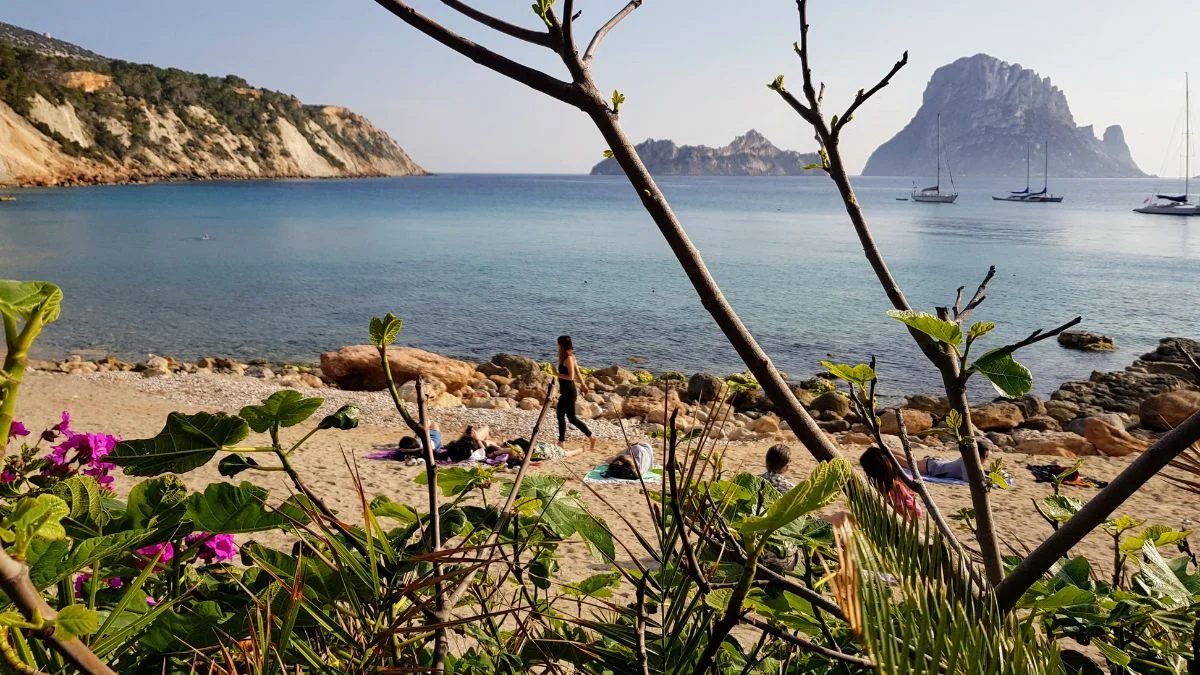
The geographical distribution confirms Mallorca’s relevance within the system, with a large proportion of destinations concentrated in coastal complexes such as Alcúdia, Muro, Formentor, and Cala Mondragó. Ibiza retains iconic spots like Cala Benirrás and Es Figueral, while Menorca offers a more restrained approach with Cala en Porter, Son Bou, Binibeca Nou, and Punta Prima, in line with its more regulated tourism strategy.
Beyond the list, there are two awards that point to the direction the model is heading: Muro has been recognized for its lifeguard service and Alcúdia for its accessibility. In other words, excellence is no longer measured solely by the water or the sand, but by how the overall visitor experience is managed.
The final figure is revealing. Maintaining—and increasing—the number of Blue Flags in an environment of intense tourist pressure is not an automatic success. It is a strategic decision. The Balearic Islands not only compete to attract visitors, but they do so without harming their main asset: the coastline.
And it is in this tension between growth and conservation that its future is truly at stake.