







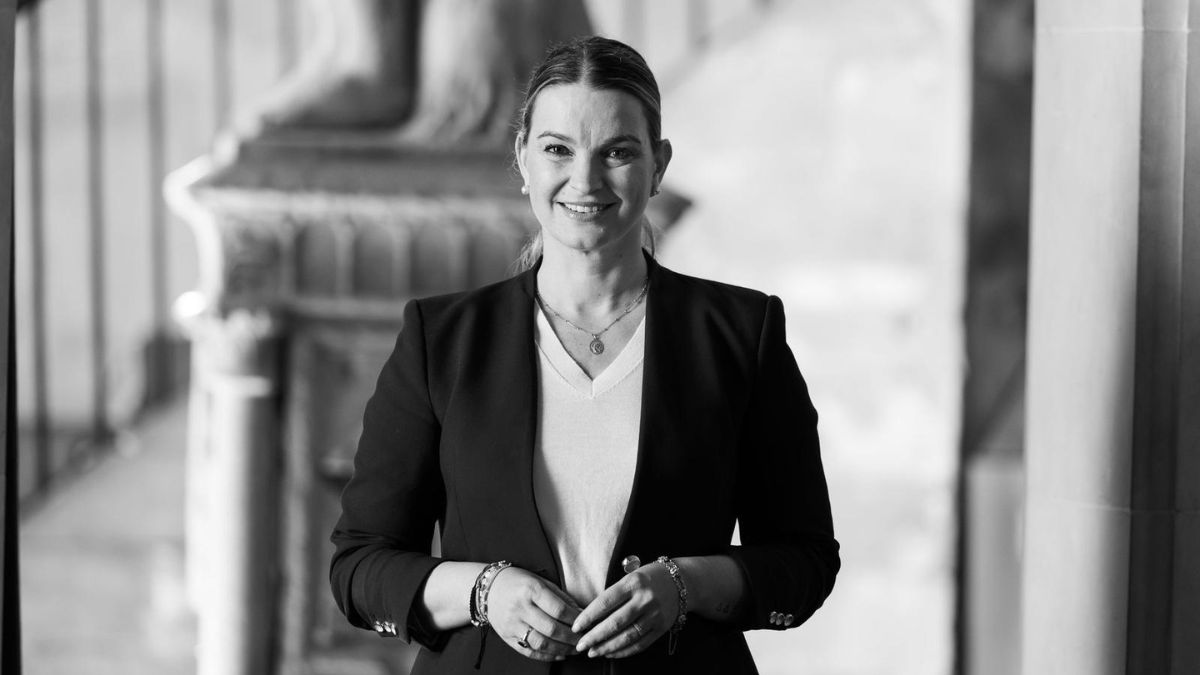
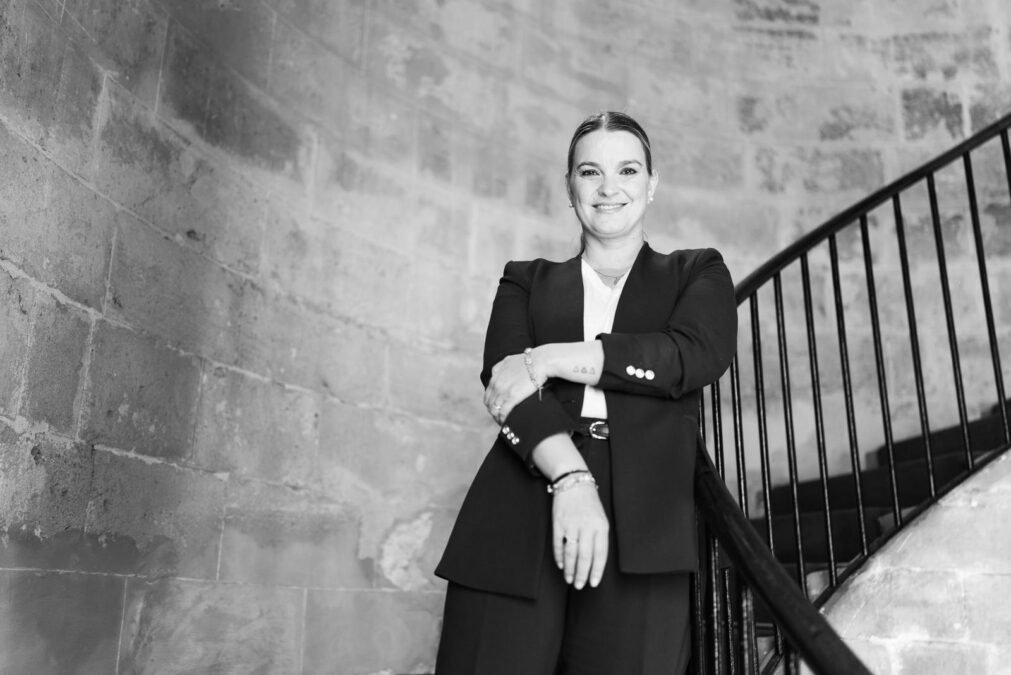
In the midst of transforming its economic model, the Balearic Islands are seeking to balance their undeniable strength in tourism—the region is a global leader in the industry—with the quality of life of their residents. Marga Prohens (Campos, Mallorca, 1982), president of the Government of the Balearic Islands since 2023 and leader of the Popular Party in the archipelago, faces the challenge of redefining the islands’ economic model at a time of peak international visibility.
With a political career rooted in public administration and regional development, she advocates for a transition toward growth based on value, sustainability, and innovation, with the goal of translating tourism success into real well-being for the public. In this interview with Forbes Baleares, the president of the regional government outlines the key elements of a strategy that focuses on restraint, innovation, and sustainability to position the islands as an international benchmark not only for their appeal but also for their ability to generate well-being, talent, and future investment.
Madam President, the Balearic Islands are currently enjoying unprecedented international visibility. If I had to define what sets the Balearic Islands apart today, what are the three structural strengths that position us ahead of other Mediterranean hubs?
The Balearic Islands are undoubtedly a region with a successful and dynamic economic model, and precisely as a government, we are now working to transform that model to translate all that success and dynamism into well-being for our citizens. If I had to define three strengths of our islands at this moment, I think I would say leadership—our experience across various sectors that allows us to stay one step ahead; quality, as the hallmark of our offerings and of any product from our islands—whether our tourism offerings, our manufactured goods, or our agri-food products; and finally, sustainability—our awareness that we are a limited and fragile territory with finite resources, which drives us to innovate and adapt to global challenges before other regions do.
The concept of the “Balearic Islands Brand” is evolving. What new attributes—beyond the traditional ones—should take center stage so that the world understands the complexity and richness of the Balearic economy?
I believe our islands are already recognized for that leadership, for our commitment to quality, and for our commitment to sustainability; and now we are working on our transformation and want to be recognized as well for well-being, for our ability to translate our success into a better quality of life for our citizens; for innovation, because we can be a hub for innovation in the Mediterranean; and, of course, also for culture, as another of our hallmarks, so that we are recognized not only as a quality tourist destination but also as the vanguard of the Mediterranean.
How is your government working to strengthen the role of the islands as a two-way bridge between the Iberian Peninsula, the heart of Europe, and the dynamism of the Mediterranean?
We in the Balearic Islands do not want to be a region that merely stands by and watches; we want to be active participants. That is why, within the European Committee of the Regions, we are promoting the opinion on sustainable and resilient tourism to lead the transformation of tourism at the European level and guide the European Commission’s tourism strategy—an opinion that advocates measuring success in terms of value rather than volume, for sustainability, well-being, and innovation. It was unanimously approved by all regions and positions our islands as a benchmark for tourism transformation across Europe.
The Balearic Islands are the region with the largest share of tourism revenue in the country, accounting for 45% of GDP. Last year, they welcomed more than 19 million foreign tourists, whose cumulative spending exceeded 21 billion euros. In recent years, the Balearic Islands have been positioning themselves as a premium destination targeting tourists who generate high added value. How is the regional government driving this transformation?
First, we must acknowledge that this is a commitment the private sector itself has been making for years in the Balearic Islands. The commitment to the quality of our destination is achieved by investing in the product, in infrastructure, and by knowing how to make the most of everything we have to offer as a destination. But now we are also giving a new boost to quality from the Government, with a strategy to reposition our islands as a destination for sports and cultural tourism—two tourism segments that attract higher-quality tourist demand—and by providing tools to modernize the tourism offering, not only in terms of accommodation but also in terms of complementary services.
The Serra de Tramuntana, Talayotic Menorca, and the Posidonia meadows are recognized and protected by UNESCO. How do you preserve and promote this incredible heritage? They
are undoubtedly our greatest heritage, and clearly require the commitment of all institutions to their preservation and conservation. This is achieved through management measures, such as the tools we provide—for example, to care for our mountain range, through the work of our forestry and environmental staff, or by providing grants to landowners and farmers to clear vegetation and minimize fire risk, or to clean up streams; or, in the case of Posidonia protection, through maritime surveillance and by promoting and ensuring best practices for anchoring along our coastline.
How is public-private collaboration being fostered to develop the archipelago’s tourism industry?
Through platforms for participation and dialogue such as the Pact for Sustainability and the Social Dialogue Roundtable; through tools such as the Impulsa Foundation, which serves to align strategies with the leading companies on our islands; or through administrative simplification and streamlining, to reduce bureaucracy and expedite investment procedures, especially for strategic and high-value-added projects, which we now channel through the Strategic Projects Accelerator Unit that we approved in 2025.
The Balearic Islands are the major hub for Spanish tourism talent and one of the most important in the world. What is it about the Balearic spirit that has led to the creation of some of the world’s leading tourism companies?
This is surely part of who we are. I have said this many times: we are a land of entrepreneurial people, with initiative, vision, ambition, and a strong work ethic—people to whom nothing has ever been handed on a silver platter. Of course, we take pride not only in being the birthplace of the leading companies in the tourism sector, but also in the fact that, just as they have been able to export that tourism know-how around the world in recent decades, we now also have technology companies linked to tourism that are exporting technological know-how and innovation related to tourism around the world.
There is a lot of talk about “growing better rather than growing bigger.” What does this mean in terms of concrete indicators? Are the Balearic Islands prepared to sacrifice volume in favor of profitability, sustainability, and brand prestige?
It means that, as a fragile and limited region, we must address limits and tourism restraint, and that right now we must focus on growing in value rather than in volume. For the first time, we have limited the accommodation capacity of our islands and are focusing our tourism strategy on better distributing visitor flows, on deseasonalizing to spread high-season peaks across the mid- and low-seasons, and, of course, on improving quality and increasing tourist spending. And we are succeeding. Over the past year, we have seen a shift in trends, containing growth during the summer months, recording our best-ever off-seasons with record profitability, and seeing tourist spending grow more than twice as fast as the number of visitors. We now face a season marked by uncertainty in the international context, making it difficult to make forecasts, but we will work to maintain the same trend that was already emerging in 2025.
As the European model undergoes a major overhaul, how can we drive a transition toward high added value without losing the competitiveness that has made us global leaders?
I believe that in the Balearic Islands, competitiveness has long since ceased to be associated with low value or low prices. In fact, our economic model has already proven to be highly competitive by focusing for years on that added value, on quality, on experience, and by offering everything that makes us unique. Now it is also about continuing on that path of high added value by investing in innovation, in sustainability—which is a value in itself—and also in talent and training.
Following the Forbes Summit, the debate over the circular model is unavoidable. How does this vision translate into executive decisions regarding taxation, visitor flow management, and supply balance?
As I explained, for the first time we have capped the tourist accommodation capacity of our islands through a containment decree that sets zero growth in tourist beds: to add a new tourist bed, one must first be removed; to this must be added the promotional strategy to reposition our islands toward sports and cultural tourism, which is a form of tourism that can be enjoyed on our islands year-round and allows us to better manage tourist flows. Furthermore, we have also agreed with the major cruise lines on a memorandum of understanding focused on this flow management and a commitment to deseasonalization, reducing the number of cruise passengers by 1,000 per day at the Port of Palma. As for taxation, we are now allocating funds from the tourist tax to environmental sustainability: two out of every three euros go toward the water cycle or the natural environment.
Housing is currently the main challenge to competitiveness. What structural—and not just short-term—measures is your administration spearheading to prevent the archipelago from losing its middle class and its resident talent?
Housing is currently the main challenge and the primary concern of our citizens and of my government. The underlying problem is an imbalance between supply and demand. That is why we have worked from the very beginning to change course with the goal of providing affordable housing for the people here, for residents. In our first 100 days, we passed the Emergency Housing Decree-Law, and a year ago we passed the Strategic Housing Projects Act—two pieces of legislation that have allowed us to launch an emergency plan that already has nearly 8,000 housing units in the pipeline, including public housing and limited-price housing, priced between 30% and 50% below market value, and for which we require five years of residency to qualify. We have also banned the allocation of units for new tourist apartments and are fighting harder than ever against illegal supply. In collaboration with online platforms, we have removed listings equivalent to nearly 60,000 illegal tourist accommodations.
Can the Balearic Islands maintain their vitality if the cost of living threatens the livelihoods of those who sustain the real economy? Where does the balance lie between market success and citizens’ quality of life?
Certainly not. That is why the primary goal of transforming our model is to be able to translate economic success into well-being for our citizens. In this regard, it should be noted that this success, as is evident, is translating into record employment levels and the deseasonalization of employment. Through social dialogue and collective bargaining, an agreement was reached last year for the largest wage increase in the tourism sector, which employs 180,000 workers across our islands. We are the region that recorded the highest wage increase through collective bargaining in all of Spain last year. We have also lowered taxes for our citizens more than ever before. The various tax reforms undertaken over the past three years have saved our citizens 1 billion euros, all while increasing spending on public services like never before and reducing our debt year after year. That said, we need to continue advancing this transformation of our model and also keep changing the course of the housing situation on our islands, and we will give it our all.
In the knowledge economy, talent is the new oil. What unique advantages do the Balearic Islands offer today to attract and, above all, develop high-impact local and international talent?
This year we have presented the Plan to Attract and Retain Businesses and Talent for ParcBit, our technology park, which had been neglected by the previous government and which we now aim to relaunch as the Mediterranean’s innovation hub. The plan is funded with 68 million euros for the modernization of the space, new infrastructure, housing for workers, and improved management. Furthermore, due to its proximity to the University of the Balearic Islands—which, since the start of this legislative term, has been connected to ParcBit via metro—we have a clear hub of knowledge and research, making it highly attractive to companies looking to invest in innovation.
Beyond the service sector, which sectors (digital, nautical, biotechnology, primary sector) do you consider priorities for building the Balearic Islands of the coming decade?
The innovation and biotechnology sector is one of them, which is why we are promoting Parc Bit. The nautical sector, of course, is another; and that is why, for the first time, we have a Department of the Sea, which acts as a liaison for an industry that is thriving like few others; and also the primary sector, which is part of our roots and which we want to be part of our future, but treating it like the rest of the economic sectors, working to ensure its profitability and viability, and to that end we are already working on our future Agricultural Law. Indeed, innovation projects, biotechnology or biomedical projects, and agricultural projects are essentially the ones we aim to attract through our Strategic Projects Accelerator Unit, because these are today’s strategic sectors, and we are going to roll out the red carpet for them to invest in our Islands.
In terms of foreign investment, what kind of capital is the regional government seeking to attract, and what is the investment profile that—while profitable—no longer fits within the islands’ territorial strategy?
Undoubtedly, the investment we are interested in is that linked to innovative and technological projects, as well as projects related to environmental sustainability. Conversely, in the real estate sector, we want it to refocus on residents and for foreign investment to lose ground. In fact, we are already seeing a shift in this direction, as permits for multi-family homes are increasing relative to single-family homes, and we also note that home purchases by foreigners have fallen by 30%.
The Balearic Islands represent a historic success story in this area. Which cooperation models are working best under your leadership and could serve as an example for other European regions?
I believe the Sustainability Pact is a pioneering initiative in our region, a participatory forum comprising local governments, economic sectors, and social partners. Through consensus and dialogue, it has enabled us to align our goals by drafting a Transition Agenda, which sets strategic and development objectives upon which to base our decisions, and whose non-negotiable goals are the sustainability of our islands and the well-being of our residents.
Madam President, let’s fast-forward to 2036. How would you like the Balearic Islands to be perceived on the international stage? What economic and social legacy do you hope to build during your presidency?
As I mentioned at the beginning of this interview, I would like these islands to be recognized as a dynamic, modern, and sustainable region—a hub for technological innovation, a cultural leader, and a place that ensures the well-being of our citizens. That is what we are working toward.
A critical factor for high-level investment is institutional agility. How is your government transforming the regulatory framework so that the Balearic Islands are recognized not only for their beauty, but also as the region with the most robust legal certainty and the most agile administration in the Mediterranean?
We have passed a bold Administrative Simplification Act to reduce bureaucracy, streamline procedures, and address bottlenecks in the administration; we have created the Strategic Projects Acceleration Unit to roll out the red carpet for high-value-added projects; and we are incorporating new technologies to streamline certain processes and procedures within the administration. In fact, we have just launched IB-Digital, an autonomous body that brings together under one umbrella all professionals from the regional government’s technology departments to digitize all areas and processes of the Government.
With the growing influx of digital nomads and tech-based companies, what role do connectivity and digitalization play in helping the islands transition from a seasonal destination to a platform for innovation that operates 365 days a year?
Undoubtedly, we enjoy better connectivity every day, and no longer just with Spain or Europe; however, we must remain vigilant regarding the effects of the international context and how rising kerosene prices impact those connections. And, of course, we have a territory with a high-quality telecommunications infrastructure that provides coverage to all our islands, but we believe we must be cautious when promoting this model, attracting population, and contributing to population growth, given its impact on housing.
The success of the Balearic Islands depends on a delicate balance in infrastructure (water, energy, waste). What is your strategy for modernizing these critical assets so that economic growth does not place an excessive burden on the natural environment, but rather serves as a driver of its regeneration?
The Balearic Islands are investing more than ever in the water cycle. Last year, we allocated 322 million euros—58% more than when we took office—to investments in water cycle infrastructure, using funds from the tourist tax, our dedicated water cycle fund, as well as our own funds and the insularity factor under the Special Regime. We’re talking about desalination plants, wastewater treatment plants, pipelines, and network improvements, with the goal of reducing the pressure on our aquifers and allowing them to regenerate, while ensuring our water reserves throughout the year.
The yachting and premium services sector has proven to be one of the most resilient industries with the greatest ability to drive growth. How is your government supporting the consolidation of the Balearic Islands as the undisputed leader of the nautical sector in Europe, competing directly with the French Riviera or the Adriatic?
Indeed, the nautical and services sector is a leading industry on our islands, generating opportunities and quality jobs for skilled workers, and it has the full support of the regional government and the various local administrations of the islands. The Port Authority of Palma is working on the renovation of the Port of Palma, specifically, among other objectives, to open the city to the sea and the port to the public, as well as to provide optimal space for the nautical industry and its facilities.