







The eighth edition of the HIC Summit, held over three days at various locations across the island linked to tourism, the hotel industry, and the hospitality sector, concluded by emphasizing water management, landscape conservation, accessibility, and the protection of local identity, with a focus on coexistence and the future of Ibiza. The experts who participated in this conference emphasized the need to manage water resources responsibly, comply with current regulations, and engage with local communities to transform the tourism sector toward a more responsible and sustainable model.
Water, land, and landscape; accessibility and mobility—these are, ultimately, the essence of community life and the present and future of Ibiza as a tourist destination. The HIC Forum addressed the limits of the island’s territory, the need to adapt tourism to available resources, and the needs of the resident population. The meeting, held at Colegio Mestral, brought together professionals from various fields to analyze the challenges of water management, the conservation of natural and cultural heritage, and social inclusion, with the goal of identifying solutions that will enable progress toward a more balanced model of tourism.
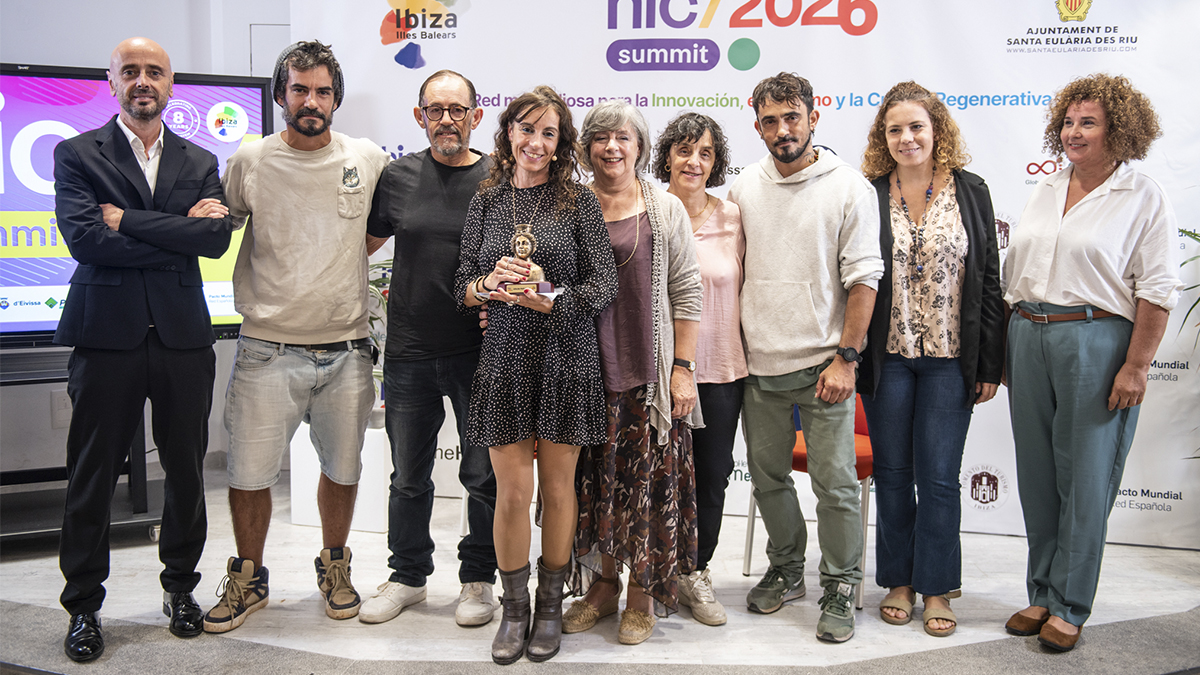
Participants in this event included Carmen Bonet, manager of APNEEF (Association of People with Special Needs of Ibiza and Formentera); Antònia Maria Cirer, spokesperson for the Institut d’Estudis Eivissencs; Joan Calafat, Director General of Water Resources for the Government of the Balearic Islands; Guillermo Pouplana, manager of Son Felip, the largest farm specializing in regenerative agriculture in the Balearic Islands; and Giuseppe Vulpis, island director of Environmental Management and Mobility for the Formentera Council. Joining them was ocean conservation expert Fanny Douvere, head of management at the UNESCO Intergovernmental Oceanographic Commission, who received one of the HIC Talentum Awards presented during the event.
Accessibility and Tourist Pressure
The social dimension of tourism was the focus of the day’s first discussion. The spokesperson for the Institut d’Estudis Eivissencs advocated for the preservation of the language, culture, and territory as essential elements of Ibizan identity—“three elements that define us and that we want to preserve.” Cirer acknowledged tourism’s role as the island’s sole economic activity but warned of the consequences of growth that fails to take into account the island’s physical limits. In this regard, she raised the need to move toward a gradual reduction in tourism pressure and to place the year-round residents of Ibiza at the center of decision-making. “Our future lies in slow degrowth,” she emphasized.
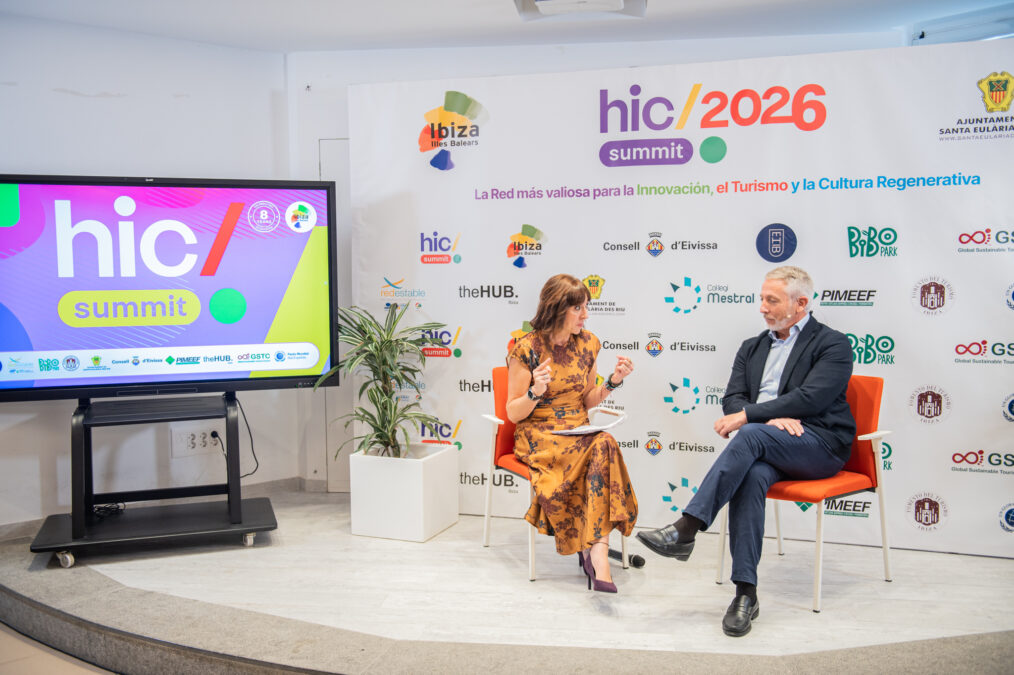
“Living together also requires ensuring that spaces and services are accessible to the entire population,” said Carmen Boned, who noted that accessibility does not only affect people with disabilities, but is a need that can arise at any point in life and to varying degrees. She called for a broader perspective that takes into account “both physical and cognitive barriers” and emphasized “the importance of effectively enforcing existing regulations.”
Responsible Water Use and Regenerative Agriculture
In Ibiza, only 2.4 percent of treated water is reused due to the salinity problem; 23 percent of every liter in the water system is lost, the number of wells is very high—nearly 7,000 compared to 15 aquifers, 11 of which are in very poor condition. These figures were provided by Joan Calafat, Director General of Water Resources for the Government of the Balearic Islands, to highlight the island’s water situation and the need to implement a model that combines aquifer restoration and water security through four strategic lines of action: reducing network losses, modernizing infrastructure, promoting water reuse, and improving planning through reliable data. “We must stop politicizing water and promote these four strategies,” he said.
Calafat also called for a review of the tourism model. “Tourism must adapt to climate realities at all levels. We cannot promote tourism that places high demands on water resources. We’ve moved toward a form of tourism that needs to be corrected.” And he gave some examples: “No hot tubs in every hotel room, and no tropical gardens in the villas. We have to do away with that.”
The relationship between soil and water resources was discussed by Guillermo Pouplana, the young manager of the Son Felip farm in Menorca, which is dedicated to regenerative agriculture. Drawing on his experience managing a 1,000-hectare farm, he explained how restoring the soil’s natural structure promotes water retention, reduces erosion, and helps decrease dependence on aquifers, advocating for an agricultural model based on observing natural processes, without tillage or the use of chemical fertilizers and pesticides. “The transition takes time, but the environmental benefits—and, in the long term, the economic benefits as well—have been proven.”
HIC Talentum Awards
Conservation and restoration—a key area of work for which the HIC Summit has recognized the efforts of Dr. Fanny Douvere, head of management at UNESCO’s Intergovernmental Oceanographic Commission, with the HIC Talentum Award. In her remarks, she analyzed international progress in marine conservation—such as the global commitment to protect 30 percent of the oceans—and the challenges involved in translating these commitments into concrete actions. Douvere emphasized the importance of working with local communities, “since knowledge and understanding of the environment are fundamental prerequisites for getting involved in its protection,” she said.
The 8th HIC Forum concluded with the presentation of the HIC Talentum Award to the family of Catalina Prats Torres, a pioneer of tourism in Ibiza, in recognition of the contributions of those who helped shape an industry that has shaped the island’s economic and social evolution. It was a moving ceremony led by Saskia Mariño, her eldest granddaughter, who, after three days of exchanging ideas, knowledge, and analysis, brought the 2026 edition of the HIC Summit to a close with a tribute to tourism for its ability to make dreams come true and share them with the world.
This edition has clearly demonstrated that the HIC Summit is a forum for inspiration, talent, exchange, and debate that has been held in Ibiza since 2019, Its purpose is to build community and drive innovation, regenerative culture, and the blue economy, while fostering public-private partnerships and cooperation between the tourism sector and society at large. After eight editions, it has become a key player in the transformation of the global tourism ecosystem.