









Shops in the Balearic Islands now have a calendar for 2027. The Interinsular Trade Commission has unanimously agreed on the ten Sundays and holidays on which commercial establishments may open to the public, in an agreement that brings together the regional government, the sector’s main business organizations, the trade unions, and the island and local authorities around the same table.
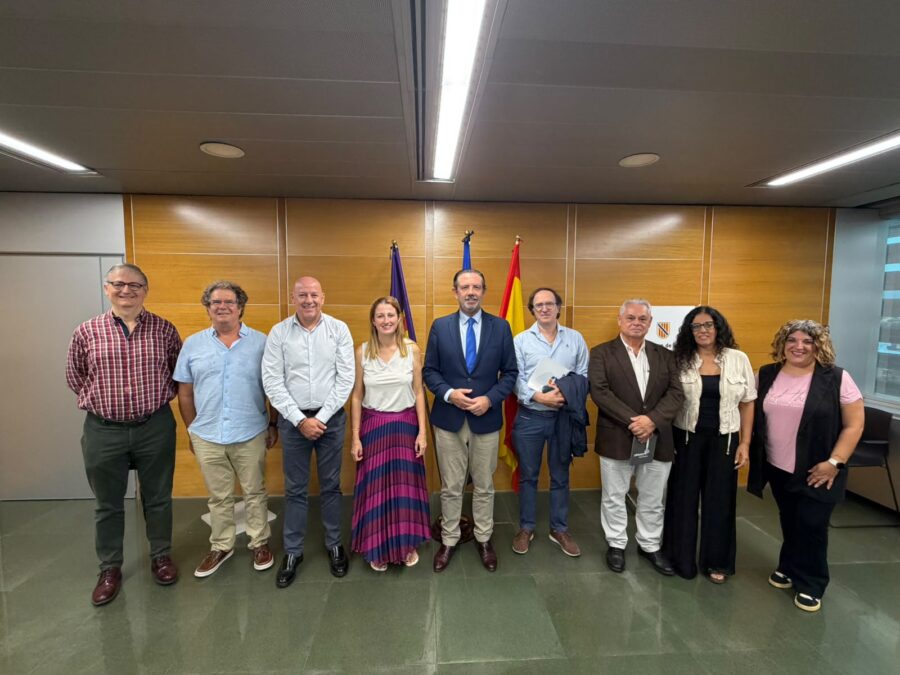
The agreement was reached in a meeting chaired by the Regional Councillor for Commerce, Self-Employment, and Energy, Alejandro Sáenz de San Pedro, who was accompanied by the Director General of Commerce, Self-Employment, and the Market, Maria Antònia Sansó. The meeting was attended by representatives from AFEDECO, PIMECO, ASCOME, PIMEF, PIME Formentera, and ANGED, as well as the UGT union, the four island councils, the General Directorate of Consumer Affairs, and the Federation of Local Entities of the Balearic Islands (FELIB).
The approved calendar groups the authorized opening days into various times of the year and establishes the following dates: January 3 and 17; March 1 and 25; May 2; November 1 and 28; and December 6, 12, and 19.
Aside from assigning dates, one of the key factors in the negotiations was the decision to exclude December 26. The Commission considers that this day retains a particularly deeply rooted status as a traditional holiday in the Balearic Islands, a consideration that carried significant weight in finalizing the calendar.
The agreement also allows a certain degree of flexibility to adapt to local circumstances. City councils will be able to replace two of the scheduled dates with local holidays, in accordance with the established procedure. Among the alternatives that have garnered the broadest consensus during negotiations are January 17 and March 1.
The result is, therefore, a schedule based on a balance between the various interests at play in the retail sector of the Balearic Islands: economic activity and consumer needs, but also the protection of small businesses, labor organization, and the specific characteristics of each region.
With the agreement reached unanimously, the sector now looks toward 2027 with a common framework for business hours, while allowing local authorities to make adjustments according to their own holiday calendar.
CAEB and AFEDECO Campaign
While the calendar dictates when stores can open, the other question is what happens once the shutters go up. In this sense, local shops are looking to increase their visibility and turn the everyday act of shopping into a decision with economic and social impact.
With this objective in mind, the Confederation of Business Associations of the Balearic Islands (CAEB) and the Federation of Wholesale and Retail Trade Companies of the Balearic Islands (AFEDECO) have launched the campaign “Local stores are on the move, on the move,“ an initiative that aims to strengthen the presence of local stores, promote the sale of Mallorcan products, and highlight the role that local businesses play in the island’s economy.
The campaign, which has the support of the Council of Mallorca, combines online and offline initiatives and will run through the Christmas holidays. Its goal goes beyond boosting sales at a specific time of year: it aims to highlight the economic, social, and local value of shopping at local businesses.
Business groups argue that behind every purchase, there is also a chain of economic activity that remains within the local area. “Local shops are one of the main economic, social, and regional drivers of Mallorca. Beyond its commercial function, it contributes to sustaining local economic activity; creating stable employment; preserving the identity of neighborhoods and municipalities; promoting the sale of local products; strengthening social cohesion; and fostering sustainability through short supply chains.
The campaign also comes at a time when the sector is undergoing a profound transformation. Competitive pressure from major platforms, difficulties in ensuring that the next generation takes over, loss of visibility among younger consumers, and changes in shopping habits are forcing traditional retailers to rethink their market position.
In this context, the campaign aims to highlight not only the businesses but also the people behind them. The initiative seeks to showcase young entrepreneurs and family businesses, foster generational succession, and boost economic activity in the towns and villages of Mallorca.
The proposal also incorporates a social and environmental dimension, with measures aimed at encouraging the participation of vulnerable groups and people with disabilities, as well as promoting practices related to sustainability and recycling.