







The second day of the 22nd Repsol Copa del Rey Vintage Yacht Race began with few signs that the day would offer much excitement. Overcast skies, high humidity, and that stifling heat that usually presages a difficult day on the water. But the Mediterranean had other plans. Among the regatta’s top names were Chinook and Varuna: both boats launched a lethal assault, a demonstration of authority with which they seized the lead and now enter the decisive phase at the top of the standings.
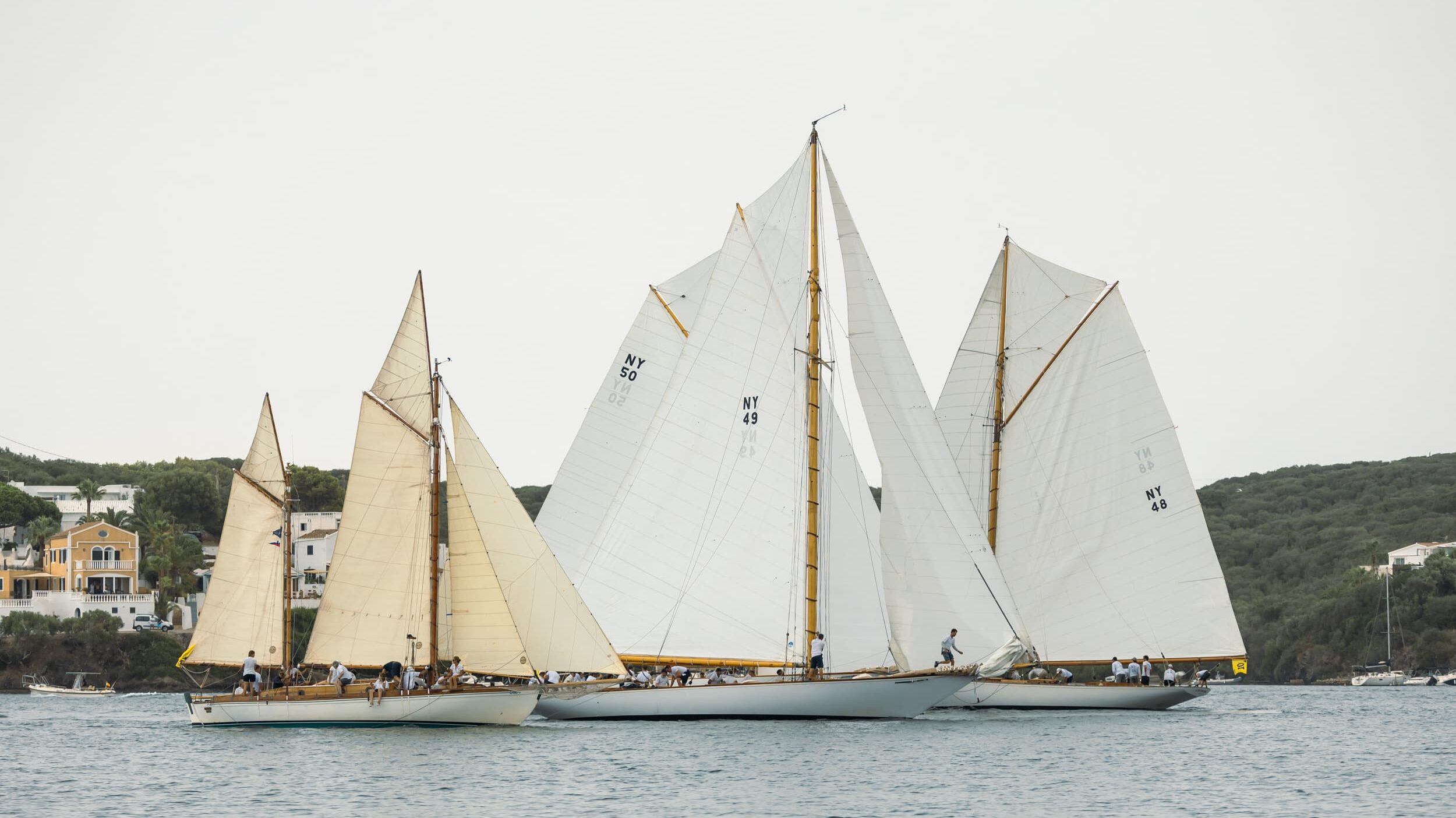
The fleet finally caught the wind and put on one of those starts that, by themselves, justify a regatta like this: two dozen historic vessels gliding between the natural walls of Maó harbor, before leaving the shelter of the longest harbor in the Mediterranean to face a moderate easterly wind, a choppy sea, and a 14-nautical-mile course.
The Isle of Air once again served as the natural reference point on the classic route around the south of Menorca. And, just like the day before, the day was characterized by conditions demanding enough to reward speed, but also the crews’ precision and their ability to read every change in the wind.
After two days of competition, Chinook, Varuna 1939, The Lady Anne, Argos and Andalucía-Barlovento lead the five fleet classes. The three NY40s were once again the protagonists of the Cangreja Vintage class. This time, it was Chinook, built in 1916, that emerged victorious. The boat, owned by Paolo Zannoni and skippered by Stefano Westermann, beat the Marilee – a 1926 NY40 celebrating its centenary this year under the command of Alessandra Angelini – by just 20 seconds on corrected time. The victory is a double reward: Chinook has moved to the top of the overall standings.
The Rowdy (1916), for his part, finished third after being disqualified on opening day following a protest related to passing a mark. If his appeals prove unsuccessful, his chances of returning will be seriously compromised. He is third in the overall standings, behind Marilee and seven points off the lead.
In the Bermuda class, the lead has also changed hands. Varuna 1939, a yacht designed by Sparkman & Stephens and built by Jens Kellinghusen, secured the day’s victory and moved into first place in the overall standings, three points ahead of Harold Goddijn’s Sonny (1935).
The most significant development, however, involved the previous leader. The Argyll (1948) could only manage sixth place and has dropped to third in the standings. And the standings are starting to tighten: Comet and Recluta are just one point behind the Argyll. The former is a 1946 yawl built by William Woodward-Fisher; the latter, a Germán Frers design, competes under the command of the designer himself. Here, unlike in other classes, there is still a long way to go in the regatta.
On the other hand, if there’s one boat that’s turning the Cup into a showcase of domination, it’s The Lady Anne. The 15-meter yacht, designed by William Fife III and owned by Gonzalo Botín, scored another clear victory. It finished more than five minutes ahead on corrected time of Viveka, Frank Paine’s schooner skippered by Keith Mills.
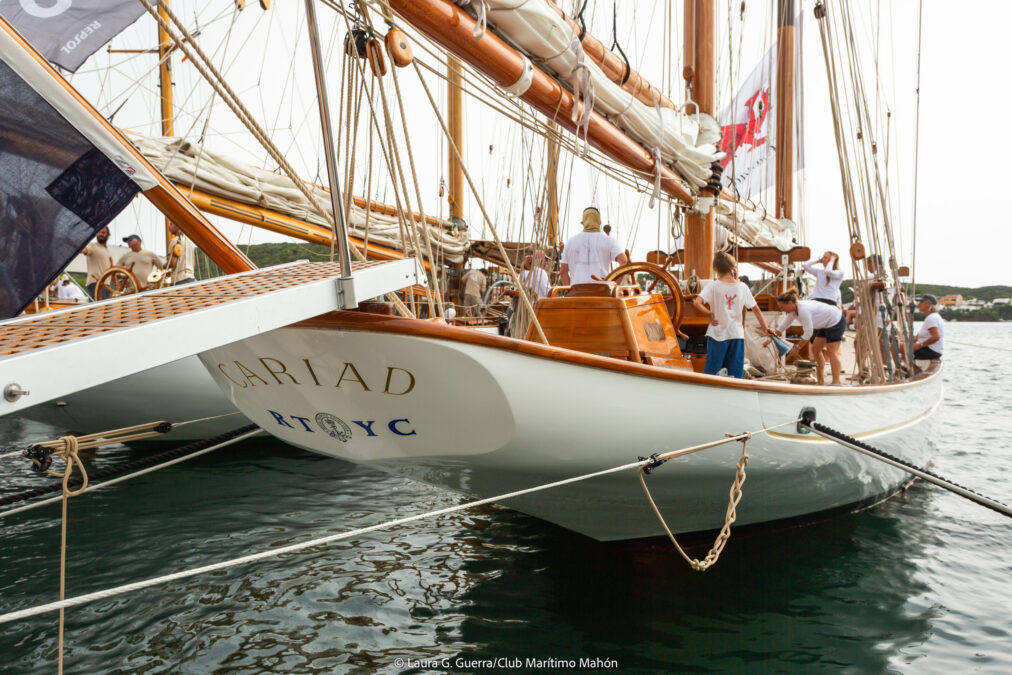
When the wind intensifies, the Lady Anne seems to have an extra gear. Her speed and a crew that minimizes mistakes have allowed her to string together two victories and pave the way for a possible title defense. Behind her, Altair and Cariad are engaged in another of the class’s most spectacular duels. A 39-meter schooner facing a historic 36-meter queche. Two giants who continue to wage their own battle within the battle.
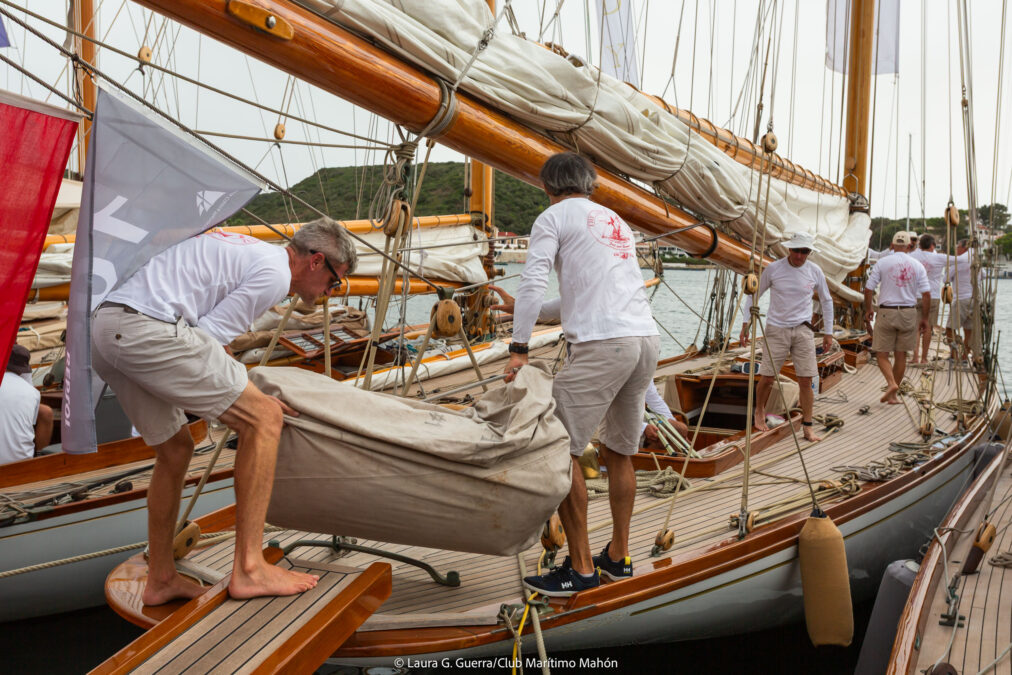
In the Classics class, Argos remains in the lead, but it is no longer sailing as easily as on the first day. It finished second in the regatta and maintains the lead by three points. The problem is that Mowgli secured the victory and has cut the lead to just two points. The 1965 yacht, designed by John Illingworth and Angus Primrose and owned by Patrick Harris, won by almost two minutes on corrected time over Argos. This is the first serious blow to Argos’s dominance in recent editions.
El Clarionet (1966), which finished third that day, also holds third place in the overall standings. The big loser of the day was Ojalá II, which, after finishing second on the first day, dropped to ninth place and is now out of contention for the title.
In the Espíritu de Tradición class, one name stands out above all others for now: Andalucía-Barlovento. Harry Becker’s Lotus E3 Scandinavia 40, crewed by Domingo de Torres, has won again. This is his second consecutive victory, which allows him to maintain the lead, two points ahead of Legolas, who finished second in both races.
Today’s paradox clearly illustrates how much time compensation changes the game: the Andalucía-Barlovento crossed the finish line 14 minutes after its direct rival, but ended up winning by more than three minutes in terms of time compensation. The Flight of Durgan, a 2007 Spirit 52 skippered by David Grylls, again secured third place and has moved up to that same spot in the overall standings. It seems their battle will be for the bronze with Happy Forever, rather than closing the gap on the leaders in the remaining two legs.
The regatta enters its decisive phase.
Two days have been enough to reveal some trends, but not yet to resolve any of the main battles. Some leaders are beginning to pull away, while others have only a narrow lead. Some boats have already found their rhythm, while others need to step up their performance. And, above all, there are still two days left in which a bad start, a protest, or a wind shift could completely turn the standings upside down.
As Helena Alegre, head trimmer of the Legolas, sums it up: “The remaining days of the competition will be tough because the Andalucía-Barlovento is almost invincible.” Their goal, however, is clear: to solidify second place.
In the large vessels category, Dan Poljsak, skipper of The Lady Anne, also doesn’t think the competition is over: “Nothing has been decided yet.” He points out that the Viveka “is very fast and has a good crew.”
And in the Classics class, Argos’s skipper, Rodrigo Álvarez, highlights his team’s ability to bounce back after a tough day: “It was a hard day with quite a few shifts in direction and wind pressure, but the crew responded magnificently.”
This is probably the best summary of what awaits us. In Maó, the fastest boat doesn’t necessarily win. The winner is the one who best reads the wind, manages the pressure, and manages to make a boat with several decades—or, at the very least, more than a century—of history perform like a racing machine again. There are still two final days to find out who the winner will be.