







PALMA, 19 (EUROPA PRESS)
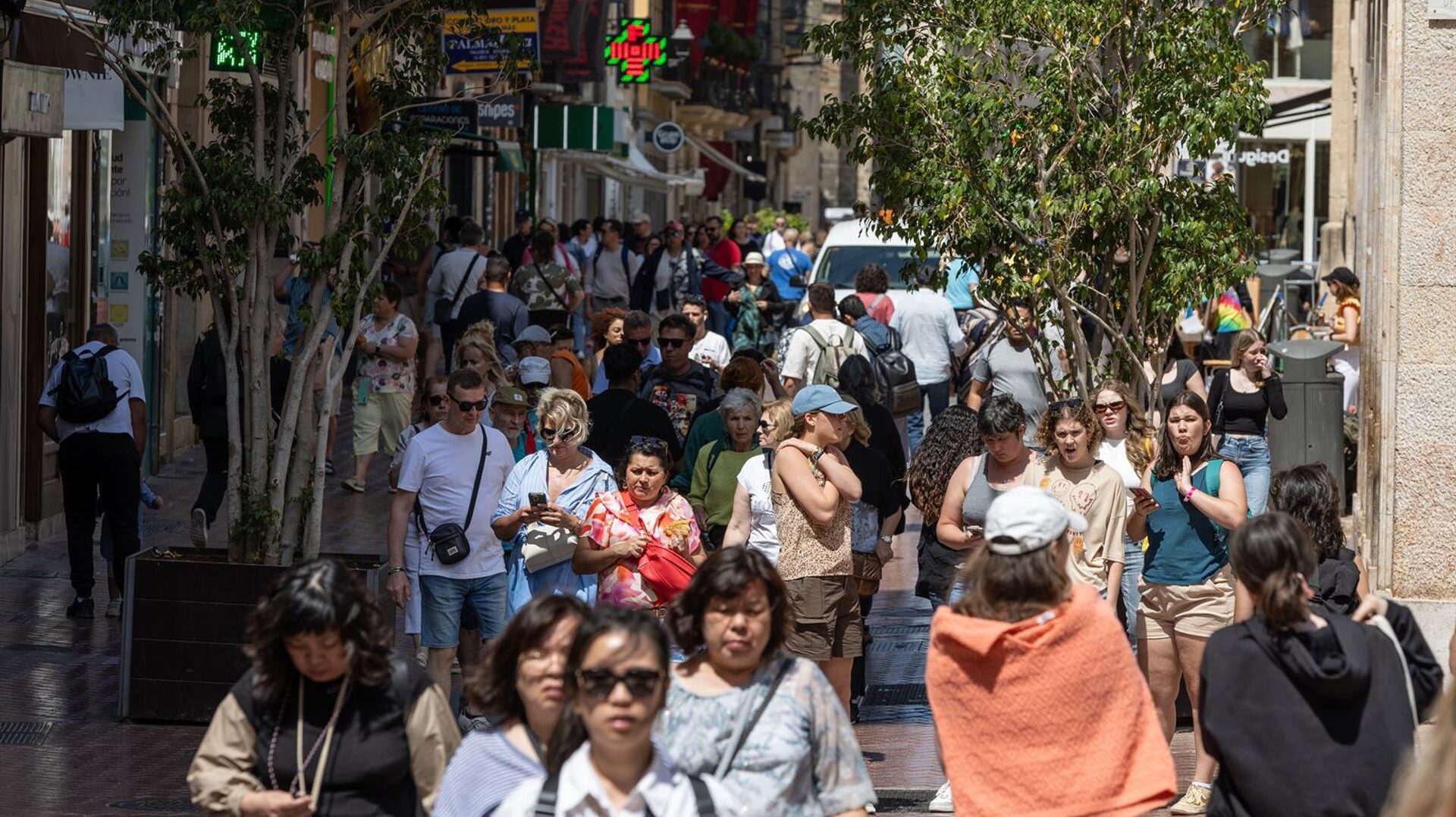
The Federation of Business Associations for Trade of the Balearic Islands (Afedeco) has warned of a situation that is beginning to cause concern within the sector, related to the increase in tourist activity that is not translating into a corresponding increase in sales for small and medium-sized merchants.
According to data collected by the organization, a significant proportion of commercial establishments in Mallorca are recording sales drops this summer of between 10 and 15 percent compared to the previous year, despite strong visitor arrivals.
Afedeco's vice president, Pedro Miró, noted that while there is a high volume of tourist activity in Mallorca, shops are simultaneously reporting significant drops in sales. "This forces us to analyze what is happening, because something in the spending flow is not working as it should," he said.
The business organization has emphasized that this is not about questioning the role of tourism—the main economic driver of the islands—but rather about understanding how visitor behavior is changing and how spending is distributed during their stay.
"An increase in the number of tourists or even in overall spending doesn't automatically mean that this money reaches local businesses. It's important how much is spent, but also where it's spent," Miró explained.
Afedeco has highlighted several factors that could be influencing this situation. Among them are the rising total cost of vacations, especially in transportation and lodging, which could be absorbing a growing proportion of visitors' budgets before it reaches local businesses.
"If tourists are spending a larger portion of their budget on flights and hotels, they arrive with less spending power for shopping during their stay. This is a hypothesis we need to examine with data," he added.
The organization also highlighted that a growing proportion of tourist spending is concentrated in sectors like dining, leisure, and transportation, which reduces the direct impact on certain segments of the retail sector.
Given this situation, Afedeco believes that we need to move toward a more detailed analysis of the real economic contribution of tourism to the Balearic economy as a whole.
In this regard, the business organization has proposed the creation of specific indicators to provide periodic information on how tourist spending is distributed among the different economic sectors and, in particular, how spending with local merchants is trending.
"We need to know what proportion of every euro spent by tourists actually ends up in our commercial streets. Only then can we determine if this is a one-time situation or a structural change in consumer habits," Miró emphasized.
Afedeco has insisted that this debate does not suggest a conflict between commerce and tourism; on the contrary, it seeks to strengthen the link between both sectors to ensure a more balanced distribution of the wealth generated by tourism.
"This is not a debate about retail versus tourism. The retail sector needs tourism, and tourism also needs a vibrant, attractive, and competitive retail sector. That is precisely why we must better understand how these expenditures flow," the vice president concluded.
The business organization also noted that the retail sector is currently facing rising labor, energy, and rent costs, which makes it especially important that tourism translates into real revenue for businesses.
Therefore, they have called for the success of the tourist season not to be measured solely in terms of visitor numbers or occupancy rates, but also by its ability to generate effective economic activity across the business sector and, in particular, in local shops.


