







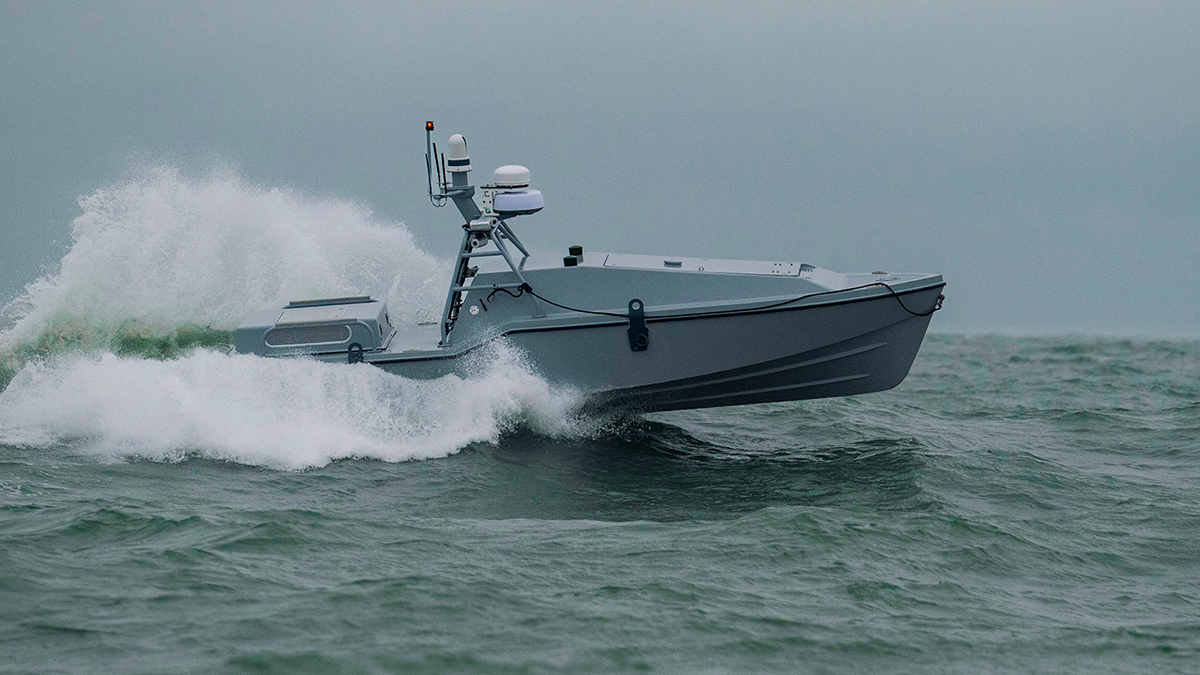
The United States has deployed naval attack drones in actual combat for the first time, in an operation that marks a historic milestone for the Pentagon and redefines how Washington can strike military infrastructure from the sea amid the escalating war with Iran.
U.S. Central Command (CENTCOM) has issued a statement confirming the July 13 attack, in which three Saronic Corsair unmanned boats, configured as single-use attack drones, sneaked into an Iranian port and blew up a facility used for maintaining submarines and warships at the Bandar Abbas naval base, one of Iran’s main military strongholds in the Strait of Hormuz.
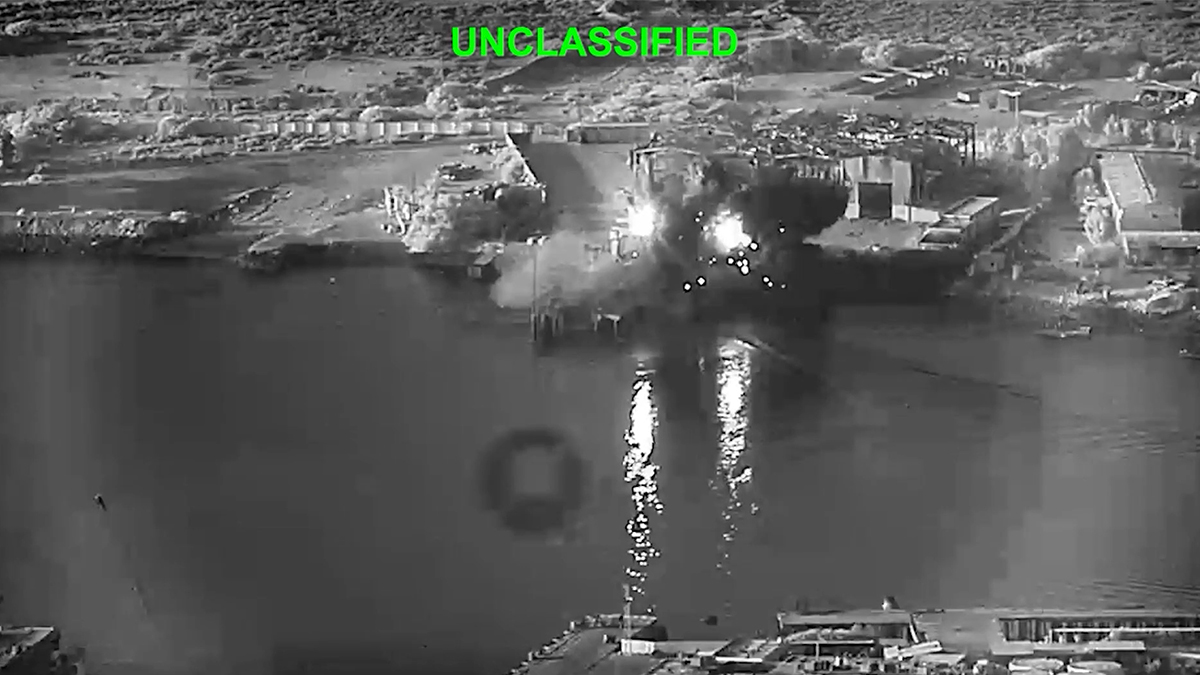
The attack was part of a broader wave of airstrikes and marked the first time U.S. forces have used maritime drones in combat operations, according to the military command itself. Until now, these vessels had only participated in surveillance or rescue missions, such as the one in June that helped save the crew of a U.S. Apache helicopter shot down off the coast of Oman.
Saronic Corsair, the kamikaze pilot who will change everything
Each of the three unmanned surface vessels that have been used as kamikaze craft is 7.3 meters long, reaches a maximum speed of 35 knots, has a range of more than 1,150 miles and a payload of 454 kg, according to data from Saronic Technologies, the Texas-based company that manufactures them. Each unit costs less than one million dollars and arrived in the Middle East in late March, after the war began.
Unlike cruise missiles or manned aircraft, these drones can approach protected coastlines with much less risk to personnel: they can attack radar stations, speedboats, or lightly defended coastal infrastructure, or act as decoys that force the adversary to activate its defense systems before manned aircraft or missiles arrive. Equipped with electro-optical sensors and autonomous guidance, they also perform reconnaissance and target acquisition support. The Strait of Hormuz, with its narrow waterways, numerous islands, and proximity to the Iranian coast, is particularly well-suited to this type of small, agile craft.
Former member of the U.S. Navy’s elite SEAL unit, Dino Mavrookas, Rob Lehman, Vibhav Altekar, and Doug Lambert founded Saronic in 2022 with the goal of developing autonomous vessels that would enhance U.S. shipbuilding capabilities and “redefine maritime superiority” through autonomy, as Mavrookas explained. Saronic has risen rapidly in the defense technology sector, backed by investors such as 8VC (Joe Lonsdale), Caffeinated Capital, and Andreessen Horowitz, and earlier this year announced a $1.75 billion funding round at a valuation of $9.25 billion. The company has stated that it is “proud” that its technology “has supported this mission and helped mitigate threats to commercial shipping.”
Everything You Need to Know About Naval Drones
Ukraine, which has been using unmanned vessels against Russia since at least 2022, is a pioneer in the military use of such vessels: that year, it attacked a Russian naval base; the following year, it deployed Sea Baby maritime drones in a high-profile attack on the bridge connecting Russia to occupied Crimea, and more recently has used them to sink Russian warships and commercial vessels, targeting—according to Kyiv—dozens of oil tankers and ferries in recent weeks. Ukrainian forces have also mounted missiles and rockets on maritime drones to shoot down aircraft and attack ground targets, and last year they even claimed to have “effectively neutralized” a Russian submarine with an underwater drone—a military first.
Despite their growing prominence, these vessels are not without weaknesses: their small size can limit their range, they are vulnerable to communication disruptions caused by electronic warfare, and communicating with underwater drones is particularly complex. Even so, navies around the world are already adapting to this threat: Russia has moved its ships away from combat zones to avoid the risk, and the United Kingdom recently announced that it will build warships designed as drone mother ships, rather than simply replacing its fleet of destroyers.
The U.S., for its part, has long been experimenting with maritime drones in waters around the world for surveillance missions, mine clearance, and simulating swarm attacks. Established defense companies such as BAE Systems and Naval Group, along with emerging firms like Anduril and Kraken Technology, are now competing to launch unmanned vessels with greater range and explosive power.
The Rules of Naval Warfare Are Changing
According to the U.S. Army, the operation on Sunday, July 13, aims to degrade Iran’s ability to disrupt commercial maritime traffic passing through the Strait of Hormuz, a route through which—before the war—up to one-fifth of the world’s oil and liquefied natural gas consumed passed.
The raid also marks a milestone for Admiral Brad Cooper, head of CENTCOM, who in 2021 launched a working group on artificial intelligence and drones in the Middle East.
The attack on Bandar Abbas came after several days of offensive exchanges between Washington and Tehran, which resumed after the Iranian Revolutionary Guard attacked a Cypriot-flagged merchant ship. Added to this is President Donald Trump’s announcement that he would reinstate the blockade on Iranian ports and impose a 20% toll on all cargo passing through the Strait of Hormuz, after declaring himself the “guardian” of the route.
According to a senior U.S. official, the assault “offers a glimpse of what is to come” as fighting resumes following the failure of peace negotiations with Tehran. Analysts suggest that the campaign now aims to dismantle the entire surveillance, command, control, and strike architecture underpinning Iran’s maritime coercion strategy—an approach that, if confirmed, will redefine the future of naval operations in disputed coastal waters.