








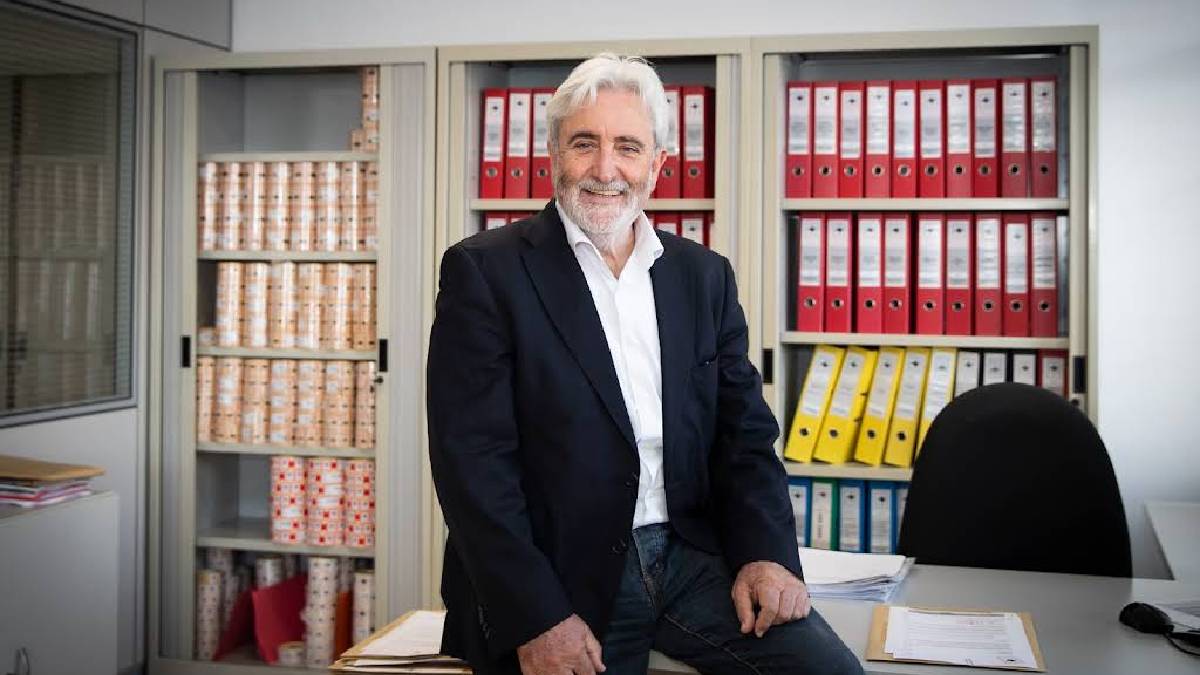
The president of the Regulatory Council of Mallorcan Sobrassada (IPD), Andreu Palou, a leading researcher in the field of medicine and nutrition, has been included in the 2026 edition of the prestigious international ranking Research.com, which recognizes the world’s best medical scientists. This recognition not only honors a decades-long academic career but also strengthens the link between knowledge, the local area, and food culture.
Professor of Biochemistry and Molecular Biology at the University of the Balearic Islands (UIB) since the late 1980s and director of the Laboratory of Molecular Biology, Nutrition and Biotechnology (LBNB) since 1995, Palou ranks 247th among Spanish researchers and 17,049th worldwide in the field of Medicine. This places him among the most impactful scientists in his discipline and confirms the international prestige of the research conducted in the Balearic Islands. In fact, Palou was one of the most prominent voices in managing the Covid pandemic in the islands, and he was part of the regional government’s advisory committee throughout that crisis.
The ranking compiled by Research.com is based on the so-called h-index, an indicator that measures scientific influence based on academic output and the impact of publications within the research community. The system sets particularly strict criteria and only includes professionals who have achieved levels of excellence verified by thousands of references and citations accumulated throughout their careers.
The importance of this recognition is better understood when considering the scope of the evaluation. For this year’s edition, more than 188,000 scientific profiles were analyzed using international bibliometric sources, of which only a small proportion makes it to the final ranking. In Spain, only 289 researchers appear in the Medicine ranking, including four from the Balearic Islands. The other three representatives from the islands are Antonio Oliver, Miquel Fiol, and Borja García-Cosío.
Palou’s inclusion in this select group is, therefore, much more than a simple individual honor. It also reflects sustained work over time, dedicated to expanding knowledge of nutrition, metabolism, and health—areas of growing importance in a society increasingly interested in better understanding the relationship between diet and quality of life.
Palou’s role takes on special significance, as it extends beyond the strictly academic realm. As president of the Regulatory Board for the PGI Mallorcan Sobrassada, his leadership symbolizes the link between scientific research and the promotion of one of the most iconic products of Mallorcan culinary culture.
At a time when food is valued not only for its tradition but also for the quality of its production processes, its traceability, and the expertise behind it, the presence of an internationally renowned scientist at the head of the PGI adds a particularly significant dimension. His track record helps to reinforce the organization’s credibility and project an image of excellence that combines heritage, innovation, and rigor.
Sobrasada de Mallorca, one of the island’s great culinary symbols, has thus found a unique ally in a researcher who has dedicated his life to the study of nutrition and who today embodies, at the same time, a region’s ability to preserve its traditions without sacrificing knowledge and modernity.
The Regulatory Council is a body that guarantees the quality of the product; it was established in 1996 when the European Union granted Protected Geographical Indication (PGI) status to ‘Sobrassada de Mallorca’, extending the protection initially granted to Spain to the entire territory of the European Union. It is composed of 19 registered producers who make Mallorcan sobrasada and Mallorcan sobrasada from black pig. It is responsible for safeguarding the specific designation and enforcing its regulations, as well as promoting and overseeing the production of Mallorcan sobrasada.
Their role involves overseeing compliance with the production, processing, and curing requirements for traditional sobrasada, with the goal of preserving the essential characteristics that distinguish it. Similarly, they carry out product quality control through inspections at processing facilities and detailed physical, chemical, and sensory analyses—the latter conducted by a tasting panel—as well as monitoring the black pig to ensure it is properly fed and raised.
