








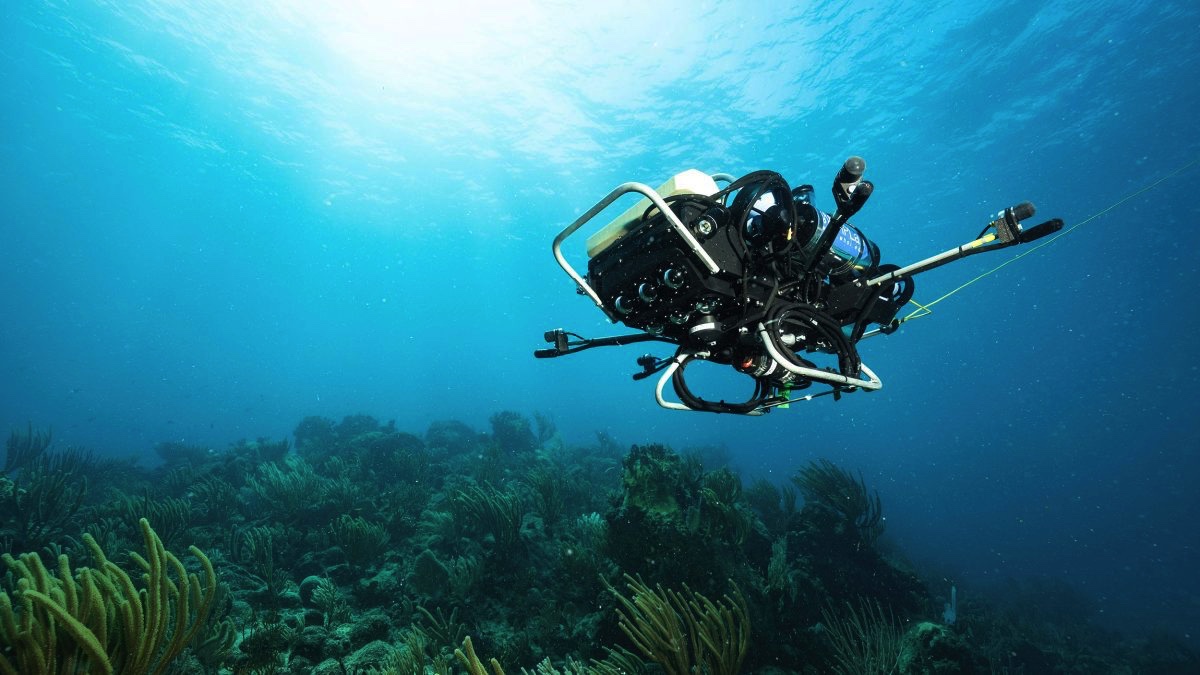
Scientific exploration of coral reefs is entering a new era. Researchers at the Woods Hole Oceanographic Institution (WHOI) have developed CUREE (Curious Underwater Robot for Ecosystem Exploration), an autonomous underwater robot designed to study complex marine ecosystems with unprecedented detail and autonomy.
The system, designed as a tool to support oceanographic research and marine conservation, integrates cameras, hydrophones, and artificial intelligence to analyze biological activity on reefs in real time. Thanks to this combination of visual and acoustic sensors, CUREE is able to identify areas of high biodiversity, track marine animals, and autonomously adapt its exploration behavior.
An autonomous robot for understanding complex ecosystems
Coral reefs are among the most diverse and fragile ecosystems on the planet, but they are also among the most difficult to monitor. Until now, much of the research has relied on human dives, fixed cameras, or instrumented buoys—systems that are limited in both coverage and temporal continuity.
CUREE was developed specifically to overcome these limitations. The autonomous vehicle can operate for hours without direct intervention, flying at low altitude over the reef while collecting high-resolution acoustic and visual data. Its ability to interpret its surroundings in real time allows it to make adaptive decisions during the mission.
The project is led by scientist Yogesh Girdhar and WHOI’s WARP Lab as part of an initiative aimed at developing robots capable of serving as “scientific partners” for marine research.
Artificial intelligence to identify biodiversity hotspots
One of the most significant advances recently announced by WHOI is CUREE’s ability to automatically detect biodiversity “hotspots” in coral reefs. These areas are characterized by high biological activity and are essential for assessing the health of the ecosystem.
The robot simultaneously analyzes underwater images and soundscapes using onboard artificial intelligence algorithms. This allows it to recognize patterns associated with species, animal activity, or habitat characteristics, generating highly accurate ecological maps.
According to the researchers, this approach opens up new possibilities for the conservation of reefs threatened by global warming, ocean acidification, and human pressure.
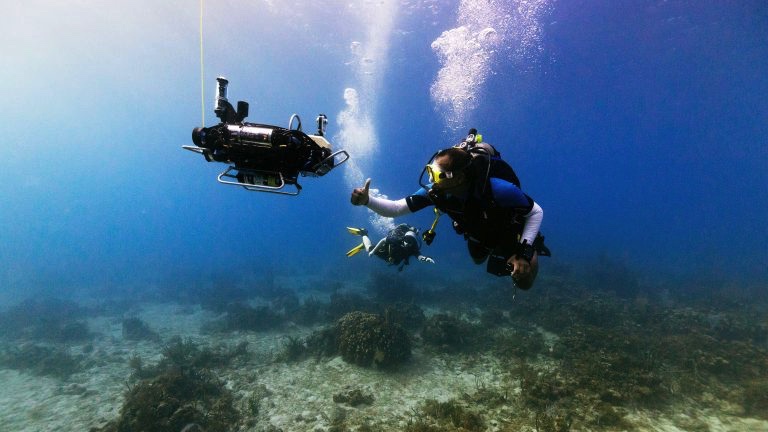
“CUREE is not intended to replace human observation, but rather to expand its capabilities and perform tasks that are impossible for a diver,” explained Yogesh Girdhar during the project presentation.
Capable of tracking fish and studying animal behavior
In addition to ecological mapping, CUREE has also demonstrated advanced capabilities for tracking marine wildlife. During tests conducted in the U.S. Virgin Islands, the robot was able to track barracudas, rays, and other fish without the need for electronic tags.
The system uses computer vision to track the animals’ locations even in complex environments with poor visibility. This capability is particularly valuable for studying natural behaviors without directly interfering with the ecosystem.
In addition, the vehicle’s modular design allows for the integration of various scientific sensors depending on the mission, ranging from acoustic systems to water sample collectors. Researchers also highlight its portability: CUREE can be transported as standard luggage and deployed by small teams in remote areas.
Underwater robotics for ocean conservation
The emergence of platforms such as CUREE reflects the growing role of robotics and artificial intelligence in oceanographic research. In the face of the rapid degradation of marine ecosystems, these technologies make it possible to expand the scale and frequency of scientific studies, generating more accurate data for environmental management.
In the case of coral reefs, considered one of the most threatened ecosystems on the planet, autonomous tools like CUREE could become strategic allies in monitoring their evolution and evaluating restoration programs. The robot’s development has been funded by the U.S. National Science Foundation and is part of a line of research aimed at creating autonomous systems capable of exploring complex ecosystems with an increasing degree of scientific independence.
