







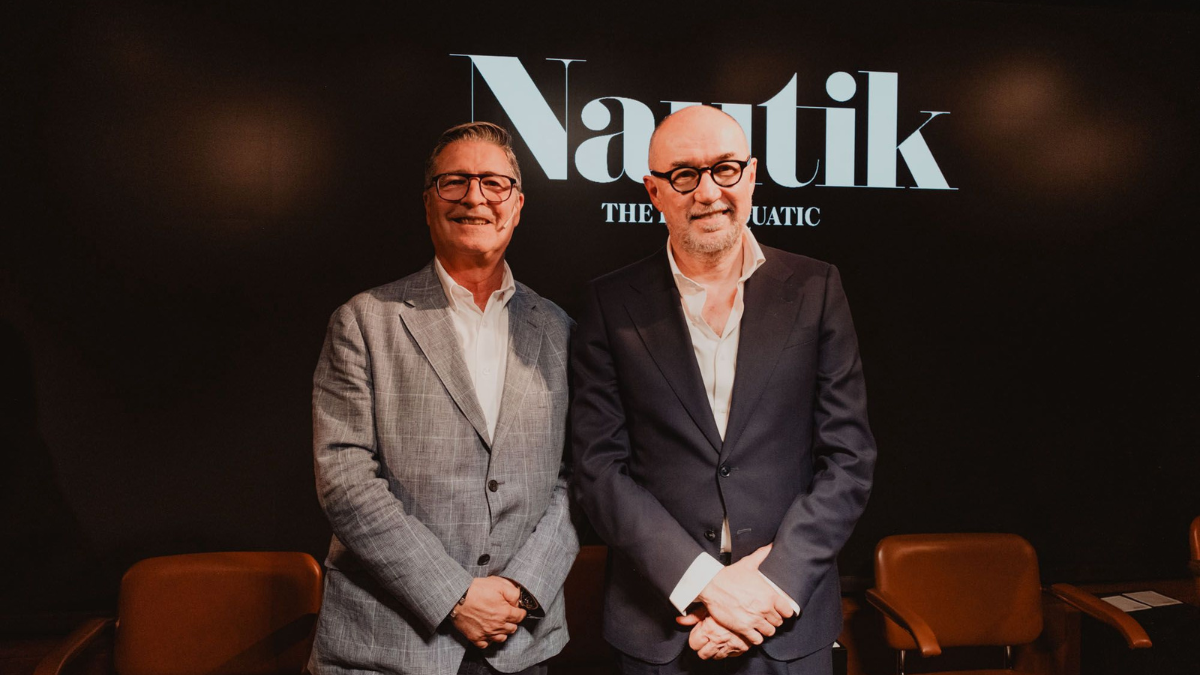
On the afternoon of May 12, Forbes House was filled with some of the leading voices on the present—and the future—of the sea. Executives, experts, and representatives from the maritime sector gathered in Madrid to participate in the first edition of Nautik | Maritime Sustainability, a conference focused on the major challenges facing coastlines, ports, and maritime logistics amid the ongoing energy and environmental transition.
Organized by Nautik and Forbes, and with the support of Marina Port Valencia and Denza, the event brought together business leaders and key figures from the nautical, tourism, and port sectors, including Patrick Reynés, CEO of Marina Port Valencia; Jordi Carrasco, executive director of the National Association of Nautical Companies; and Carlos Sanlorenzo, secretary general of Baleària, creating a forum for dialogue on sustainability, innovation, and the blue economy.
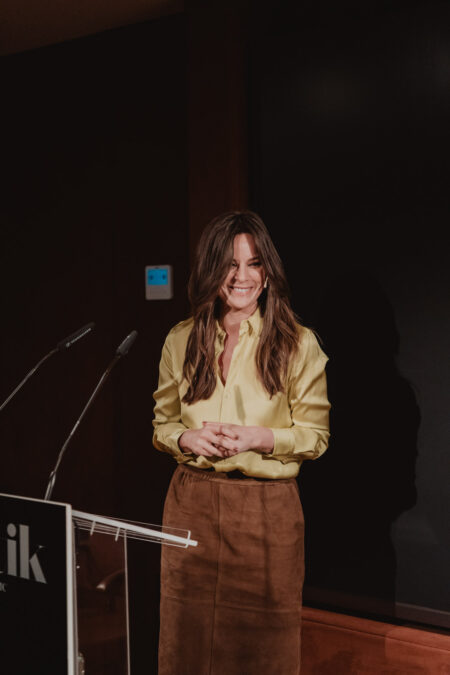
The opening remarks were delivered by Mercedes Martín, who moderated the event. She emphasized the need to “address the future of our coastline through transportation, ports, and energy,” highlighting the role of sustainability as a strategic pillar for the development of the maritime sector.
Following the screening of an introductory video, Andrés Rodríguez, president of SpainMedia and editor of Nautik and Forbes, officially opened the event by highlighting the role of Forbes House as a meeting place to connect “influential people from around the world” and emphasizing the transformation currently underway in the maritime industry. “The other day I heard someone say: the sea is blue gold,” he noted, advocating a vision of the nautical world that goes far beyond boats: “today we’re talking about experience, tourism, innovation, and lifestyle.”
In this regard, Rodríguez highlighted Nautik’s commitment to supporting and raising awareness of these developments in the sector: “The Nautik community was eager to reconnect,” he said, also emphasizing the importance of communication as a strategic tool for consolidating the maritime and tourism industry’s leadership.
The first panel discussion, focused on “Sustainability and Coastal Management,” addressed the energy transition in the maritime and tourism sectors. Moderated by Nacho Gómez, editor of Nautik and CEO of El Role, the panel brought together Jordi Carrasco, general director of the National Association of Nautical Companies; Mario Caponnetto, co-founder and technical director of Caponnetto Hueber; and Rafael Fernández-Álava, director of Communications and External Affairs for Costa Cruises Spain and Portugal.
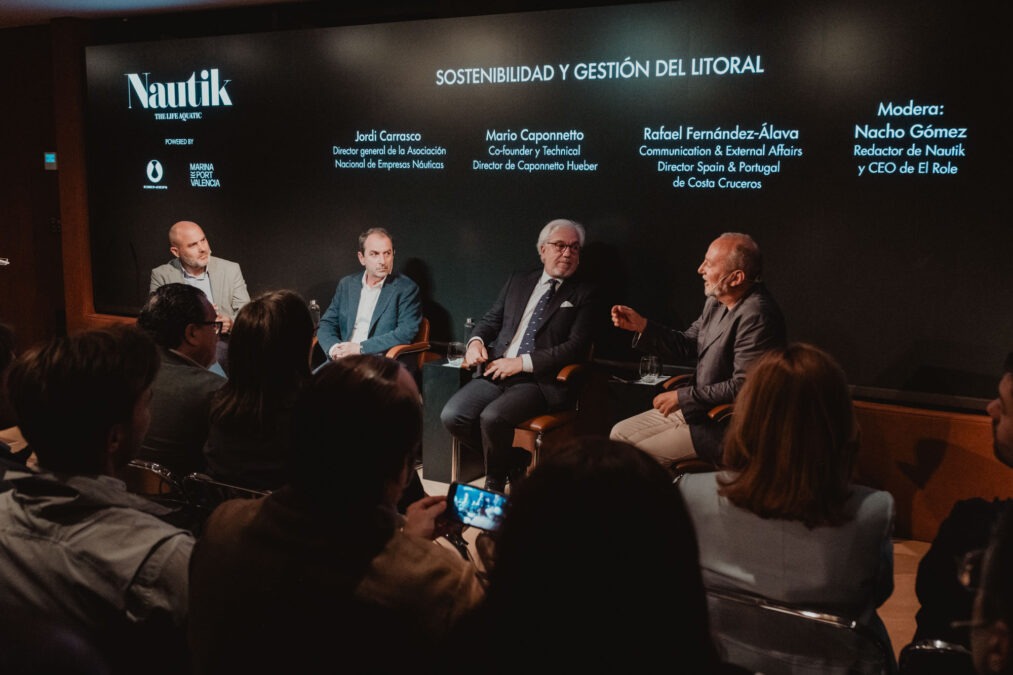
During the discussion, participants examined the challenges posed by the sector’s decarbonization, the adaptation of coastal infrastructure, and the need to promote more responsible, sustainable, and competitive tourism and maritime models.
In this context, Jordi Carrasco argued that the marine sector is already undergoing a technological transition based on multiple solutions: “There is no single winning technology,” he noted, citing the progress of electric and hydrogen-powered vessels, as well as increasingly efficient hybrid systems. He also highlighted eco-design and the need to consider “the entire product lifecycle,” from manufacturing to the final recycling of the boats.
Carrasco also called for a more open relationship between the public and the sea, highlighting the transformation many port cities are undergoing: “For years, ports were a barrier; now they are opening up to people.” An evolution that, in his view, will bring sailing to new audiences and dispel the perception that it is an inaccessible activity: “There is nothing less sustainable than something that is not used,” he stated.
For his part, Mario Caponnetto offered a perspective focused on technological innovation applied to sailing, highlighting the role of the America’s Cup as a research laboratory for the maritime sector. “The interesting part is transferring that technology to the real world,” he explained, placing special emphasis on the potential of hydrofoils to reduce energy consumption and minimize the impact on the marine environment.
The naval designer also called for a broader discussion on sustainability and the energy transition: “Hydrogen is not an energy source, but an energy carrier,” he noted, emphasizing that there is no one-size-fits-all solution for all vessels. “Each technology serves to solve a specific problem,” he noted, advocating for continued research and the transfer of innovations developed in competition to more accessible industrial and commercial applications.
Along the same lines, Rafael Fernández-Álava reviewed Costa Cruises’ progress in the area of sustainability, highlighting the company’s pioneering commitment to the first ships powered by liquefied natural gas. “It was a risky decision because we practically had to develop the technology from scratch,” he explained regarding an initiative that, as he argued, reflected a genuine commitment by the company that went beyond regulatory requirements.
Fernández-Álava also emphasized the importance of focusing on solutions applicable to the present, rather than just future technologies. As an example, he cited air injection systems installed beneath the hull that can reduce fuel consumption by up to 5% on large vessels. In addition, he highlighted the efficiency and waste reduction measures already implemented in the sector, ranging from the reuse of heat generated by engines to the elimination of millions of single-use plastics on board.
In closing, the executive emphasized the need to strengthen public-private partnerships to address the major challenges facing the maritime industry: “We need them to improve mobility, advance electrification, and better manage the economic and social impact on our coastlines.”
The second panel, focused on “Seaports and Port Logistics,” highlighted the transformation of logistics hubs and the strategic role of ports within the new economic and energy landscape. Moderated by journalist and consultant Eva Miquel, the discussion featured Carlos Sanlorenzo, Secretary General of Baleària; Beatriz Orejudo, CEO and Managing Director of Lantimar Group; and Daniel Hernanz, Corporate Director of Business Development at the Ghenova Group.
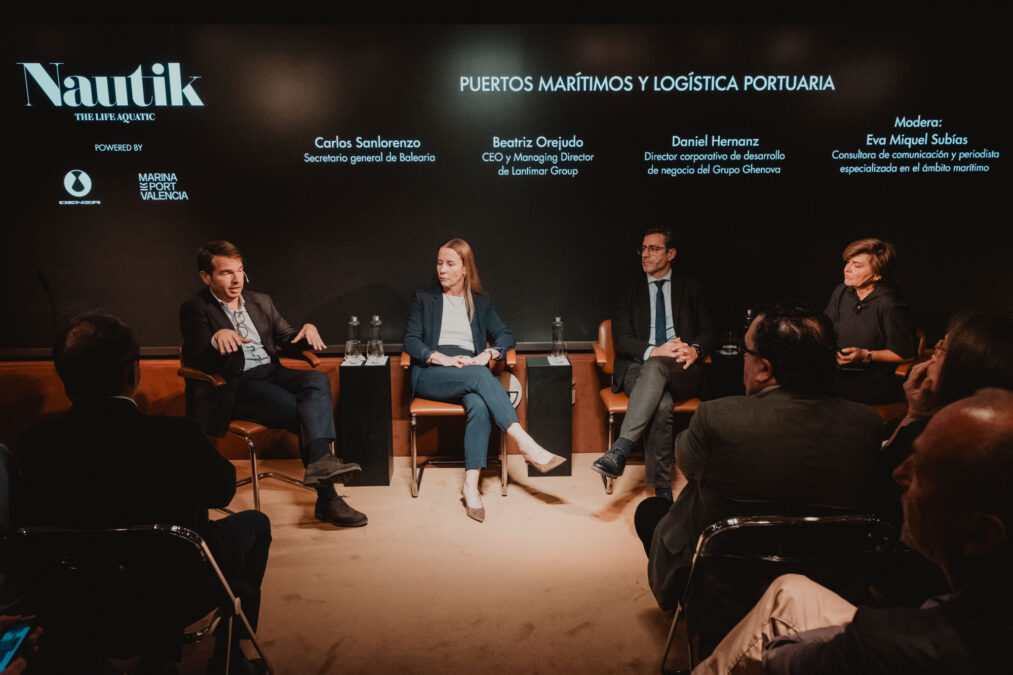
The speakers agreed on the need to accelerate the modernization of the port ecosystem, integrating technological innovation, energy efficiency, and sustainability as fundamental pillars for the future of maritime logistics.
During the conversation, Beatriz Orejudo highlighted the strategic role of the shipping agent within the port ecosystem, a role she described as “the port’s conductor.” “They are the ones who coordinate absolutely everything: documentation, security, logistics, health, and operational services,” she explained, also highlighting the sector’s growing complexity and the shift toward “360-degree” management models, particularly in segments such as cruise ships, megayachts, and international traffic.
Orejudo also highlighted the transformation of the relationship between the city and the port: “Historically, cities have turned their backs on the port, although that is beginning to change,” he noted, emphasizing the positive impact this openness could have on maritime and tourism activity in the Mediterranean.
For his part, Daniel Hernanz highlighted the potential of Spanish naval engineering at a time marked by the energy transition and geopolitical complexity. “In the maritime sector, virtually every ship is a unique prototype,” he explained, emphasizing that there is no one-size-fits-all solution when it comes to propulsion or sustainability, as each design depends on the route, operations, and specific needs of each vessel.
The Ghenova executive also stressed the importance of moving toward greater technological and industrial sovereignty: “We must be capable of designing, building, and maintaining ships using our own capabilities,” he said, highlighting Spain’s role as a leader in naval engineering and the construction of high-value-added vessels.
Along the same lines, Carlos Sanlorenzo has argued for the need to move toward a common international regulatory framework that allows for competition “under symmetrical, not asymmetrical, rules” in a fully globalized sector. “Europe cannot act alone while the rest of the world operates under different rules,” he warned, referring to regulatory requirements related to sustainability and emissions.
The CEO of Baleària also outlined the company’s energy transition strategy, which is based on liquefied natural gas, biogas, and electrification. “Sustainability is in Baleària’s DNA,” he said, noting that the shipping company was a pioneer in the use of LNG and currently operates 100% electric ships built in Spain.
He also highlighted the strategic role of maritime transport as a driver of territorial and economic cohesion: “We don’t just transport passengers and goods; we connect regions, cultures, and societies,” he concluded.
The event continued with a presentation by Patrick Reynés, CEO of Marina Port Valencia, who described the Marina Port Valencia project as a new model for integrating the city, sustainability, and the blue economy. “We never viewed this project solely as a marina,” he noted. “We want to build an ecosystem capable of connecting innovation, industry, sports, culture, and urban life around the sea.”
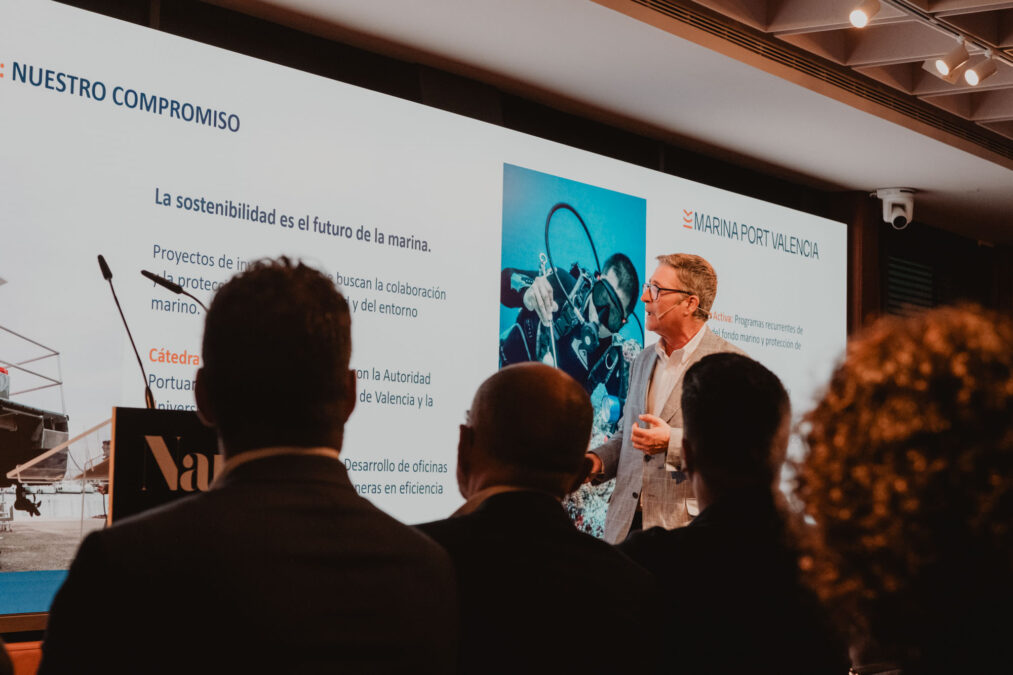
Reynés also emphasized the need to strengthen the connection between cities and their coastal surroundings: “Valencia has always looked out toward the Mediterranean, even though it has often been said that it had its back turned to the sea.” In this regard, he argued that the project aims to “return the sea to the public through a much more open, efficient, and responsible model.”
The CEO of Marina Port Valencia also highlighted some of the initiatives already launched as part of the project, such as the creation of the Chair of the Sea in partnership with the universities of Valencia and Alicante, the development of LEED Platinum-certified buildings, and the commitment to 100% electric energy and operational solutions.
He also highlighted the initiative’s international scope, which aims to make Valencia “one of the Mediterranean’s leading nautical and maritime hubs,” drawing on both business development and major maritime sporting events such as SailGP, TP52, and the Valencia Boat Show.
The event concluded with a cocktail reception and networking session at Forbes House, where attendees and participants were able to continue exchanging ideas and perspectives on the future of the sector in an environment characterized by innovation, sustainability, and the transformation of the maritime economy.


