








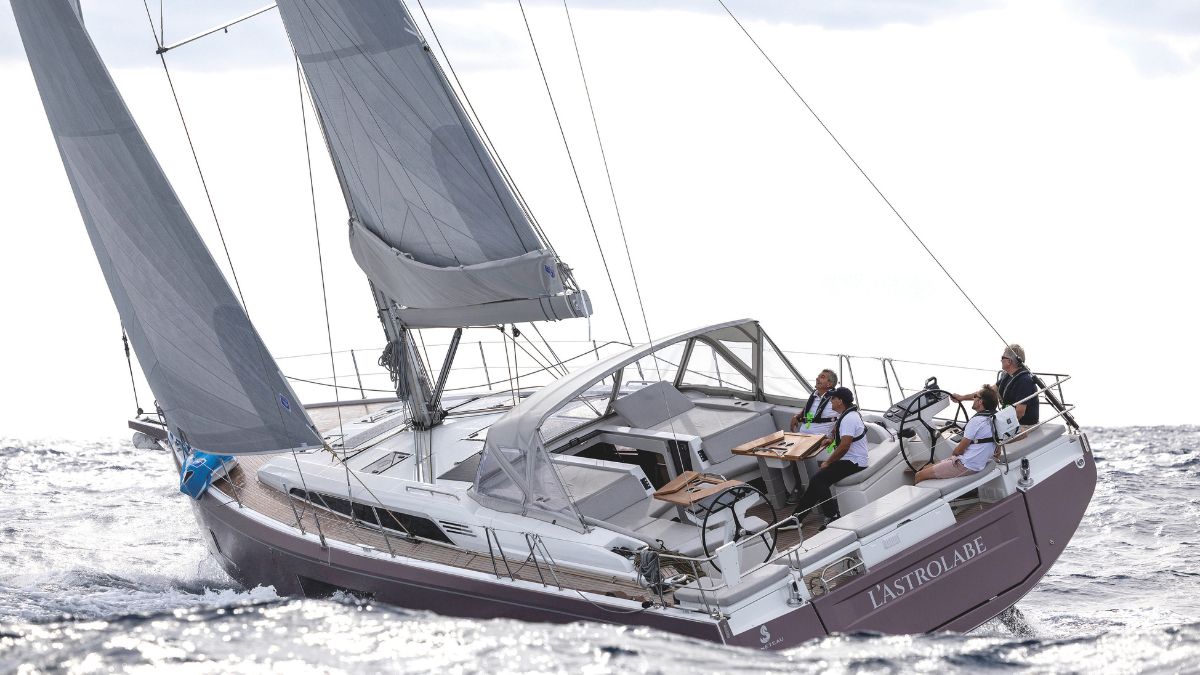
The Oceanis 52 is a fast cruiser that has chosen to prioritize comfort over the sporty performance of its predecessor, the 51.1—a trade-off that the shipyard has offset with a significant increase in space and comfort.
Roberto Biscontini’s naval architecture and Nauta’s interior design combine a hull with a pronounced sheer and maximum beam extending nearly to the stern to achieve greater interior volume and, according to the shipyard, 30% more space in the cockpit than its predecessor. This increased interior volume translates into more comfortable space below deck. Circulation and living spaces take center stage at the expense of the deck working area, which is not exactly cramped, but rather, the simplicity of the maneuvers does not require many hands.
The design of the Oceanis 52 prioritizes comfort and space on board over sheer speed
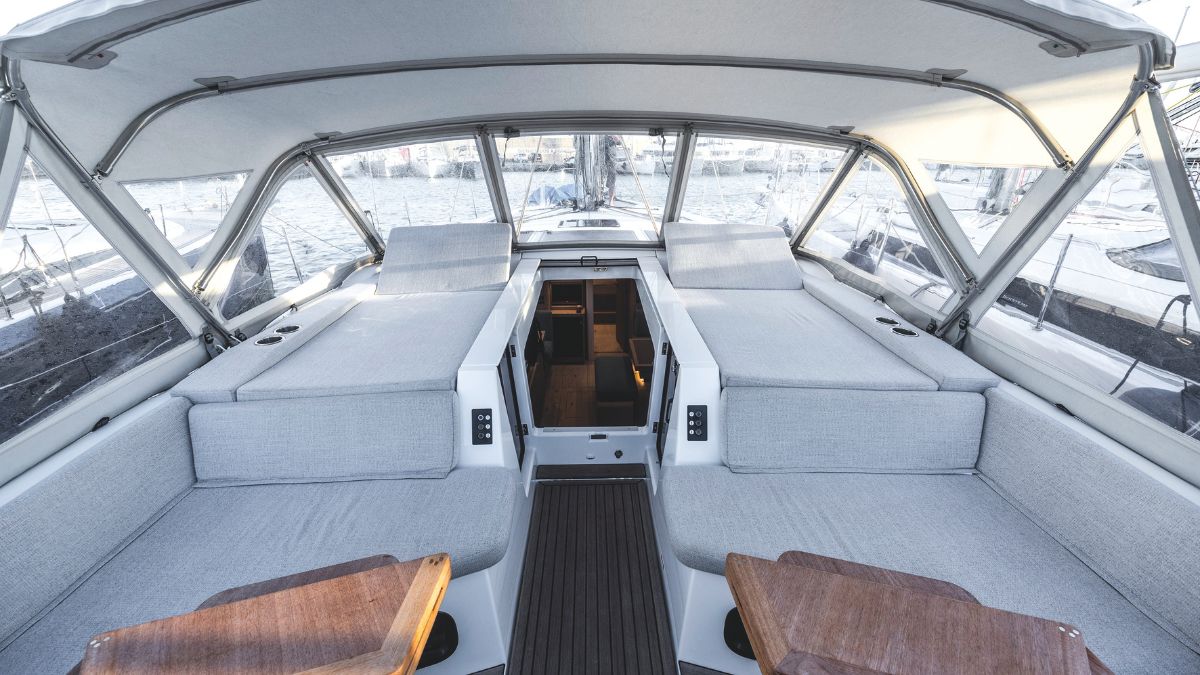
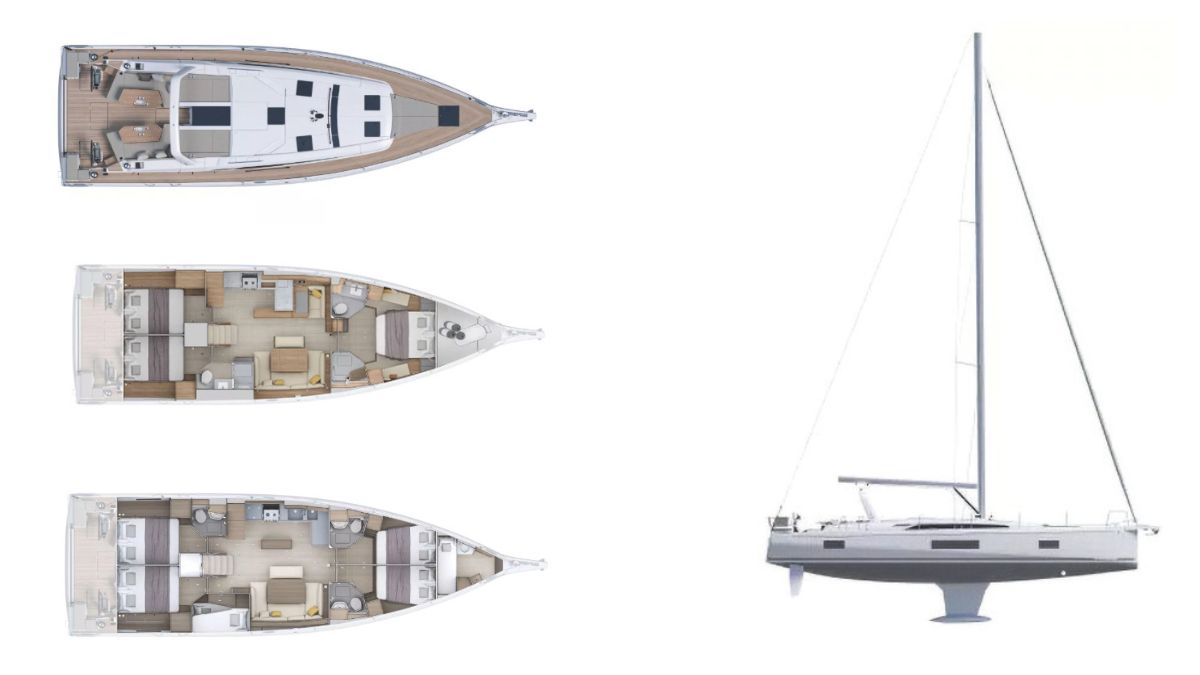
The cockpit area is dominated by two C-shaped sofas facing each other, each with a table that completes a hexagonal layout. These tables can be lowered to form two spacious sunbathing areas separated by the central aisle. The aft section features a continuous row of seating, with the option to install an outdoor galley. The sailing configuration with the canopy deployed protects the wide entrance to the interior from spray, but also creates a space on either side of the hatch that is ideal for enjoying the ride when sailing downwind. This space features two sun loungers facing aft, sheltered from the wind. It may also be a good spot for keeping watch at night, but only when there is no list.
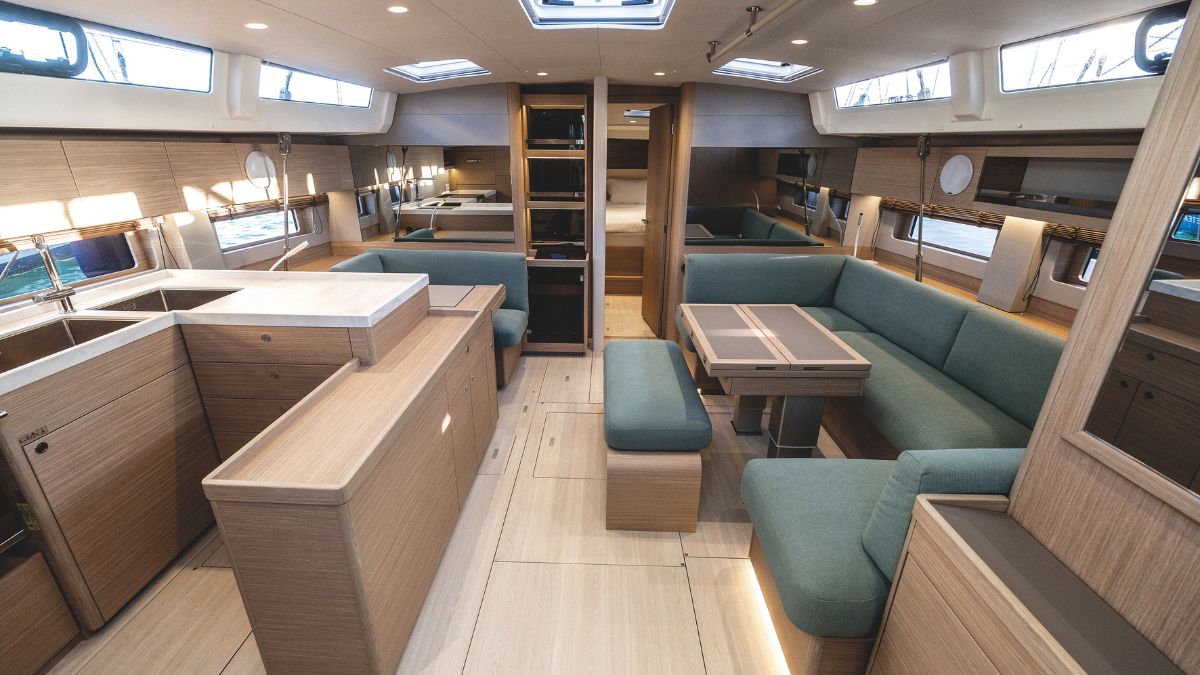
Nauta Design was responsible for the interior’s design and color scheme, with a special emphasis on natural lighting. The standard version features five cabins and three bathrooms, and boasts a clean, simple style that is easy to clean, with elements designed for quick maintenance. The private version reserves the bow for the master cabin, which makes full use of the available beam. This cabin maximizes the ample bow volume to accommodate a freestanding double bed, with an en-suite bathroom and separate showers. On the port side, the C-shaped galley adjoins a space that can serve as a chart table or desk, while on the starboard side lies the salon with a folding-wing table. Overall, it offers ample storage space; while not designed as an ocean-going cruiser for long voyages, its layout is perfectly suited for fast coastal cruising. In this version, the finishes offer a higher level of quality, with greater attention to woodwork and warmer textures.
We tested the Oceanis 52 in Port Ginesta, Catalonia, under excellent sailing conditions, with winds of 18 to 20 knots and moderate swell. The boat we sailed was equipped with the First Line Pack, which includes a taller mast and increased sail area. When sailing close-hauled in these conditions, it’s best to ease the sheets slightly; sailing at an apparent wind angle of 80°, we managed to maintain an average speed of 7.8 knots, with a moderate heel angle and no strain on the tiller.
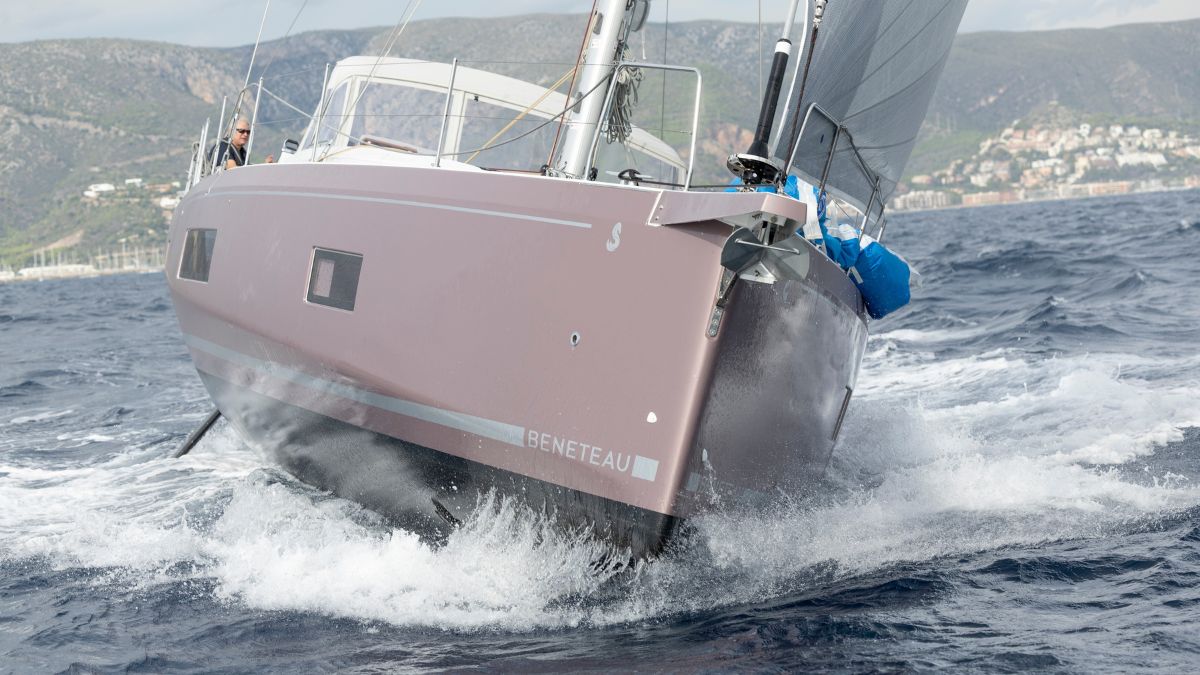
The hull’s shape—particularly the sheer—ensures very controlled heeling, and the twin-rudder configuration enhances the boat’s controllability and course stability, which often gives us that feeling that “the boat sails itself.” The handling is designed and simplified for a small crew: a couple can easily handle the entire boat, especially with the self-tacking jib, which proved very efficient and safe in conditions like those of the test.Its displacement-to-length ratio, as well as the available sail area, place the Oceanis 52 in the category of fast cruisers—agile in light winds—but one that prioritizes onboard comfort over pure speed and more sporty performance.
- Technical specifications
- Overall length: 16.28 m
- Hull length: 15.75 m
- Length overall: 14.67 m
- Maximum beam: 4.84 m
- Light displacement: 14,476 kg
- Draft (deep keel): 2.36 m
- Weight with deep keel: 3,396 kg
- Standard sail area: 94 m²
- First Line sail area: 127 m²
- Standard size (roll-up): 46.5 m²
- First Line (Classic) Master Suite: 59.5 m²
- Self-supporting deck: 47.5 m²
- Genoa (First Line): 67.5 m²
- Gennaker: 187 m²
- Code 0: 143 m²
- Fuel tank: 200 L
- Water tank: 420 L
- Engine power: 110 hp
- CE Certificate: A13 – B14 – C16
- Naval architect: Roberto Biscontini
- Deck and interior design: Nauta Design
- Shipyard: Beneteau
- Base price: €445,000 (excluding taxes)
This article is featured in issue 5 of Nautik Magazine, which you can find at newsstands or in our store.