








In 2011, Christina Rosenvinge released *La Joven Dolores*, an album whose title did not correspond to any of its songs. During the promotional campaign, many recalled that Formentera had been one of her sources of inspiration. For the people of the Pitiusan Islands, however, that name evokes more than just music: it refers to a specific ship, one of the most iconic in the history of the connection between Ibiza and Formentera.
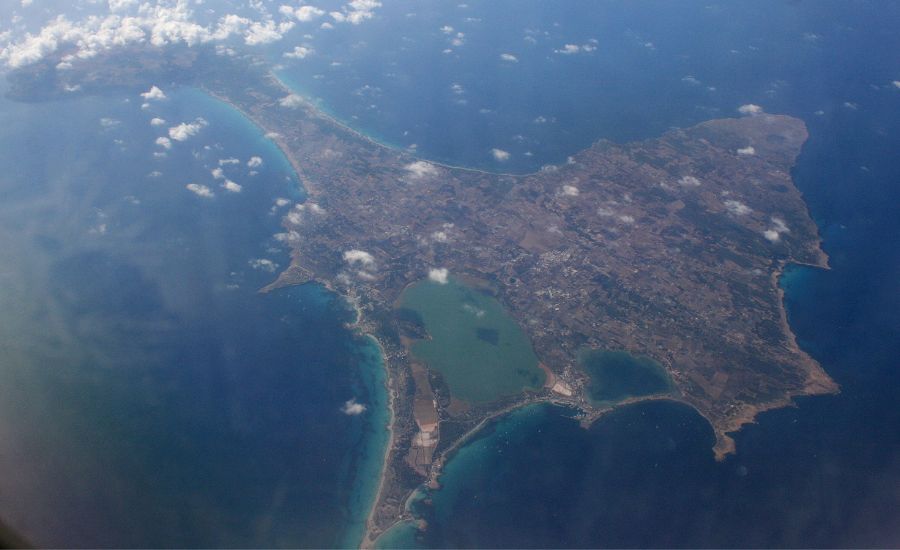
For decades, “La Joven Dolores” was much more than just a boat: it was the link between the two islands and a symbol of a connection that remains intact. Because Formentera is the only inhabited island in the Balearic archipelago without an airport (and, as far as anyone can tell, it never will have one), so everything that comes in or goes out does so by sea. The route connecting it to Ibiza is not just a simple route, but its true lifeline to the outside world.
In 2025, nearly three million passengers crossed the strait between the port of Ibiza and La Savina, making it by far the busiest ferry route in Spain. However, its history is not measured in millions, but in centuries of necessity, isolation, and seafaring tradition.
When Crossing the River Was a Matter of Survival (18th–19th Centuries)
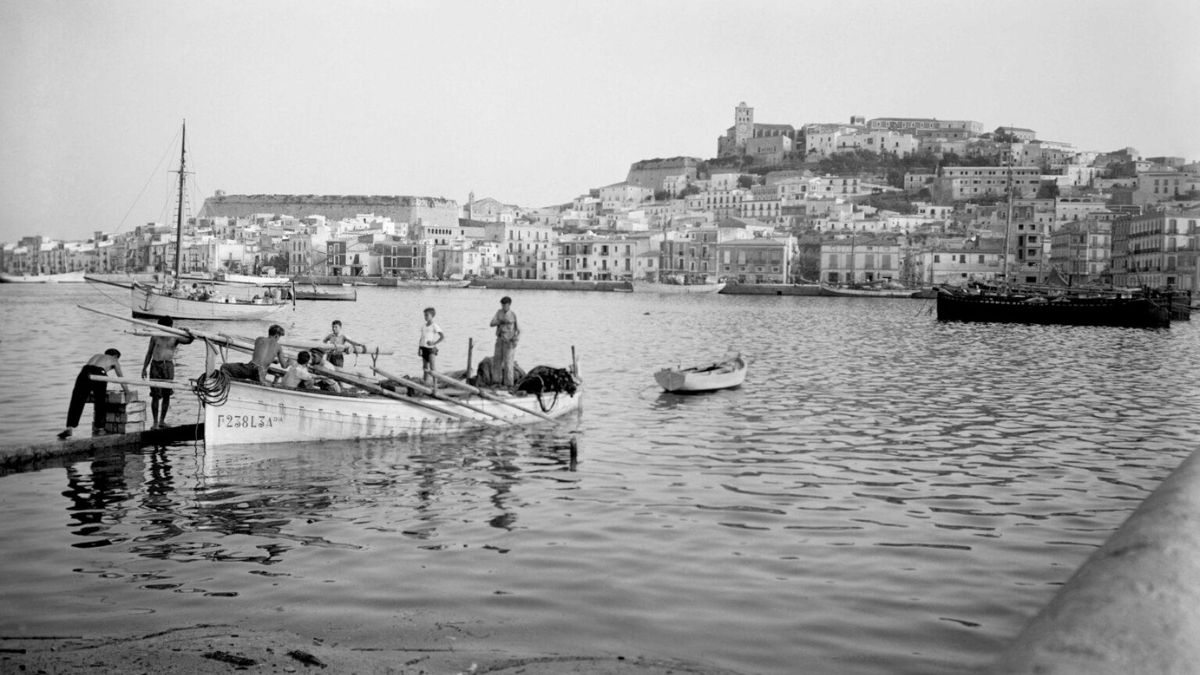
Long before ferries and fixed schedules, the strait between the islands was crossed in small wooden boats. Since at least the 18th century, llaüts—sailboats with lateen sails and oars—made the crossing with a regularity as surprising as it was precarious, at a time when crossing was not a choice but a necessity.
As early as 1867, the sailor-archduke, Louis Salvator of Austria, described three key locations on Formentera: Es Caló, which he deemed dangerous in easterly winds; La Savina, a natural refuge in summer; and Estany des Peix, a safe haven during the harshest winters. These locations shaped not only the island’s geography but also the living conditions on this isolated island.
The voyages were a true test of seafaring skill. The faluchos were crewed by a captain and four sailors and operated under an almost communal system. The so-called “igualados”—residents with established rights—paid between 12 and 20 reales a year, a fee that covered family transportation, errands, and even urgent trips to bring doctors or medicines from Ibiza. Everything traveled on board: salt, gravel, livestock, chickens, sacks of grain, and also people who needed to be born, healed, or die in Ibiza, since Formentera lacked stable medical services.
With a favorable wind, the journey could take two hours; in dead calm conditions, it could take up to fifteen hours by oar. The trip smelled of tar, saltpeter, and hard work, and was part of a routine that was as grueling as it was essential.
From Steam to Organization: The Leap into the 20th Century
The first major breakthrough came in 1907 with the steamship *Constante*, operated by the Isleña Marítima company, which covered the crossing in about three hours and, for the first time, offered something resembling a regular service. In 1910, the *Formentera* joined the fleet, and little by little, shipping became more reliable.
The real change took place a century ago. In 1925, Unión Marítima de Formentera S.A. was founded, bringing together local owners of llaüts such as the Francisco Javier, the María, the Joven Catalina, and the Joven Pepito, putting an end to unregulated competition and paving the way for coordinated management. In 1932, they signed an agreement with Trasmediterránea, which allowed them to consolidate the route and improve the regularity of the service.
For decades, freight transport remained a priority; in fact, as late as 1983, nearly 11,000 tons were being moved between the two islands each year. However, a major turning point was about to arrive in the form of an external phenomenon that would change everything: tourism.
‘La Joven Dolores’: the ship that changed everything
In 1965, the most legendary vessel in this story made its debut: ‘La Joven Dolores’. Built in Tarragona with a wooden hull, measuring 24 meters in length, and capable of speeds under 10 knots, it took approximately an hour and a half to complete the journey—a time that may seem long today, though at the time it represented a significant advance.
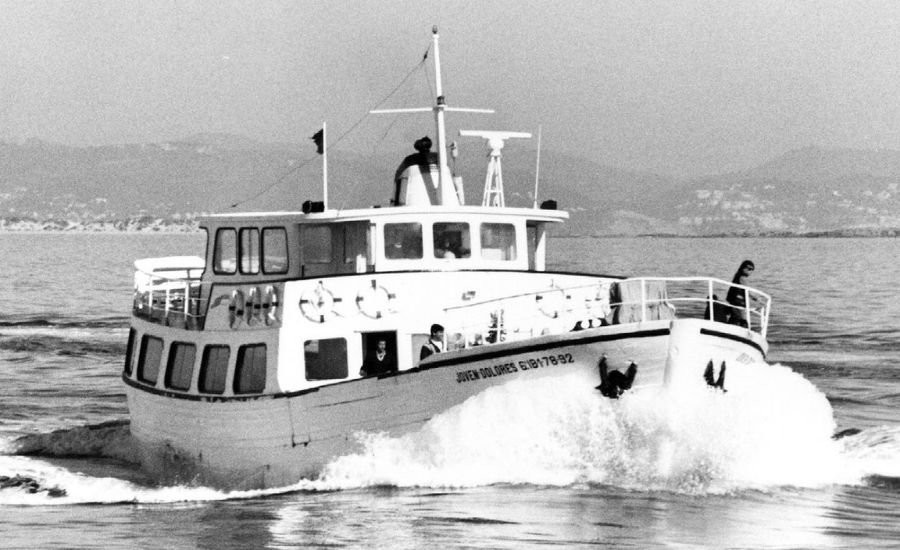
Its true revolution lay elsewhere: the ability to carry vehicles. Up to three cars could be loaded aboard via rickety wooden gangways and manually stowed by the crew in a sort of naval Tetris that perfectly encapsulates the ingenuity of the era. That transformed the relationship between the two islands.
Formentera began to open up to the outside world, first to curious travelers and later to the hippie movement that would ultimately shape part of its contemporary identity. “Joven Dolores” was the gateway to that change.
For decades, it carried cargo, passengers, and stories: romances that blossomed on deck, impromptu guitar performances during the voyage, and unexpected births before reaching the Can Misses hospital. Among those who sailed on it, there is a phrase that is repeated like a mantra: it never failed.
It remained in regular service until the late 1990s. It then continued to operate on sightseeing cruises, was towed to Dénia, and was eventually scrapped, leaving behind a void that was not only practical but also deeply emotional.
From ferries to fast ferries: the modern era
The 1980s marked the beginning of a definitive modernization. In 1985, the Espalmador and Ibiza ferries, operated by UMAFISA, entered service, featuring substantial improvements such as comfortable seats, air conditioning, and compliance with international safety standards. Reliability became a central focus, and the route established itself as an indispensable service even in adverse sea conditions.
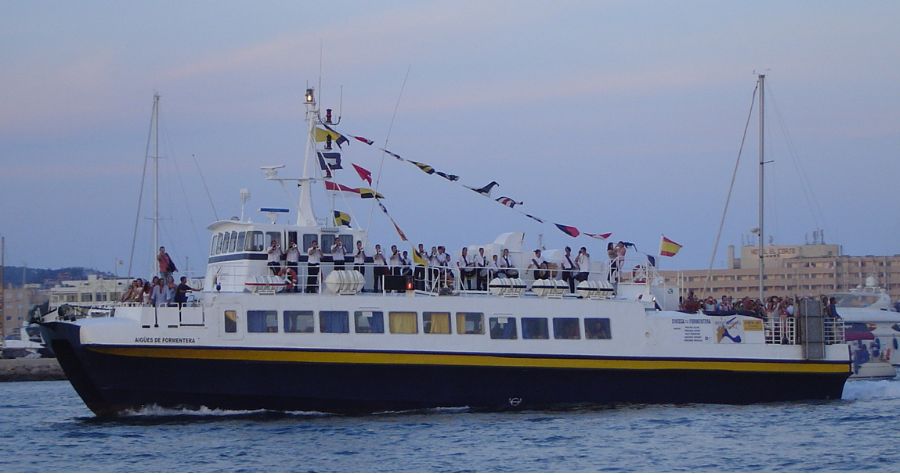
Later came hydrofoils, catamarans, and high-speed ferries, significantly reducing travel times. Companies such as Trasmapi and Baleària established the route, increasing the number of departures and making the journey a regular part of daily life rather than an ordeal.
A vital line… and one that’s overwhelmed
Today, the connection between Ibiza and Formentera is one of the busiest in the Mediterranean. Four shipping companies operate regular service: Baleària, which also offers connections to the mainland from La Savina; Trasmapi, a leader in passenger and vehicle transport; Formentera Lines, a successor to local shipowners with initiatives focused on protecting seagrass; and Aquabus, which caters primarily to tourists. There is also a service exclusively focused on rolling cargo, which complements the ships that can carry vehicles and even trucks on board.
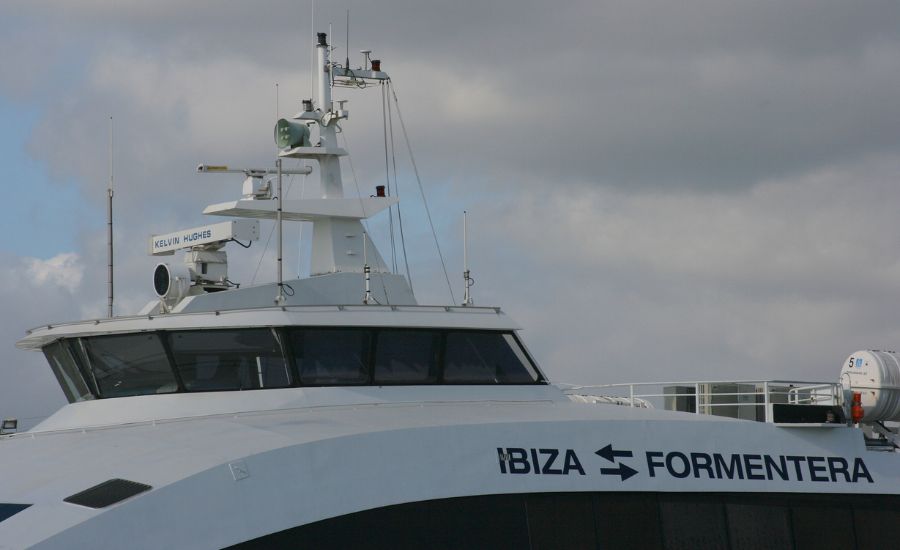
During peak season, departures occur every 15 to 30 minutes, and the trip takes between 25 and 35 minutes. The figures reflect the scale of the phenomenon: in 2025, 2,961,486 passengers used this line, compared to just over 400,000 in the 1980s. Growth has been steady and exponential.
The challenge now is a different one: managing that success without compromising the island’s balance. Tourist pressure, the protection of seagrass, and the sustainability of the model are the new factors shaping the future of the line.
More than just a route
Despite all the changes, one thing remains unchanged. The Ibiza–Formentera route is still what it always was: a necessity. In the past, it carried salt, livestock, and the sick; today, it transports tourists, workers, and residents. In the past, it depended on the wind; now, it relies on high-speed engines, but its purpose remains the same: to connect an island that has no alternative, except in emergencies.
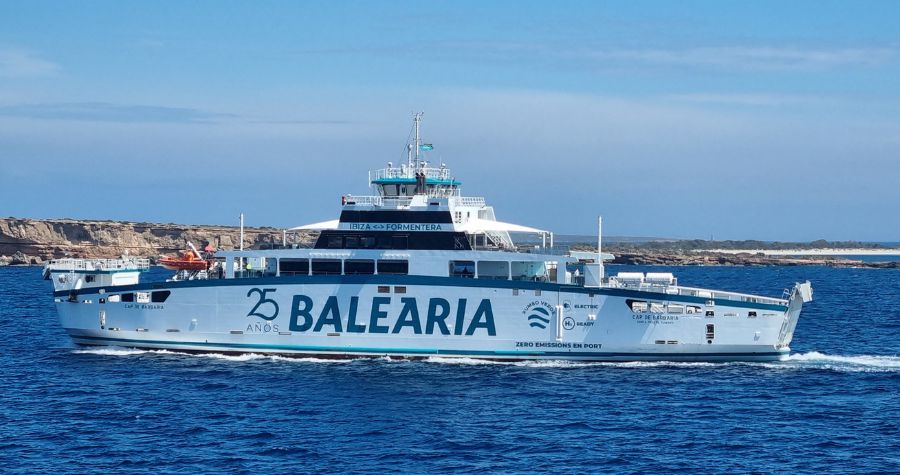
Deep down, little has changed. La Savina remains the heart of Formentera, and the sea is its only road. Everything else (boats, engines, numbers) is merely a way to continue exploring it, just as when you cross the island from one end to the other on the PM-820 highway, with the La Mola lighthouse at one end and the port at the other, reminding us once again that in Formentera, everything begins and ends at the sea.