








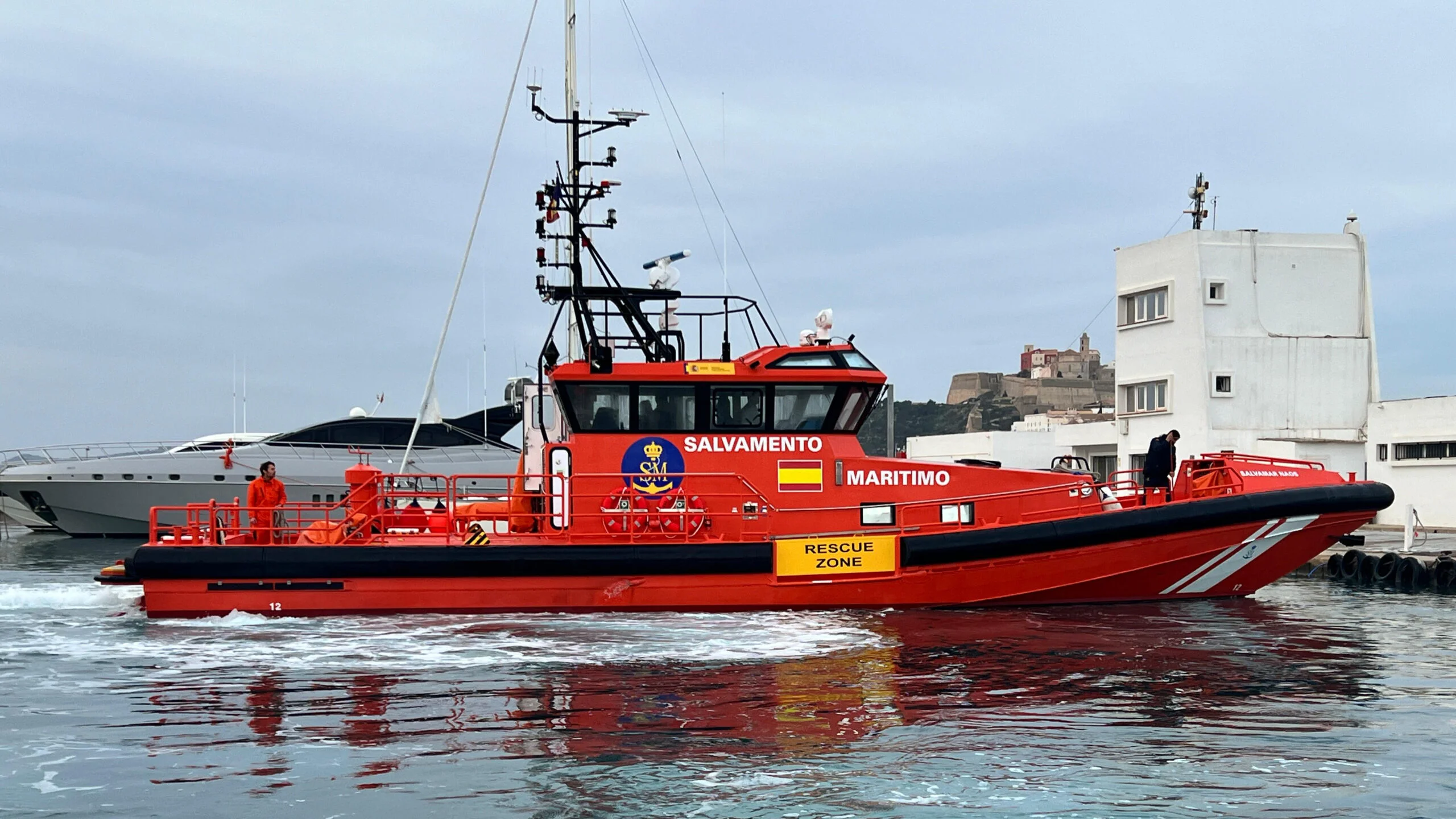
Six Maritime Rescue vessels (Diphda, Acrux, Navia, Alpheratz, Mizar, and Urania) and two Civil Guard patrol boats (Río Tajo and Río Guadiato) participated on Saturday, November 14, 2026, in the largest rescue operation ever recorded on the Atlantic route. The teams assisted 1,580 people who had arrived in the Canary Islands aboard 15 small boats, 119 more than the previous record, set on November 7, 2020 (when 1,461 people arrived). The first arrival took place at 4:01 a.m., when the Salvamar Navia assisted 148 people who had been at sea for six days. The last arrival occurred at 11:07 p.m.
Most disembarked on El Hierro: 1,327 people (84% of the total) in 13 small boats, mainly at the port of La Restinga. Another 203 arrived in Gran Canaria and 50 in Tenerife. Among them were at least 120 women and 173 minors, according to preliminary figures. The boat with the largest number of passengers carried 240 people—12 women and 36 minors—after a six-day journey from Gambia.
An Unprecedented Weekend
On Friday, the Maritime Rescue Service completed eight operations, assisting 843 people. Seven of these involved escorting small boats to port, and one involved rescuing the occupants of a partially submerged vessel. On Sunday, the island received at least another 1,261 people in seven or eight small boats, with three people transported to the hospital. In total, 3,684 people have arrived in the Canary Islands on 29 small boats since Friday.
According to the Ministry of the Interior, so far in November, more than 9,000 people have arrived in El Hierro on some 90 small boats, compared to the 66 who arrived between January and October. The Minister of Territorial Policy, Ángel Víctor Torres, put the number of arrivals in the Canary Islands this year at 27,000, of which about 17,000 have arrived in El Hierro.
Reinforcements and Pressure on the Reception System
Torres visited La Restinga on Sunday and announced a third Maritime Rescue vessel for the Canary Islands (one of the five that Spain has), which is expected to arrive between Monday and Tuesday following a weather-related delay. He also called for a new meeting of the Interministerial Commission on Migration on Tuesday at 7:30 a.m. Last week, the government declared a migration emergency and approved 15.2 million euros to expand shelter capacity, in addition to one million for the Red Cross.
The president of the Island Council, Alpidio Armas, reported that some 900 of the more than 1,600 people housed at the CATE, the sports center, and the Red Cross facilities would be transferred off the island on Sunday, with more transfers scheduled for Monday. Armas added that the crane used to remove the small boats from La Restinga has broken down. The president of the Canary Islands, Fernando Clavijo, called for “an immediate response” from the national government and for the agreed-upon measures to be expedited.
Why Now?
The International Organization for Migration (IOM) attributes the surge to several factors. Among them are weeks of calm seas—linked to the El Niño phenomenon—and a shift in departure points toward the south (Gambia, Senegal, Guinea-Bissau, and Guinea-Conakry) as controls in Morocco and Mauritania are tightened. Those arriving are fleeing a lack of economic opportunities (the most commonly cited reason in IOM surveys) and, in the case of those from Mali, an armed conflict that has been ongoing since 2012. The Spanish Commission for Refugee Aid (CEAR) calls for each asylum application to be reviewed on a case-by-case basis and for legal and safe migration channels to be expanded.


