








The ancient Greeks attributed the mysteries of the sea to gods and monsters. Currents powerful enough to sweep away even the heaviest ships, winds that appeared out of nowhere and swept away everything that broke the ocean’s surface, waves capable of engulfing even the sturdiest fleets… even mountains that spewed fire. Homer described some of these in passages from the Odyssey, the tale of Odysseus’s return to Ithaca after the Trojan War.
Fast forward three millennia. In 1966, four intrepid individuals decided to organize a regatta around Sicily, starting and finishing in Malta. The British sailors Alan Green and Jimmy White, along with the Maltese sailors Paul and John Ripard, sponsored this racing adventure organized by one of the oldest yacht clubs in the Mediterranean: the Royal Malta Yacht Club, founded in 1835. Its course would be similar in distance to the already famous Fastnet Race, organized by the Royal Ocean Racing Club since 1925, and would initially circle Sicily clockwise until it was reversed to its current counterclockwise direction in 1978. That first edition brought together eight boats.
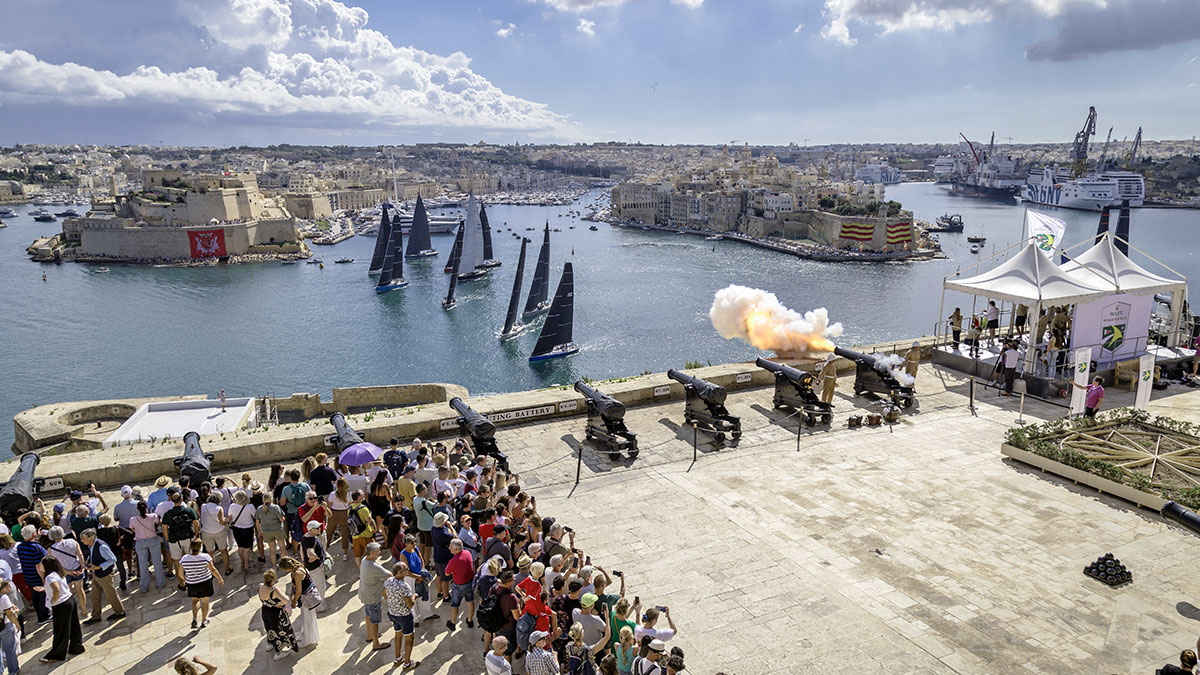
The current race begins at the majestic Grand Harbor in Valletta, Malta, where the cannons of the Salunting Battery (a 16th-century gem) signal the start of each of the classes into which the fleet is divided. In its 47th edition, on October 17, the artillery gave the starting signal to 107 boats representing 27 nations, divided into seven categories and propelled by a light breeze that slowed down a spectacle that is a globally recognized icon. Thus began a 606-nautical-mile (approximately 1,122-kilometer) voyage that transcends the realm of sports.
“Life at the Royal Malta Yacht Club revolves around this regatta,” explains Mark Napier, the club’s commodore, who every year overcomes the logistical challenge of managing a fleet of about 100 participating boats with just over 50 of the club’s own berths. “The event has evolved over time, and since Rolex became a sponsor in 2002, we’ve gained worldwide recognition. This is Malta’s most important sporting event—a brand in its own right—and it helps promote the image of this beautiful Mediterranean island as a maritime destination. Ninety percent of the fleet is foreign, and its crews serve as ambassadors for Malta. Local authorities understand this and are aware that supporting the organization is the best way to ensure its continued growth and to promote the magnificent sailing conditions we enjoy year-round.”
The Trip Home
To explain the challenges facing the participants, we go back to the 8th century B.C. After leaving Malta and heading north, the ships pass along the eastern coast of Sicily, which, according to tradition, was home to Polyphemus, the Cyclops from whom Odysseus managed to escape after blinding him. Tradition identifies the cliffs of Aci Trezza, near Mount Etna, as the rocks the giant hurled at his ship. Sicily has also been associated with Trinacia, the island of the sacred cattle of Helios, the sun god.
The next landmark is the Strait of Messina, the narrow passage that separates Sicily from the Italian peninsula. As Homer wrote in Book XII of the Odyssey, this was the territory of two monsters: Scylla loomed with her six heads from her cave on the coast of Calabria; on the opposite shore, Charybdis swallowed and spewed out enormous amounts of water, forming a deadly whirlpool. Ulysses chose to sail close to Scylla and sacrifice six of his companions rather than risk losing his entire ship. On this occasion, both monsters proved benevolent toward the regatta fleet, which navigated that first peril amid gentle breezes and without any major setbacks.
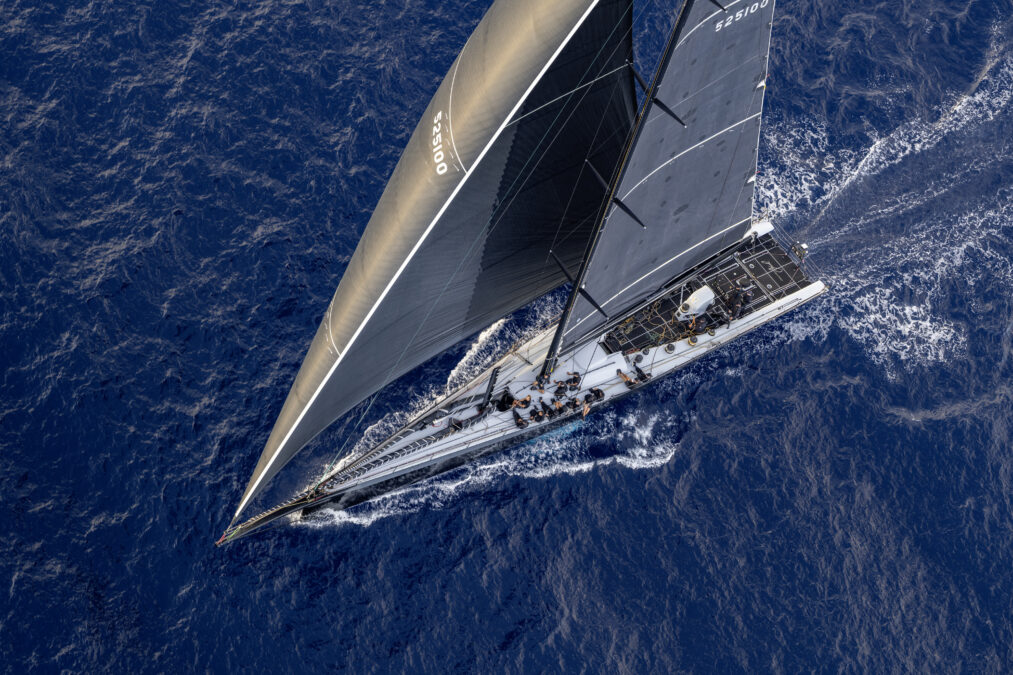
Next come the Aeolian Islands (a UNESCO World Heritage Site) and one of the race’s greatest icons: Stromboli, the active volcano rising from the Tyrrhenian Sea. This setting is closely linked to Aeolus, the guardian of the winds, who, according to Homer, gave Odysseus a wineskin containing the adverse winds to facilitate his return to Ithaca. His companions opened it and unleashed a storm. “Sailing right past Stromboli is breathtaking—you see the lava, hear the volcano, and can even feel the rocks falling,” explains Vigo-based sailor Jaime Arbones, who is participating aboard the Varuna VI in this year’s race.
After circumnavigating Sicily and passing through the Aegadian Islands (where Christopher Nolan’s *The Odyssey* was filmed), Pantelleria (the “Island of the Wind”), and Lampedusa, the fleet returns to Malta. There, the nearby island of Gozo has been identified by local tradition as Ogygia, where the nymph Calypso held Odysseus captive for seven years. Interestingly, Calypso is the name of the smallest boat in the fleet of the 47th edition, measuring just 9.5 meters in length, skippered by Sebastian Ripard, grandson of John Ripard himself, who founded the regatta.
After overcoming all these challenges, the finish line awaits off the coast of the Royal Malta Yacht Club.
Today’s Heroes
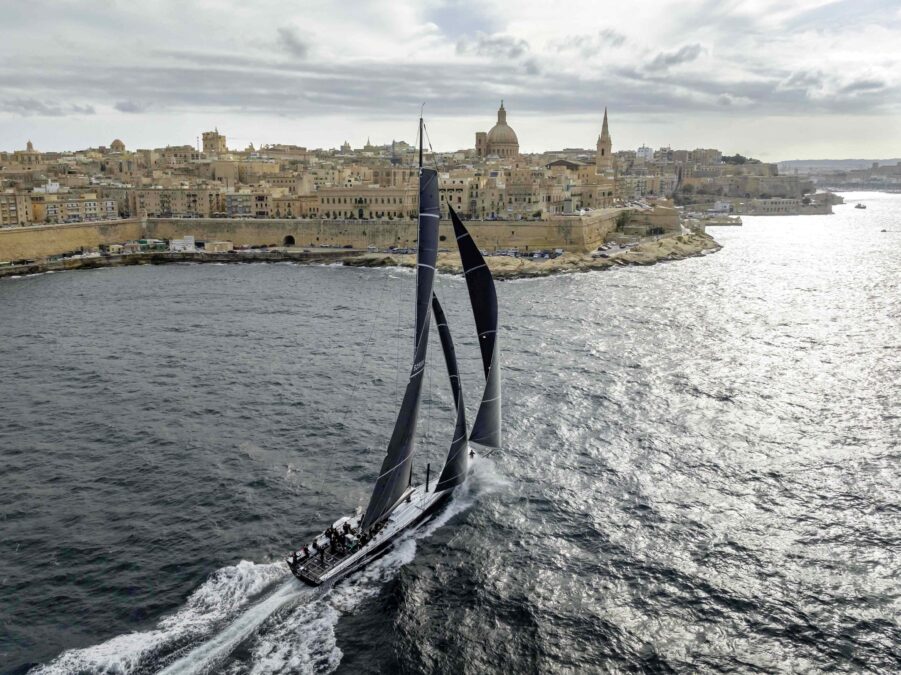
Meteorology, satellites, electronics, knowledge, technology… tools that today have replaced the stories of Greek mythology. It took Odysseus ten years to return home; Black Jack 100, the fastest boat in the 47th Rolex Middle Sea Race, completed the 606-nautical-mile course in 51 hours and 51 minutes, enough to lift the coveted trophy as the winner in real time but a far cry from the record set in 2021 by Comanche (40 hours, 17 minutes, and 50 seconds). Willy Altadill, from Barcelona, was part of the Comanche crew at the time and added the 2026 victory to his impressive list of achievements aboard the 100-foot colossus built by Remon Vos and skippered by Tristan Le Brun: “We experienced a bit of everything as we rounded Sicily: light winds passing through the Strait of Messina, a gentle tailwind off the northern coast of the island, and a shift in the far northwest corner of the island that picked up in intensity and forced us to sail close-hauled. As we approached Malta, we encountered winds of nearly 27 knots with significant swells; it was more about preserving the boat’s integrity than trying to pull away from the others.”
But in the Rolex Middle Sea Race, finishing first doesn’t necessarily mean winning. It guarantees you a Rolex engraved with your achievement, a trophy, and a place in the golden book of world sailing. On this occasion, the magic of time compensation—which allows boats crewed by amateur sailors (like the small Calypso) to compete against speedsters sailed by professionals (like the massive Black Jack 100)—brought glory to the team that best adapted to the conditions.
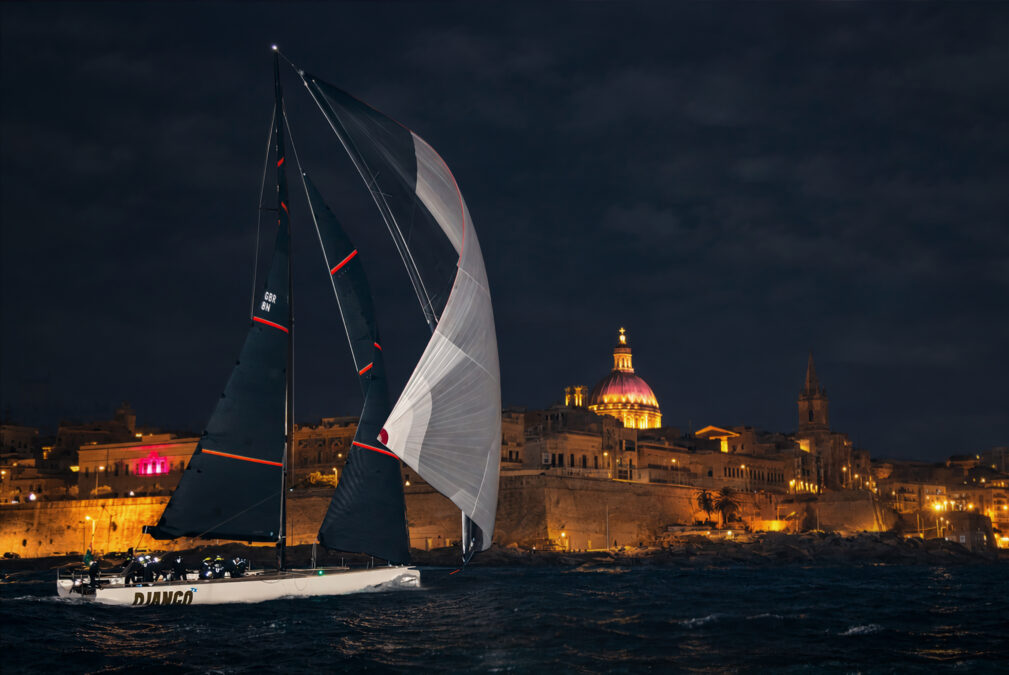
The battle for the overall victory pitted two state-of-the-art boats against each other: the Wallyrocket 71 Django 7x, owned by Italian Giovanni Lombardi, and the Mills 72 Balthasar, owned by Belgian Filip Balcaen, winner of the 2025 edition. The two boats traded the lead throughout the first half of the race, until Django 7x secured a decisive advantage as it reached the northwestern tip of Sicily. The stronger winds favored the boat, built in 2025 at the King Marine shipyard in Valencia, allowing it to consolidate its lead on the water. The rough conditions in the final stretch—with enormous waves and speeds nearing 30 knots—favored the Django 7X, which was crowned the overall champion of the 47th Rolex Middle Sea Race.
As he accepted the trophy and the commemorative Rolex amid unanimous applause from the sailing community in recognition of his feat, Giovani Lombardi highlighted the significance of this title: “Achieving this victory is incredible. I’m very proud, and we want to come back. Let’s hope there’s another victory, and another one after that. We love Malta, we love this race, and we love ocean racing.”
Nearly three thousand years separate Homer’s tales from modern racing yachts. The boats, instruments, and knowledge have changed, but not the essence of the challenge: reading the wind, adapting to conditions, and finding the way back home. Of the 107 boats that started the race, 92 managed to complete the course, and 15 fell victim to one of the “monsters” that inhabit these waters.
The 48th edition of the Rolex Middle Sea Race will set sail on October 16, 2027.