







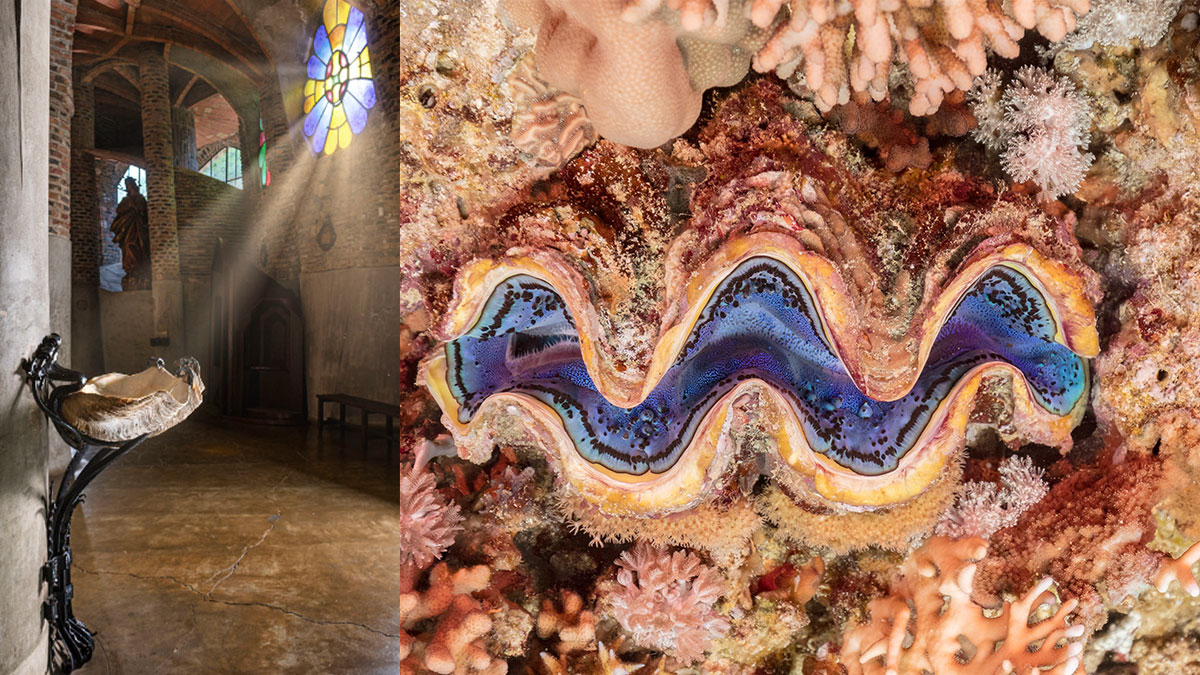
In the crypt of Colònia Güell, the holy water fonts are neither carved stone nor plaster replicas. They are real seashells—of the species Tridacna gigas—that grew in the tropical seas on the other side of the world. Antoni Gaudí incorporated them into the church he built for the workers of Eusebi Güell’s textile colony in Santa Coloma de Cervelló, about 23 kilometers from Barcelona.
This choice has a striking historical context. When Güell commissioned Gaudí to design the church in 1898, the Philippine Islands were still a Spanish colony, but Spain lost them before the end of that same year.
A gift from Güell’s father-in-law
The shells come from the Philippines and were given to Gaudí by the Marquis of Comillas, Eusebi Güell’s father-in-law and owner of the Transatlantic Company and the Philippine Tobacco Company: the ship that brought the shells was part of the former’s fleet. Each shell rests on a wrought-iron stand, also designed by Gaudí.
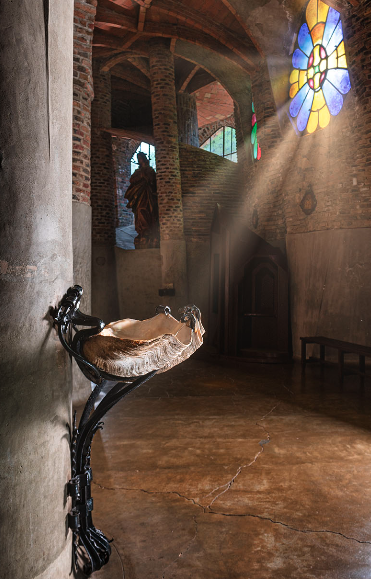
The architect himself placed the two original fonts in front of the two columns located at the entrance to the church. A third basin, installed later, serves as a baptismal font and is situated between the presbytery and the altar of the Virgin of Montserrat.
The Largest on the Planet
Giant clams are the largest bivalve mollusks in the world, and the largest species can reach 1.4 meters in length. Today, they are protected, and catching them in the Philippines is illegal.
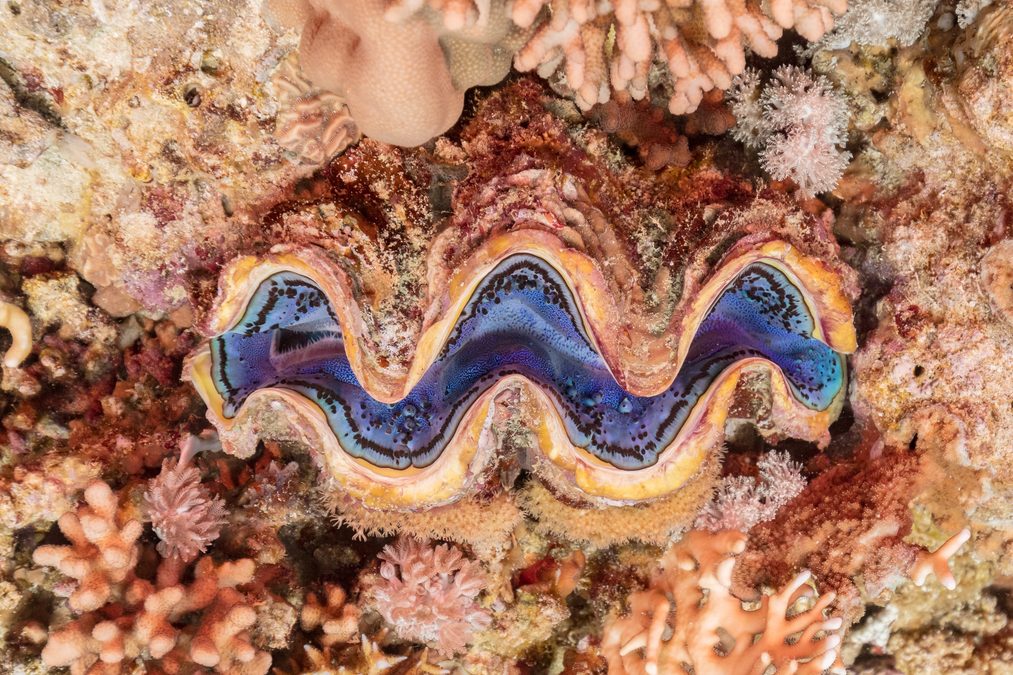
Gaudí was so taken with the idea that he even envisioned giant clam shells for the Sagrada Familia. This vision became a reality in 2010, more than 80 years after his death, when the Philippines donated six shells to the Barcelona cathedral.
As for the Güell Crypt, the businessman commissioned the project in 1898, and construction began in 1908. Gaudí designed a church with two naves—a lower and an upper one—topped by side towers and a central dome 40 meters high. In 1914, the Güell family stopped funding the work, and the architect abandoned the project.
Only the lower nave was ever built, which the bishop of Barcelona consecrated in November 1915; hence, the building is popularly known as the “crypt.” Between 1915 and 1917, another builder enclosed the upper nave with brick walls and corrugated asbestos-cement roofs. Today, the church—a UNESCO World Heritage Site—continues to host weddings, baptisms, and Sunday Mass.