








PALMA, 5 (EUROPA PRESS)
The Council of Mallorca will allocate 2.5 million euros to the restoration of 35 historic mills spread across 19 municipalities on the island.
The initiative, the island council announced in a statement, will allow for work to be carried out on 22 water-pumping mills, 12 flour mills, and one hydraulic mill.
The grants, which will be paid between 2026 and 2027, come from a multi-year funding plan financed by the Sustainable Tourism Tax (ITS). They cover 75 percent of the cost of each project, and the remaining 25 percent is contributed by each owner.
The 2.5 million euros will be supplemented by about 838,000 euros in private investment, bringing the total cost of the works to 3.35 million euros.
Of the 35 projects receiving funding, 25 are from private individuals and organizations, totaling 1.8 million euros. Five are from companies, for an amount of 365,901 euros, and the other five are from city councils, for a total of 324,951 euros.
The projects include the restoration of the Cala Banyalbufar watermill, the Molí d'en Soler in Puigpunyent, the Molí d'en Suau in Llubí, the Can Seda mill in Lloseta, and the Molí dels Germans in Son Servera, as well as other work on private mills throughout Mallorca.
The works include the restoration of both architectural elements and historical machinery, and must comply with heritage conservation criteria and the use of traditional materials and techniques.
"THE MILLS ARE PART OF OUR IDENTITY"
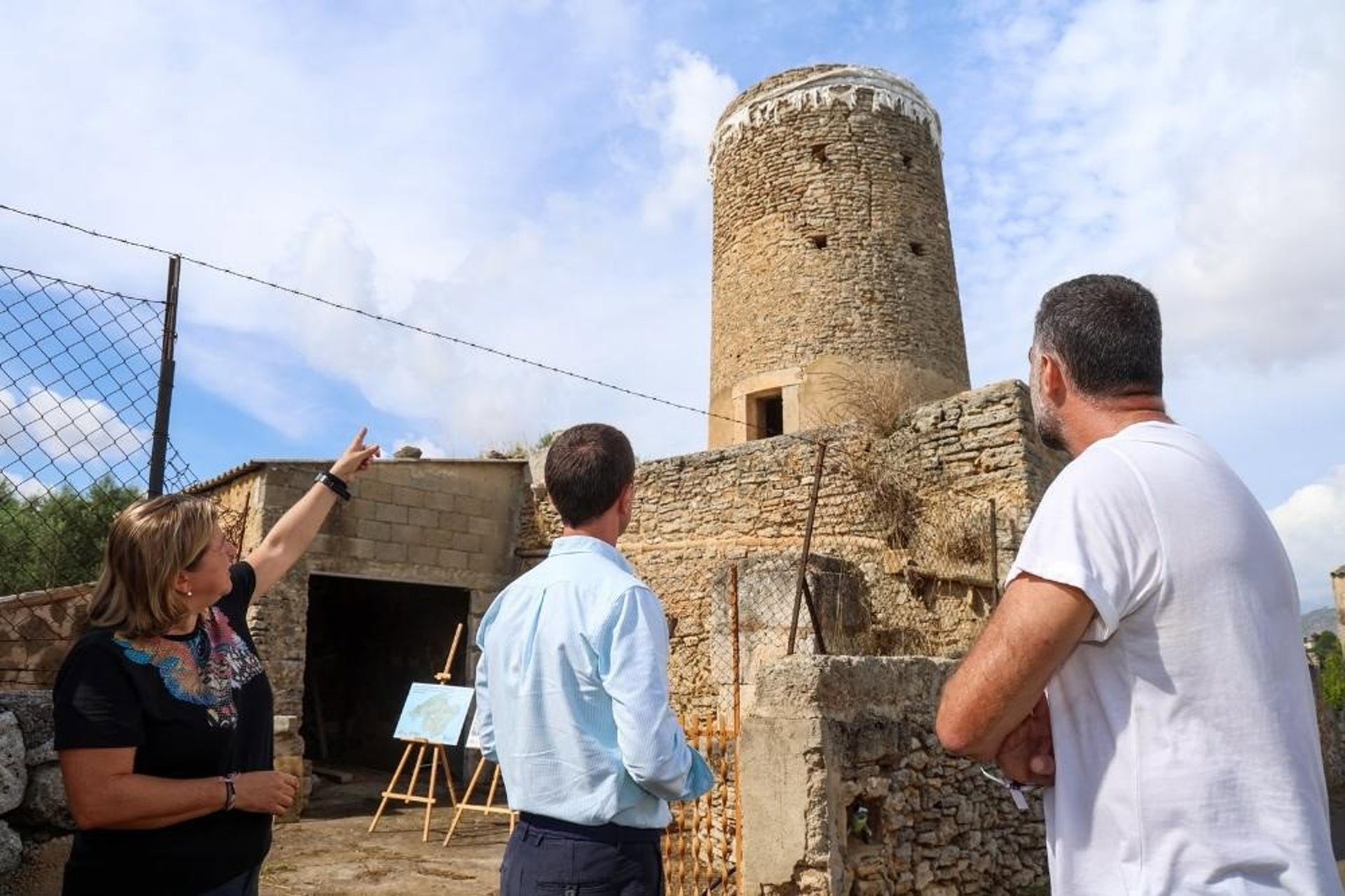
The President of the Council, Llorenç Galmés, and the island councilor for Culture and Heritage, Antònia Roca, visited the privately-owned Can Moreu mill on Monday, which will receive 150,000 euros for its restoration.
"The mills are part of our identity and the landscape we want to pass on to future generations," said Galmés. Roca, for her part, described it as "one of the most important investments in recent years in the preservation of Mallorca's mill heritage."
Meanwhile, the regional minister of Tourism, Culture, and Sport, Jaume Bauzá, stated that this investment of ITS funds "demonstrates the commitment to ensuring that the tourist tax directly and tangibly benefits society."
"The restoration of these mills is not only an example of inter-institutional collaboration and shared responsibility with private owners, but also proof that we are moving towards a tourism model that is valuable, regenerative, and respectful of the territory, while ensuring that the public can enjoy this heritage," he added.


