








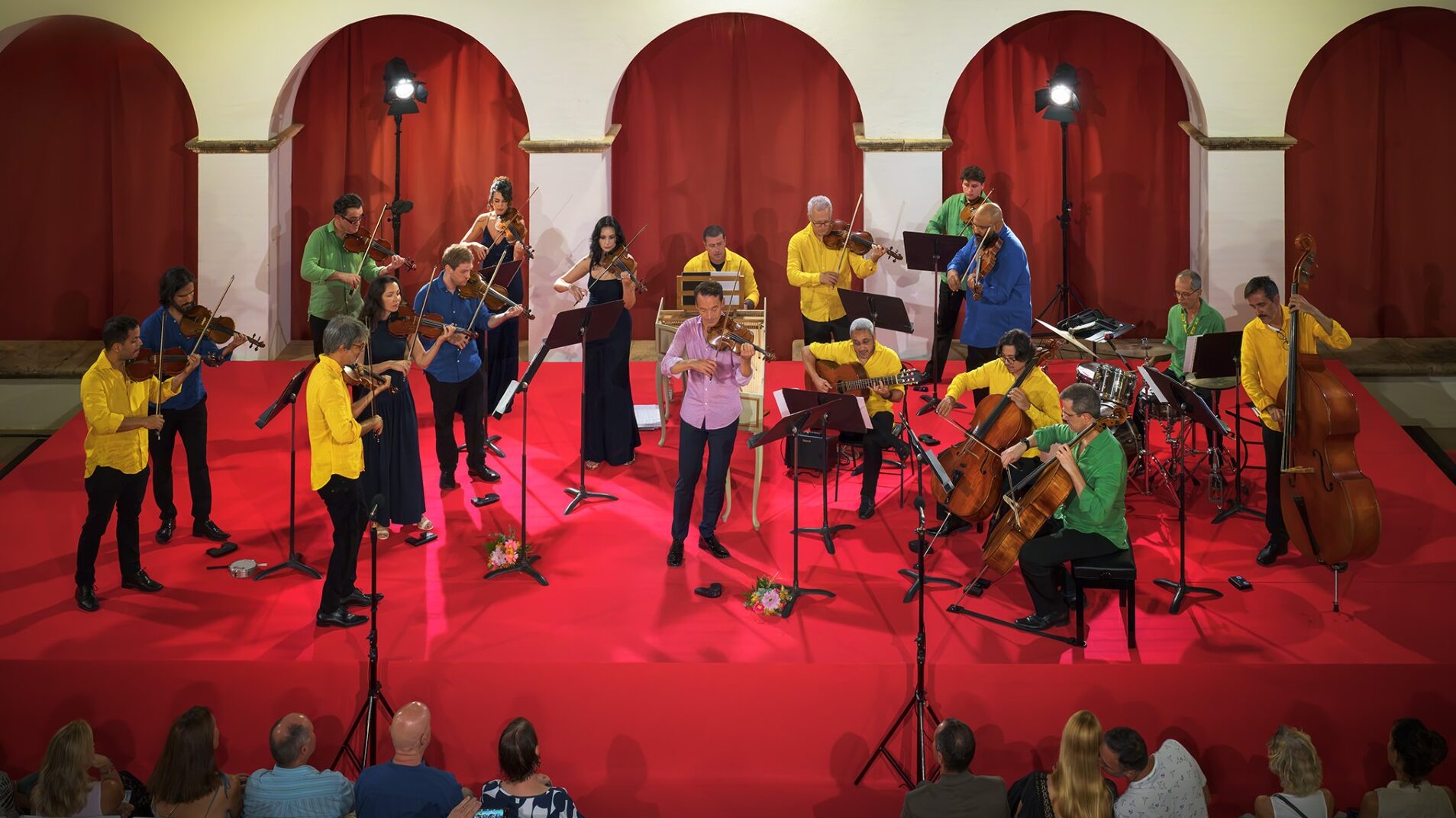
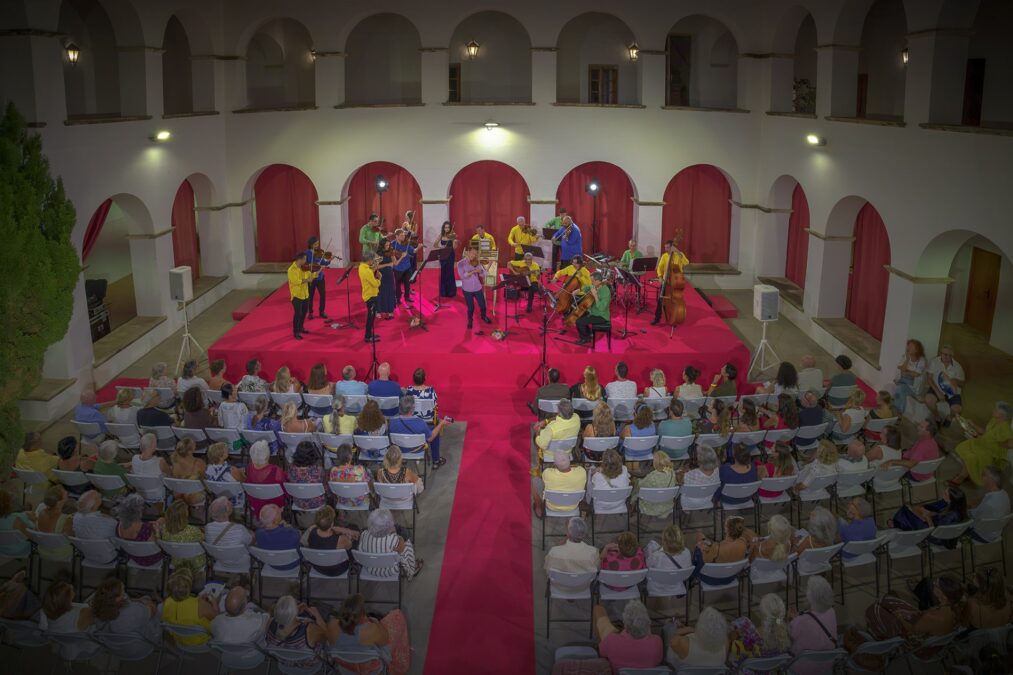
For three nights, the Cloister of the Dominicans in the Upper Town ceased to be merely a historic monument and became something quite more unusual: a venue capable of bringing together hundreds of people to enjoy the music of Bach, Vivaldi, samba, and bossa nova. The Ibiza Conciertos International Classical Music Festival closed its eighth edition, held from August 29 to 31, with sold-out tickets and a program that signals a growing trend in the cultural industry: classical music no longer needs to abandon its tradition to reach new audiences.
The program has had a clear star. German violinist Linus Roth, the festival’s artistic director, has turned Ibiza Conciertos into a project that combines interpretive excellence, an international program, and the deliberate desire to break from the conventional concert format. His 1703 Dancla Stradivarius shared the spotlight with the Johann Sebastian Rio Orchestra, which had traveled from Brazil to reinterpret some of the great works of the European repertoire from a Latin American perspective.
The result was more of a cultural experience than a traditional classical concert. The audience sang along, kept time, and at times even ended up dancing. This reaction encapsulates the main challenge—and also one of the great opportunities—facing classical music in the 21st century: how to preserve our musical heritage without turning it into an experience reserved for a specialized audience.
When Bach meets Brazil
The program for this eighth edition was built around this idea. On the first night, ‘SamBach: From Bach to Brazilian Samba’ put Johann Sebastian Bach’s Violin Concerto in dialogue with arrangements inspired by samba and bossa nova. On Sunday, it was the turn of Antonio Vivaldi’s The Four Seasons, juxtaposed—or rather, linked—with works by Brazilian composers such as Heitor Villa-Lobos, César Guerra-Peixe, Ernani Aguiar, Sivuca, and Gadelha. The festival concluded with a ‘Brazilian Night,’ conceived as a celebration of the country’s rhythms and musical diversity. The stage and the auditorium were practically transformed into a single space.
Beyond the artistic experience, the approach reveals an interesting strategy: using a universal repertoire as a gateway for an audience that might not otherwise be drawn to a conventional classical concert. Instead of lowering artistic standards, Ibiza Conciertos opts to change the context and the way this excellence is presented. “This year’s festival has been extraordinary. To see the Cloister full all three nights and to hear the Ibizan audience let themselves go with the music in this way has been deeply moving,” explains Linus Roth. “This was precisely our dream with SamBach: to show that Bach, Vivaldi, samba, and bossa nova can go together naturally, and that music doesn’t need borders when it’s played with freedom, respect, and emotion.”
The festival takes place in a region whose international reputation has historically been associated with leisure, gastronomy, and high-end tourism. In this context, culture can play a strategic role: expanding Ibiza’s narrative and helping to position it as a cultural destination as well. The Dominican Cloister, in Dalt Vila, also offers an asset that is difficult to replicate. The combination of historical heritage, music, and an open-air setting makes each concert an experience that is hard to replicate in a conventional concert hall.
It is precisely here that initiatives like Ibiza Conciertos derive part of their value. It is not just about bringing international performers to the island, but about using the island itself as part of the cultural offering. Promoted and under the artistic direction of Linus Roth, with the support of the Ibiza City Council and the Ibiza Council, the festival is celebrating its eighth edition. The goal is to bring world-class artists to Ibiza and, at the same time, expand the audience for classical music.
Culture with social impact
The project has also developed a second dimension offstage. Since its early editions, Ibiza Conciertos has maintained a collaboration with the Ibiza and Formentera Cancer Association (IFCC), to which it donates the funds raised at its concerts and with which it organizes musical activities for patients and their families.
Roth also organizes visits to hospitals and other centers on the island to perform for cancer patients. “Music is also therapy,” says the violinist, who believes it is essential for the festival to maintain this bond with the local community. In this case, culture serves not only as entertainment or as a tool to promote tourism, but also as a means to foster social connection.
The eighth edition of Ibiza Conciertos leaves us with a conclusion that goes beyond its three nights of programming. At a time when cultural industries are competing to capture the attention of an increasingly fragmented audience, the challenge does not necessarily lie in changing the content, but in finding new ways to experience it.
After three nights of sold-out performances, Ibiza Conciertos has closed its eighth edition with a simple idea that has far-reaching implications: classical music can preserve its historical value while reinventing the way it reaches its audience.
