








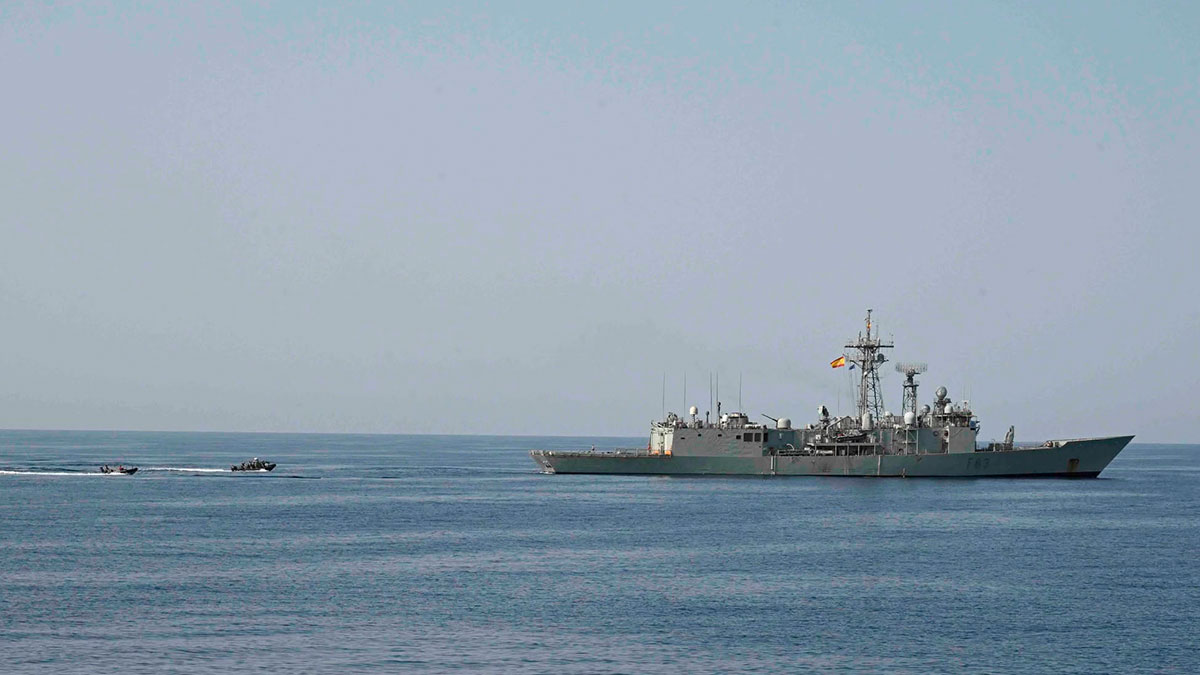
The waters off the Horn of Africa are experiencing the biggest surge in piracy in more than a decade. After years of relative calm since the peak in 2010 and 2011—when more than 1,000 attacks were recorded and some $400 million in ransoms were paid— kidnappings have returned to the region with an escalation that has alarmed shipping companies, insurers, and international organizations alike.
According to analysts, the perfect storm has come together, allowing this threat to resurface. First, there has been a significant cut in international aid. For example, U.S. aid to Somalia fell from $476 million in 2024 to just $3 million in the first few months of 2026, weakening the programs that had been curbing pirate recruitment.
U.S. foreign policy may also be behind the second cause of the spike: the diversion of naval surveillance. The conflict between Iran and the United States, along with Houthi attacks in the Red Sea and the Bab al-Mandeb Strait, has forced international warships to focus on those routes, leaving the Horn of Africa with less protection.
Third, analysts point out, Somalia is in the grip of an unprecedented drought, leaving some 6 million Somalis facing critical food insecurity and a real risk of famine. With the value of oil and gas shipments on the rise, piracy offers the temptation to secure million-dollar ransoms in one of the world’s poorest economies. According to the Global Initiative Against Transnational Organized Crime, pirates demanded $10 million for the Eureka, which was hijacked on May 2, while the Chinese fishing vessel Liao Dong Yu 578 was released in March after a ransom of between $1.2 million and $1.5 million was paid.
A Worrying Summer
On August 17, eight armed pirates boarded the Cameroonian-flagged but Turkish-cargoed freighter Lutuf just four nautical miles off the Somali coast as it was heading toward Mogadishu. Its cargo, destined for Turksom—Turkey’s largest military base outside its borders—consisted mainly of military equipment: weapons, drones, and satellite equipment. The ship had set sail in late July from the port of Tekirdag, home to the facilities of drone manufacturer Baykar.
Three days later, on August 20, six armed men boarded the oil tanker Sibu 1 (also known as the Seamull) 136 nautical miles east of Al Mukalla, Yemen, and diverted it toward Somalia. According to the ten-member crew (six Indians, one Turk, one Georgian, and two Serbian security guards), the attackers approached from the Sward, another previously hijacked freighter—a tactic that allows them to blend in and move away from the coast without arousing suspicion.
Several maritime security experts, including Corey Ranslem of Dryad Global and Matt Reisener of the Center for Maritime Strategy, warn of signs of cooperation between Somali pirates and Yemeni Houthi rebels, including a possible exchange of intelligence, training, and weapons. A formal alliance with Al Shabaab, they note, could put Houthi technology—such as drones and guided missiles—into the hands of the pirates, drastically increasing the risk to international maritime traffic. However, other analysts, such as Omar Mahmood (Crisis Group), believe that the evidence for such an alliance is “quite scarce” and that it would make little sense, given that the interests of the two groups are diametrically opposed.
International Response
Command of Combined Task Force 151—a force comprising 47 countries (including Spain) dedicated to combating piracy outside territorial waters—passed from British to South Korean hands on August 24, following a campaign in which the outgoing contingent responded to 25 incidents in an area of operations spanning more than three million square miles.
The European Operation Atalanta, whose mandate runs through February 28, 2027, continues to include among its functions the protection of vulnerable ships and the suppression of piracy in the region.
Yemen, for its part, announced this week the creation of a National Maritime Security Committee to protect its shipping lanes in the Red Sea, the Gulf of Aden, and the Bab al-Mandeb Strait.
Turkey, the Somali government’s main military partner, has deployed ships, helicopters, and drones to the area, and has already carried out at least one airstrike against pirate positions along the coast.