






PALMA, 24 (EUROPA PRESS)
The sinking of the Roman ship at Ses Fontanelles – a late Roman vessel from the 4th century AD that sank 1,700 years ago off the coast of Palma Beach, and whose investigation is led by the Council of Mallorca – has been preselected for the third edition of National Geographic's +Historia awards, in the category of Best National Historical Discovery or Find.
The nomination for the Mallorcan site competes with four other archaeological finds of national significance, including a funerary epigraphic collection found in Cádiz, the Roman sanctuary of Cova de les Dones (Valencia), a collection of beads from a prehistoric funerary complex documented in Seville, and the funerary complex of the Alarcos Archaeological Park (Ciudad Real), according to a press release from the island institution.
The winner of each category will be decided by popular vote, open until October 12 through the National Geographic Historia website, which makes this nomination an opportunity to bring national recognition to the historic achievement the Council of Mallorca has just accomplished at Ses Fontanelles.
A RECENTLY COMPLETED MILESTONE: THE COMPLETE RECOVERY OF THE SHIPWRECK
Notably, on June 29, the Mallorca Council completed the full recovery of the Ses Fontanelles wreck, concluding a four-month archaeological operation carried out in collaboration with the University of the Balearic Islands (UIB), the University of Barcelona, and the University of Cádiz.
The operation, which began on March 10, has allowed for the complete recovery of the shipwreck's remains to ensure their conservation and study, a milestone for underwater archaeology in the Mediterranean.
A team of about 15 people worked non-stop, dismantling the vessel from top to bottom and from the outside in, until the last two and largest sections of the hull—each nearly 12 meters long—were extracted from the seabed.
After being refloated with buoyancy bags and transported by sea to the San Antonio de la Playa Maritime Club, the sections were moved to the Castle of St. Charles, where they will remain submerged in desalination tanks for approximately a year and a half.
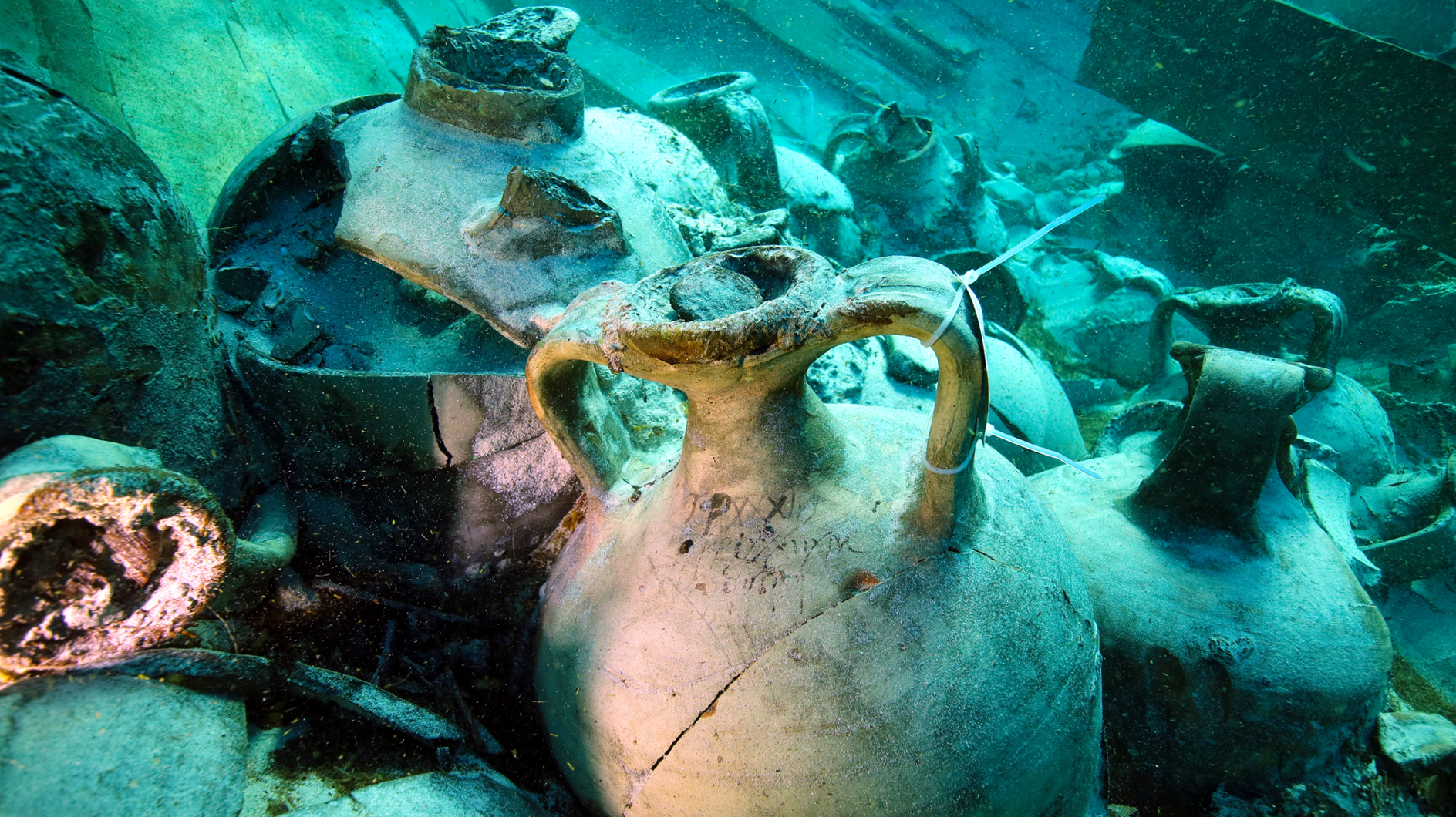
In parallel with the extraction, the excavation of the site's perimeter has allowed for the recovery of materials of extraordinary scientific value, such as nearly complete amphorae, fine-decorated tableware, North African cooking utensils, animal remains, four anchors—some with their original knots still intact—about 90 meters of rope, two complete plant-fiber baskets, a pulley, a sounding line, and remains of the ship's linen sails, which have allowed us to document for the first time how they were made.
After desalination, the wood will be transferred to the ARQVAtec laboratory of the National Museum of Underwater Archaeology in Cartagena to be restored using polyethylene glycol (PEG) impregnation and freeze-drying; Additionally, the ship's architecture will be studied, radiocarbon dating will be performed, and all recovered materials will be cataloged.
Starting in November, the Council of Mallorca will also present an exhibition dedicated to the shipwreck at the La Misericòrdia Cultural Center, where the public can learn firsthand about the story of the discovery and the entire scientific process carried out since its discovery.
Now in its third edition, the +Historia Awards, organized by National Geographic Historia, recognize the year's most outstanding projects, discoveries, and figures in the fields of history and archaeology in Spain, through a popular voting system accessible from its website.