








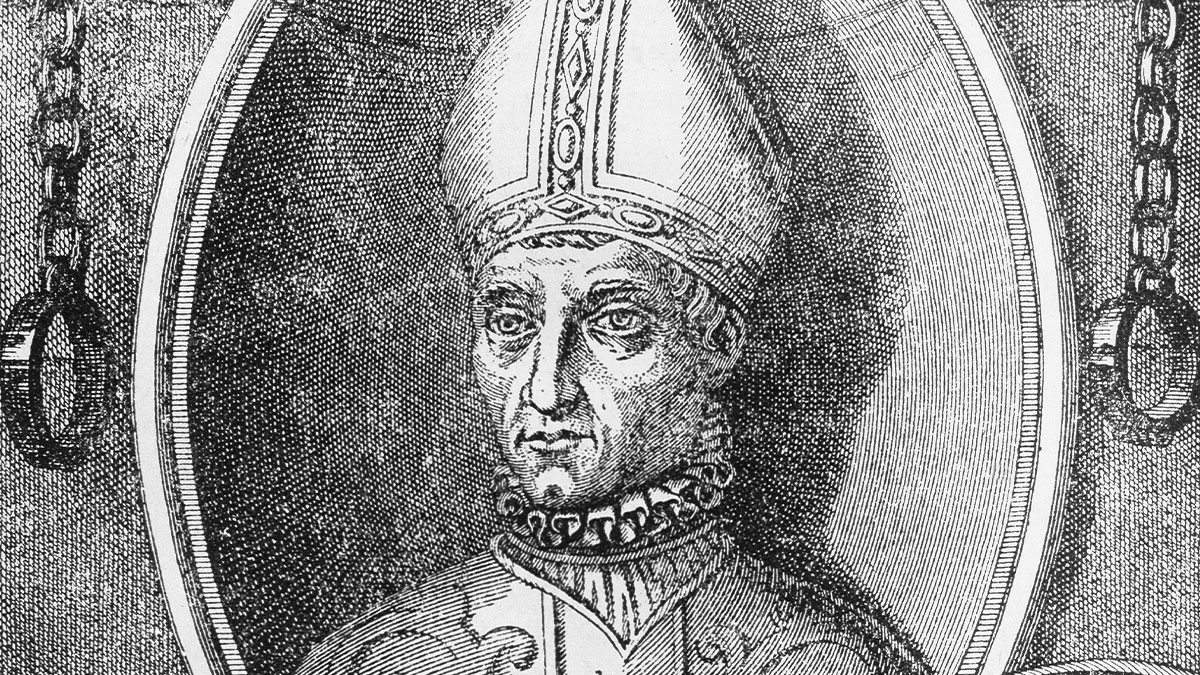
The Mare Nostrum has been ravaged by piracy since the dawn of history. Let’s travel back to the 14th and 15th centuries. At that time, the greatest danger in the Mediterranean Sea was not storms or tempests, but the dreaded pirates and privateers, with the Barbary pirates striking the most fear into the hearts of sailors. These Muslim privateers belonged to various ethnic groups and were led by the Barbarossa brothers, who were allied with the Ottoman Empire and based in North Africa—also known as the Barbary Coast (Algeria, Tunisia, and Libya). Their areas of operation were the Spanish, Italian, and French coasts, where they attacked merchant ships and galleons. In addition to seizing Christian ships and those of the Papal States, they sometimes took the cargo, but they also captured hostages to demand ransom for them or to sell them as slaves in the Algerian market, the largest in North Africa.
Naples: Prosperous, Walled, and Under Threat
As we have mentioned, the Barbary pirates were the most feared corsairs in the Mediterranean and a constant threat to the Italian coasts, especially those of the Kingdom of Naples, which was one of the most prosperous and populous cities in Europe, where important business was conducted and large sums of money changed hands, in addition to serving as a strategic control point for maritime routes. For this reason, the Neapolitans had to build an impressive defensive system of fortifications that shielded the city from any attack by corsairs, other pirates, or the Ottoman fleet. Today, these fortifications remain standing as a historical testament.
Among these clashes with pirates, one stood out for its unscrupulousness and immorality. Baldassarre Cossa (Island of Procida, 1370–Florence, 1419) was one of the chief scourges of King Ladislaus I of Anjou-Durazzo, known as “the Liberal” (Naples, 1376–1414), a member of the House of Anjou and anti-king of Hungary from 1403 to 1414. This king controlled much of southern Italy and financed Cossa’s rivals in an attempt to capture him, but to no avail.
The Schism of All Schisms
The most curious thing about the whole affair is that the pirate who threatened King Ladislaus I himself and the Catholic Church rose in 1410 to the highest rank in Christendom, under the name of John XXIII (not to be confused with the 20th-century pontiff known as “the Good Pope”). He did so during the “Three Popes” crisis, in which three rival claimants vied for the throne of St. Peter following the death of Pope Gregory XI: aside from Cossa as John XXIII, two cardinals were vying for the Fisherman’s Ring: Gregory XII of Rome and Benedict XIII of Avignon (known as Pope Luna). All claimed to be the legitimate pope.
This led to the convening of a conclave—known as the Western Schism or the Avignon Schism—with the aim of deposing the three popes, because most European monarchs and cardinals had withdrawn their financial and political support from them. This surreal episode of political and religious division was finally resolved at the Council of Constance (1414–1418), which deposed the three popes and unified the Catholic Church under the leadership of Pope Martin V, thus ending the reign of the “antipopes.” John XXIII was forced to abdicate and submitted his resignation, although he was later arrested and imprisoned. After his election, Martin V released him, and in exchange, Cossa pledged obedience to him as the supreme head of the Church. The new pope reinstated him to the College of Cardinals and appointed him Cardinal Bishop of Frascati (Tusculum).
A leg as a banner
But who was this peculiar figure who was first a privateer, then a pope, later an antipope, and finally a bishop? The first unusual detail about Baldassarre is that his last name was not Cossa, but Coscia, which means “leg” in Italian. This is a very important detail regarding his papal career, because when he became pope, he decided to add a leg to the papal coat of arms (which features two crossed keys) as a reference to his real surname, Coscia.
Born into a noble and large family of sailors who had fallen on hard times, he tried his luck in the army in his youth, but since discipline wasn’t his thing, he left to devote himself to smuggling and highway robbery on the roads around Naples. Given his past as a sea dog, he later, along with his brothers, he turned to piracy, where greater wealth could be gained by boarding the merchant ships of the Provençal Anjou, the Florentine Medici, and the Genoese clans that sailed the Adriatic and Ionian Seas bound for Egypt and Constantinople. He later allied himself with the Medici family (his patrons when he was made a cardinal) to attack merchant ships and became their financial advisor. They sold those they captured to the Saracens, and if there were women among them, they raped them first.
A Divine Calling
Baldassarre, the sharpest of his family, quickly amassed a great fortune, which he kept on Procida, the island where he was born, and he realized that the life of a pirate, while exciting, still carried the risk that he might end up in prison, or be hanged or beheaded. After hearing a divine calling, he felt he had to give up his life of crime and devote himself to serving the church, which carried less risk and could provide him with greater financial rewards.
The first thing he did was improve his manners and learn Latin. Later, he enrolled at the University of Bologna—the oldest in the Western world—in the canon law program, where he earned his doctorate. He couldn’t shake his unscrupulous ways, so before long, he became notorious for extorting money from his classmates in exchange for sparing them beatings, for frequenting brothels, and for visiting convents to seduce nuns.
Boniface IX, his great patron
His life changed when Pope Boniface IX visited the University of Bologna—which was under the control of the Roman Church—and met Cossa. Since both were Neapolitans and spoke the same dialect of their hometown, they hit it off immediately. Shortly thereafter, Boniface IX took Baldassarre to Rome as his private chamberlain and assigned him to manage the papal finances. There, he began handling off-the-books income and commissions, and grew even wealthier.
Having earned the trust of Boniface IX, the pope offered him the position of cardinal (if he could pay for it). This is where Giovanni de’ Medici comes in, as he financed the purchase with 10,000 ducats. Following the death of Alexander V in 1410, Cossa was named his successor. As we mentioned, he was eventually deposed, imprisoned, released, and appointed bishop by order of Martin V. He died in 1419—the same year he was appointed—at the age of 49. His remains rest in a marble and bronze tomb in the baptistery, adjacent to the Cathedral of St. John in Florence. The inscription, flanked by two angels, reads: “John, the former Pope XXIII.”