








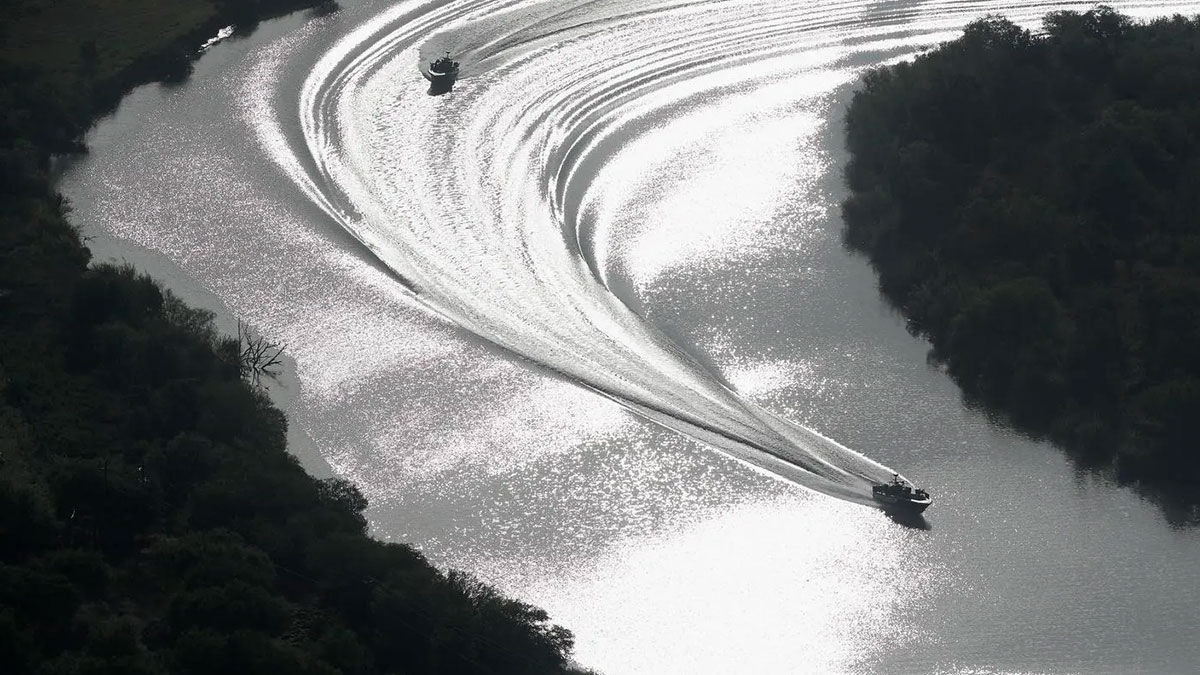
The Pentagon’s Southern Border Joint Task Force, which was activated in March of last year, is using autonomous Unmanned Surface Vehicles (USVs) to patrol extensive stretches of the Rio Grande (Rio Grande) in order to deter drug traffickers.
Also known as drone boats, these vessels operate as security patrols alongside military and law enforcement personnel, with the added advantage of identifying blind spots and monitoring hard-to-reach areas.
The Department of Defense revealed that the manufacturer Seasats is supplying the task force with its solar-powered Lightfish vessels for the mission on the southern border.
An autonomous early warning system
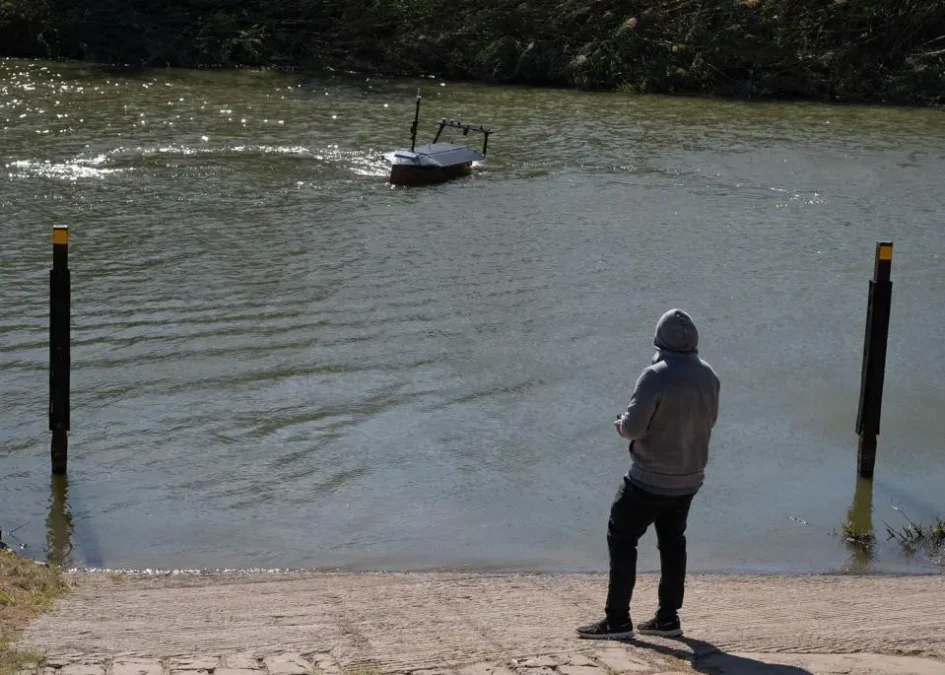
Seasats previously partnered with the U.S. Navy to send the Lightfish on a nonstop voyage across the Atlantic to Portugal last year. The vessel broke speed records by reaching its destination just over two months after setting sail from Florida.
It is now being used to reinforce U.S. Coast Guard vessels and other military and law enforcement ships tasked with patrolling the Rio Grande.
Seasats CEO Mike Flanigan noted in an interview that the Lightfish is designed to provide detection and early warning to members of the task force during this mission.
“It’s certainly a challenging environment,” Flanigan said. “When the Coast Guard first proposed this project, I know they considered many USVs. I’ve never heard of another USV operating on the Rio Grande, and I think that’s because it presents so many challenges.”
Deterring Smuggling Through Patrols
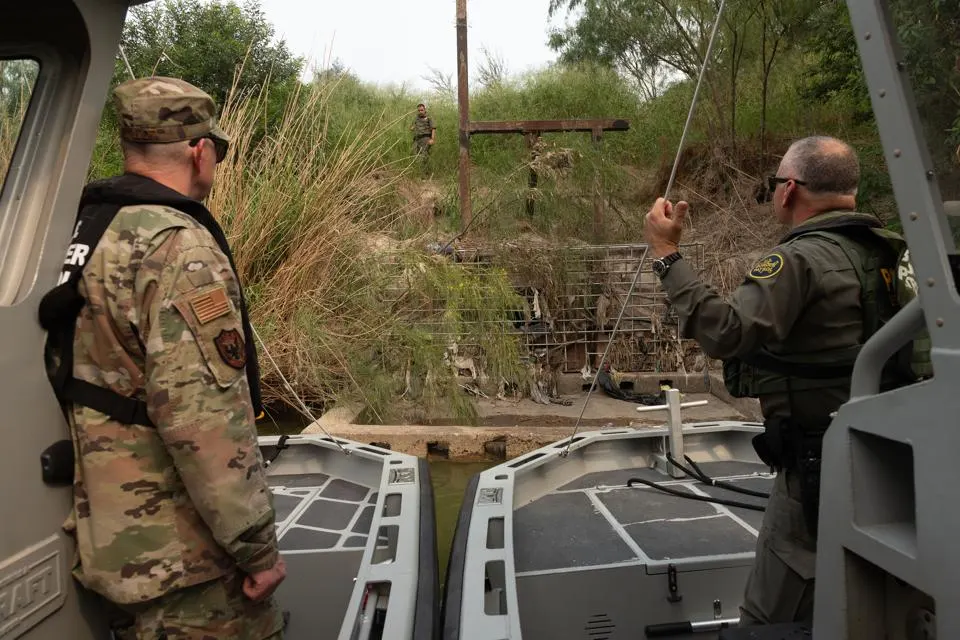
From left, General Gregory Guillot, commander of U.S. Northern Command, and U.S. Border Patrol shift supervisor Rubén García inspect a tunnel previously used to smuggle illegal drugs across the Rio Grande in Texas in May 2025. Unmanned surface vehicles are currently being used to deter smugglers. (U.S. Army photo by Sgt. Caleb Woodburn). U.S. DEPARTMENT OF DEFENSE
These challenges include strong currents and obstacles both above and below the water, such as logs, roots, and dense mud banks. Flanigan explained that the Lightfish’s compact design and ruggedness allow it to operate almost continuously and without supervision.
“I think the reason you don’t see other autonomous boats operating on the Rio Grande is that, for these security missions, they only work if the vessels can stay out there for weeks or months without maintenance or support.”
“Although we have support staff who look after and maintain the boats, generally speaking, when these vessels are operating properly, they spend long periods of time out there without anyone touching them.”
The Rio Grande has long been a corridor for drug trafficking. A 2007 report by the National Drug Intelligence Center noted that the river was easily and frequently crossed by cross-border drug traffickers, who were often equipped with military-grade weapons, such as assault rifles, which they frequently used to fire upon law enforcement officers.
“These smuggling operations involved transporting shipments across the river before they were ‘loaded onto waiting vehicles to be transported to a hiding place or concealed in the vegetation until they could be retrieved,’ the report stated.”
Problems with smugglers and the relative shortage of U.S. Border Patrol agents exacerbated the situation for many years.
Currently, the working group is filling these gaps by using Lightfish USVs, which are equipped with cameras, built-in artificial intelligence, and depth sensors.
A multi-layered security network
Operators can remotely adjust the speed at which the vessels operate. USVs can navigate around obstacles and use their sensors to report activity to end users.
“Their ability to operate continuously while remaining unpredictable makes them effective security patrols,” Flanigan explained.
“Just like security guards, [the Lightfish] can be hard to predict,” he said. “Basically, it can cover a larger area more cost-effectively and efficiently. Instead of individual fixed installations that have blind spots, it can cover a wider area.”
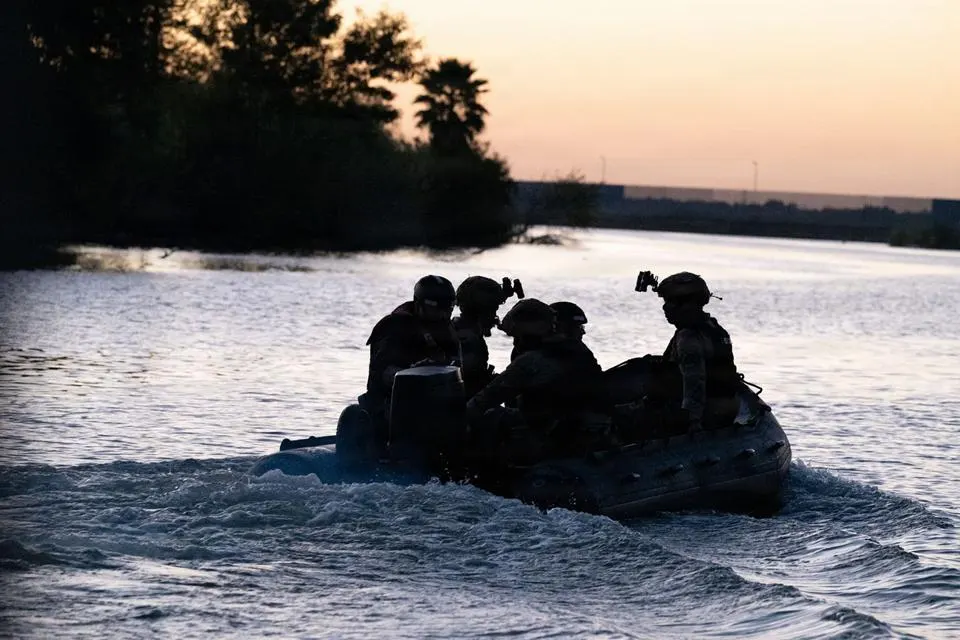
The vessels are part of a multi-layered security network that includes patrol boats manned by military and law enforcement personnel. The autonomous vessels are used to extend the range of manned patrols.
“One of the benefits of Lightfish has been that we’ve been able to reassign its tasks in collaboration with end users to move them to where they’re needed most,” Flanigan concluded.
As unmanned vehicles proliferate in the air, on land, and at sea, their current use by the Joint Southern Border Task Force demonstrates that AI-powered machines can also be effectively deployed in confined areas as security guards. It demonstrates that autonomous systems can function as sentinels in challenging environments and suggests that drone patrols could be used to enhance a wide range of security systems and expand into the private sector in the future.