









In a market where water toys are constantly striving to impress with greater speed, power, or technology, Subwing offers something different: transforming the underwater experience into a smooth, silent flight. This towable device, designed to glide underwater while a boat pulls it at low speed, has become one of the most original water sports gadgets in recent years. Its concept blends sports, marine exploration, and family fun into a compact and surprisingly accessible package.
An underwater wing for exploring the ocean
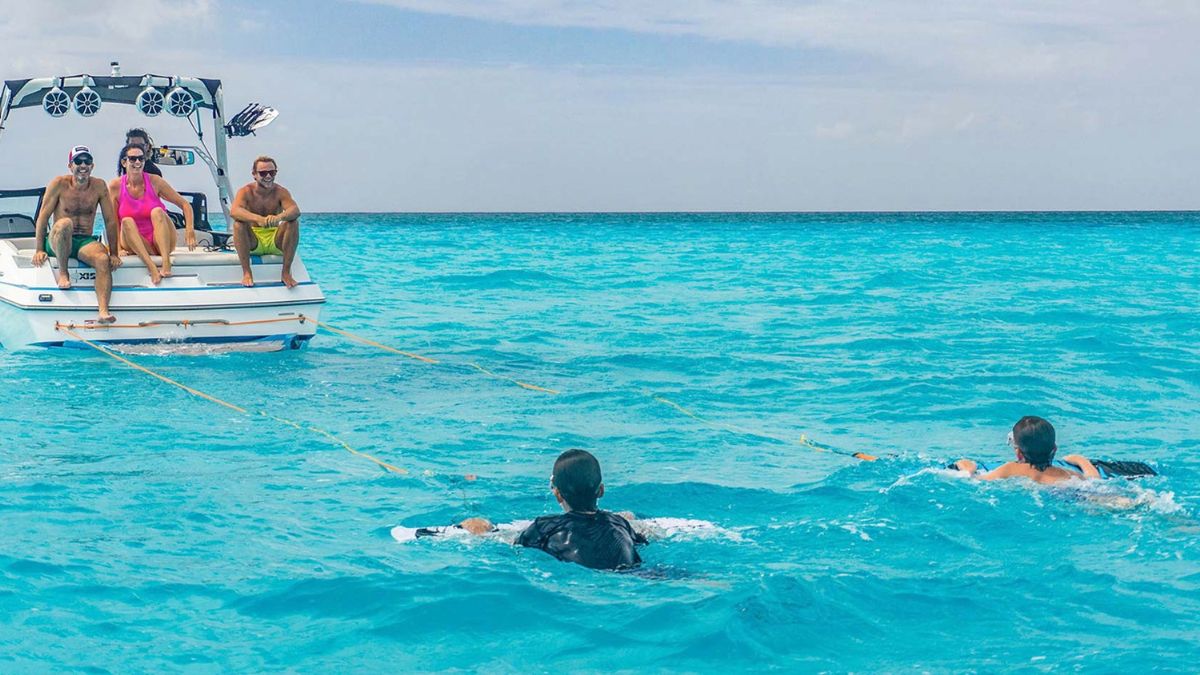
The concept behind Subwing is simple, even though it looks spectacular. The system consists of two wings connected by a rotating shaft that allows each wing to be angled independently. The user holds onto the device while a boat tows them at a moderate speed—between 2 and 4 knots—and steers by tilting the wings.
The result is a sensation very similar to underwater flight. The user can dive, surface, spin, or perform smooth maneuvers using only the hydrodynamics of their own body and the wing. The brand describes the experience as a blend of free diving, water gliding, and recreational sports.
Unlike other motorized watercraft, the Subwing has no motors or batteries. All propulsion comes from the boat towing it, which reduces weight, mechanical complexity, and maintenance.
A gadget designed to make underwater “flight” accessible to everyone
One of the most interesting aspects of the product is its clear focus on the general public. The company emphasizes that no prior experience with extreme water sports or exceptional physical ability is required to use it.
The controls are intuitive, and the physical effort required is relatively low, as the device uses the boat’s wake to generate lift. According to the company, just a few seconds underwater are enough to enjoy the experience, which also makes it suitable for users who do not practice freediving.
This approach is particularly well-suited to the rise of recreational gadgets linked to nautical tourism and vacation charters, where ease of use and the visual experience are key factors.
Compatible with almost any boat
Another of Subwing’s strongest selling points is its compatibility with relatively small boats. The manufacturer claims that it can be used with small motorboats, jet skis, dinghies, or small recreational boats thanks to the low speed required to tow it.
The frame is made of ABS polymer using honeycomb technology to reduce weight and improve strength. In addition, the wing can be disassembled into two parts for easy transport and storage, an important feature for boat owners with limited storage space.
The brand currently offers several color variants of the product—such as Shark, Hexagon, and White Flame—along with specific accessories like GoPro mounts, carrying cases, and diving masks.

An accessory that bridges the gap between sports and premium entertainment
Although it may visually resemble certain freediving or recreational diving devices, Subwing is more closely aligned with the nautical lifestyle segment. Its compact design, low learning curve, and striking visual appeal make it a particularly attractive accessory for resorts, water sports companies, and recreational boat owners.
The proposal is not intended to replace traditional water sports, but rather to offer a different experience: one that is more contemplative, more fluid, and clearly geared toward premium entertainment.
At a time when the marine industry is increasingly focusing on gadgets designed to enhance the experience and provide immersive entertainment, Subwing proves that there is still room to reinvent something as basic—and as fascinating—as gliding underwater.