








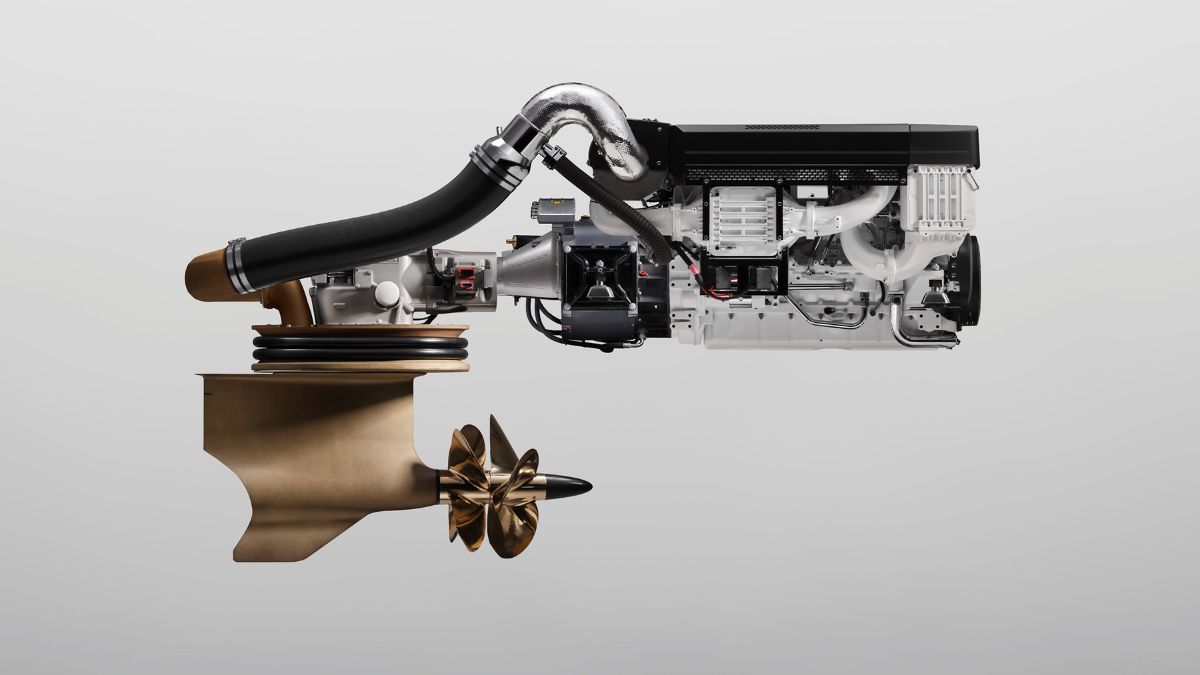
Volvo Penta has unveiled the first details of its new D13 IPS Hybrid propulsion system for yachts, which is scheduled for commercial launch in late 2026. The Swedish company is committed to a comprehensive “helm-to-propeller” solution that integrates propulsion, electric motors, batteries, energy management, and controls into a single platform, based on Volvo Penta’s proven IPS technology. The goal: to enhance the boating experience, simplify construction, and optimize maintenance for high-end recreational boats.
A new generation of hybrid propulsion for yachts
With the new D13 IPS Hybrid, Volvo Penta is taking a decisive step toward more efficient, quieter, and more sustainable boating. The system is designed to provide an intuitive user experience, with full integration among all components of the platform.
The propulsion system allows the yacht to operate in three different modes—electric, hybrid, and crossover—adapting to various sailing conditions. In all-electric mode, the yacht can maneuver and cruise at low speeds with minimal noise and vibration, enhancing both onboard comfort and access to environmentally sensitive areas or those with emissions restrictions.
In addition, high-capacity batteries allow the ship’s hotel services to be powered without the need for auxiliary generators, ensuring a quieter environment during overnight stays at anchor.
Seamless integration for a more intuitive user experience
One of the technological cornerstones of the new system is its fully integrated architecture, powered by Volvo Penta’s Electronic Vessel Control (EVC) platform. As a result, advanced features such as Joystick Driving, Assisted Docking, autopilot, and Glass Cockpit operate seamlessly and precisely in any propulsion mode.
The Swedish brand particularly highlights the boat’s maneuverability at low speeds and during docking maneuvers, areas in which the integration of electrical and mechanical systems allows for more refined and natural control.
Hanna Ljungqvist, head of Volvo Penta’s Marine Business division, emphasizes that the new system “simplifies everything from design and installation to operation and maintenance, while also enhancing onboard comfort and performance.”
Benefits for shipyards and designers
Volvo Penta’s “one-stop shop” approach also aims to make life easier for shipyards and naval design firms. By consolidating propulsion, batteries, controls, and energy management under a single supplier, the company reduces integration complexity and streamlines construction processes.
Standardizing the IPS footprint also eliminates the need for complex shaft alignments and facilitates an installation that is closer to a plug-and-play setup. This allows for greater flexibility in interior design, including more compact engine rooms and better use of living space.
According to Nicola Pomi, Vice President of Yacht & Superyacht Sales at Volvo Penta, collaborating from the earliest stages of the project helps optimize the vessel’s overall performance and streamline integration into production.
Energy efficiency and emissions reduction
The new hybrid system has been developed to meet the most stringent environmental regulations. It is compatible with the renewable fuel HVO100, which can reduce emissions by up to 90% compared to conventional diesel, and incorporates a compact exhaust gas aftertreatment system certified under IMO III regulations.
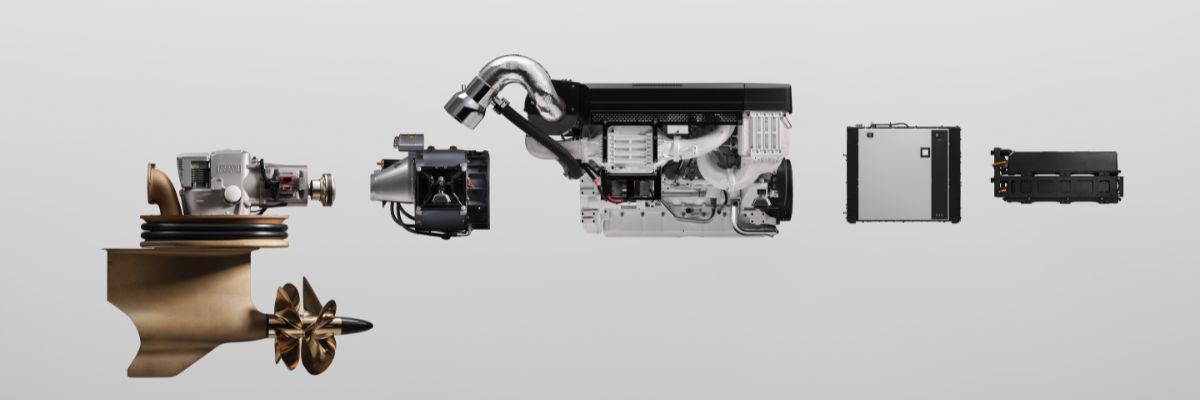
The technical specifications include propulsion power ratings ranging from IPS900 to IPS1350, with 160-kW electric motors and various battery capacity options. The system also incorporates an advanced electrical distribution and energy management system designed specifically for demanding marine applications.
The batteries, developed specifically for this hybrid platform, use LFP chemistry, offer high energy density, and have received DNV Type Approval. The system features continuous monitoring, built-in protection functions, and the ability to recharge while driving.
Global service and centralized support
Another key selling point for Volvo Penta is the simplification of maintenance and technical support. By taking responsibility for the entire propulsion system, the brand offers a single point of contact for shipowners and captains, backed by its international service network and advanced diagnostic capabilities.
The company believes that this full integration not only improves operational performance but also provides peace of mind for the owner by reducing incidents and making it easier to resolve issues anywhere in the world.
With this launch, Volvo Penta is strengthening its strategic position in the premium hybrid propulsion segment for yachts, paving the way for a new era characterized by electrification, energy efficiency, and full system integration.