








I wake up in Bali. The port where I am, currently under construction, is where all the large fishing vessels of the Indonesian fleet are gathered. These wooden behemoths are in such poor condition that I doubt they’re even seaworthy. They all look the same, as if they were mass-produced. The paint—each one a different color—and the various battle scars are what set them apart from one another. I’d like to see what they look like inside, what the engine room is like, and what engines they use. From books I’ve read about Southeast Asian fishermen, I know that hygiene isn’t a priority and that conditions for the fishermen are very harsh.
The boats are moored side-by-side along the concrete dock. For every boat touching the concrete, on the opposite side there are about 20 more boats moored together. At low tide, they rest on the muddy bottom. There’s always a lot of activity in the area where the fishermen are: unloading fish, loading ice to preserve the catch, the sound of engines, and maintenance work. I like to stroll through the commotion and observe their way of life. Talking to a local fisherman, he tells me they can be out on the high seas for anywhere from weeks to months, depending on what the captain decides. To be honest, the boats don’t look to me like they’re in good enough condition to sail for that many days.
It’s early November, and the cyclone season in the Indian Ocean is already beginning. It’s time to make a big decision. I have to decide whether to cross the Indian Ocean to South Africa or wait out the season and make the crossing next year, which would mean spending about six months sailing around Southeast Asia. Studying the weather, I see that low-pressure systems are already starting to form, which, if I were to encounter them in the middle of the ocean, would mean facing very dangerous conditions.
After giving it a lot of thought and talking with Guy and Pika—my most trusted advisors for this kind of decision—I’ve decided to skip this season. I know that if I set sail now, I won’t enjoy the voyage as much as I would if I did it knowing that I’m in the right time of year for it. It’s a very difficult decision to make; it means delaying my arrival in Spain by a year. I’m thrilled, but back home I have my loved ones, who are eager to see me and suffer with every passing day as they’re at the mercy of the weather. Obviously, I’m dying to see them too, but I’m living my dream and I want to enjoy it to the fullest. I don’t think I’ll ever get another chance like this. The day I tell them my decision is tough.
Now it’s time to plan the next six months of sailing through Indonesia, Malaysia, and Thailand. I spend three days on board, buried in books and guidebooks on Southeast Asia, soaking up vital information for navigating these treacherous waters: fishermen without lights, unmarked buoys with nets in the middle of the sea, logs, trash, and currents. By the fourth day, I’ve more or less got a plan for the coming months. It’s time to explore Bali.
The first task is to get food and diesel. A friend gives me the contact information for a driver who takes me to a huge supermarket that looks like a warehouse. There are all kinds of food, brands, and drinks. Everything is incredibly cheap. I stock up on everything I can and take the opportunity to load the ‘Sofía’ to the brim. I’m forced to buy jugs of water; because of the dirt in the harbor, I can’t get the water purifier to work. In the afternoon, I grab the diesel cans from the boat and they take me to a gas station. I’m in southern Bali, in an area with zero tourists. The streets are packed with motorcycles, and the traffic is dangerous. Up to four people ride on a single motorcycle; often, parents with children, and the ones not wearing helmets are the little ones. It’s hard not to get run over by a vehicle. Amid the houses—many of which are in desperate need of renovation—there are beautiful temples; the contrast is striking.
Once I’ve done my homework, I rent a motorcycle and set off to explore the island. At first, I have a hard time getting used to the unwritten rules of Balinese traffic. People pass on solid lines, even if a car is coming head-on. Motorcycles have the right of way over cars, and it’s a case of “survival of the fastest.” Traffic lights are just suggestions, not rules. Stop signs are only there so you can lean off your bike and smoke a cigarette. You can drive in the opposite lane if there are too many cars in your direction. It’s tricky, but I’m good at it.
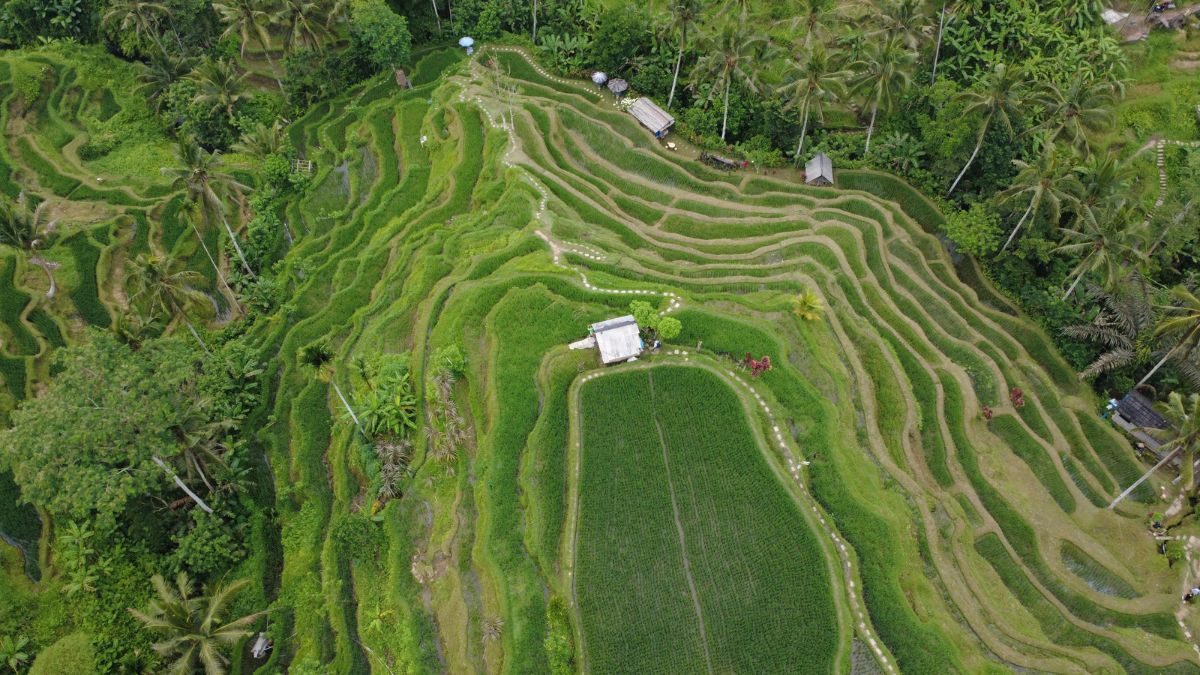
I tour the island during the two days I rent the motorcycle and visit several temples and rice paddies. I’m amazed by the dedication and skill the locals have in keeping the rice paddies spotless—without any machinery, all done by hand. The only piece of machinery I see is a brush cutter; everything else is done by hand. It’s more than just rice farming: it’s art.
I meet up with some friends who are in the tourist area of Bali. I spend a day with them, and they show me the nightlife. After a few drinks and some dancing at a nightclub packed with British and Spanish people, I arrive at “Sofía” as the sun begins to rise. After traveling all over the island, it’s time to start planning for the next six months.


