








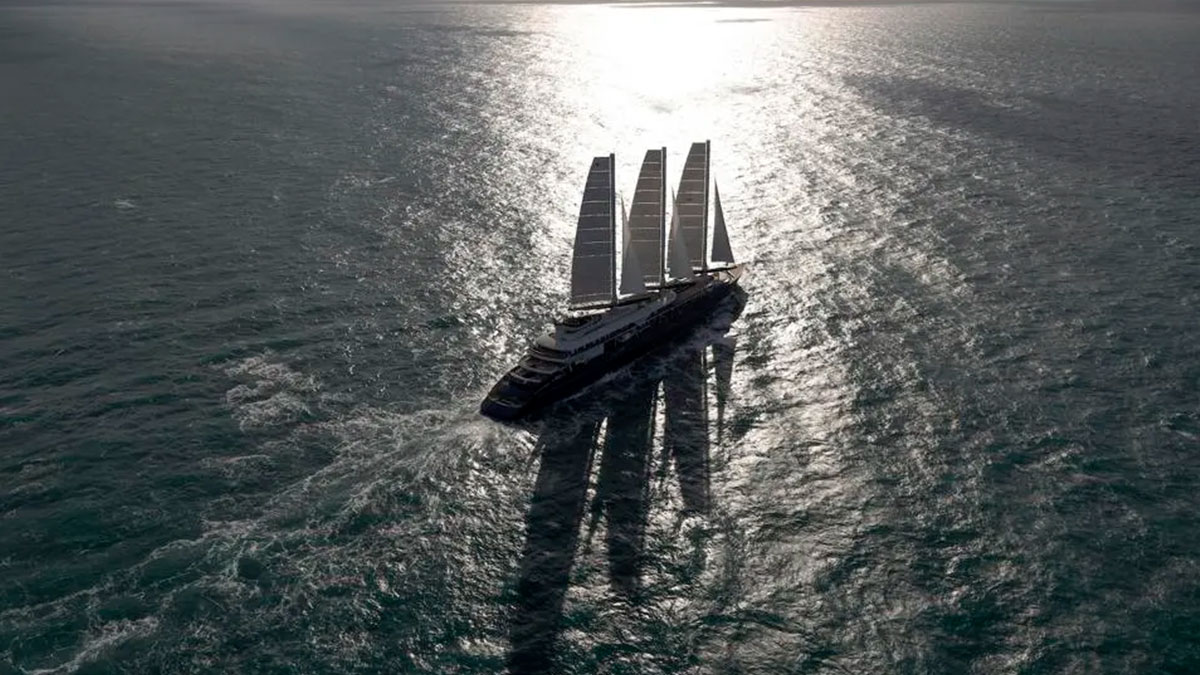
Luxury hotel brands may be competing to enter the world of ultra-luxury cruises, but Orient Express Sailing Yachts is deliberately positioning itself somewhere in between: it is neither exactly a cruise line nor exactly a fleet of superyachts. For Philippe Brault, CEO of Orient Express Sailing Yachts, this distinction is important. “We’ll consider ourselves a yacht when our guests consider us a yacht,” he tells me about the brand’s first vessel, the Corinthian, dismissing the industry’s debate over labels in favor of the guest experience.
It is a philosophy that permeates every aspect of the project. From the retractable marina and spacious suites to the emphasis on sailing and “slow travel,” Orient Express Sailing Yachts seeks to blur the line between private sailing and luxury hospitality at sea.
The project represents an ambitious expansion for the historic Orient Express brand, which now encompasses trains, hotels, and sailing trips designed to connect them all. Brault, a veteran of the shipping sector with more than four decades of experience in the maritime industry, helped turn the concept into reality after presenting the vision directly to Accor CEO Sébastien Bazin, a longtime friend.
In the conversation below, he discusses his journey to the Corinthian and why he believes it will be the guests—and not the industry—who will ultimately decide whether Orient Express Sailing Yachts deserves to be called a yacht.
Could you tell me a little about your career and how you got started in the shipping industry?
Philippe Brault: I’ve been in the shipping industry for 44 years. My mother is Danish. Her father was a shipowner in Denmark. My ancestors in France were also involved in the shipping industry. My father worked in the shipping industry. I’ve been an insurance broker for 35 years, and even my son works for a shipowner, so we really come from a family dedicated to the shipping industry.
I have spent most of my career in the merchant marine—container ships, oil tankers, LNG carriers—; it’s not a very glamorous sector, but it is essential. I also spent 15 years managing contracts for the construction of new ships between shipowners and shipyards. Later, along with 14 colleagues, I bought the company where I had started as an intern. I stayed there for 35 years, including 20 years on the board of directors. Then, in 2016, I decided to change course. I founded a boutique mergers and acquisitions firm focused on selling companies that operate ships, rather than selling the ships themselves.
What led you to Orient Express Sailing Yachts?
It came about through my network of contacts. Accor’s CEO [Sébastien Bazin] was a classmate of mine. Before the pandemic, I went to see Sébastien and told him that Marriott was entering the luxury cruise sector with the Ritz-Carlton. At the time, Accor had just acquired the Orient Express brand. I said to him, “Why don’t you get into yachts? That way, you could combine leisurely travel itineraries across hotels, trains, and ships.” He loved the idea.
At first, I helped Accor understand the market: financing, shipbuilding, and how to manage a maritime project. Through my previous company, we had also acquired a yacht brokerage firm in Monaco, so I had experience in both the private yachting world and commercial shipping.
How did the project go from being an idea to becoming a reality?
After the pandemic, the luxury travel market skyrocketed because everyone wanted to get out and travel. I spoke with Sébastien again and reminded him of our previous conversations. At the same time, there were rumors that Aman and Four Seasons were also going to enter this sector.
We found an existing sailing yacht design at Chantiers de l’Atlantique. Using an existing concept saved us at least a year, since otherwise we would have had to start from scratch. Everyone wanted a spot at the shipyard, but thanks to the contacts we had there, we were able to act quickly.
Is that why the boat is a sailboat instead of a motorboat?
In part, yes. We wanted to create something sustainable, and a sailboat design was already available. Instead of spending a year developing completely new specifications, we were able to adapt an existing, proven design. We removed a deck, lengthened the boat by 20 meters, redesigned the marina, and transformed it into something much more yacht-like.
How long did it take to build the ship?
With surprising speed. By December 2022, we had already made a firm commitment to build two ships. By May 2023, we had a contract in place, and the first steel-cutting ceremony took place in 2024. The ship was assembled in Saint-Nazaire in just five months using 14 prefabricated blocks, and much of the equipment was already complete prior to assembly. The ship was launched in January 2025. Sea trials began later that same year, and delivery took place on time and within budget.
What sets Orient Express Sailing Yachts apart from other luxury cruise brands entering the market?
The main difference is the candles, but it also has to do with scale and experience. The Ritz-Carlton has 243 suites. The Four Seasons has 95. We only have 54 suites, which brings us closer to Aman in terms of spirit.
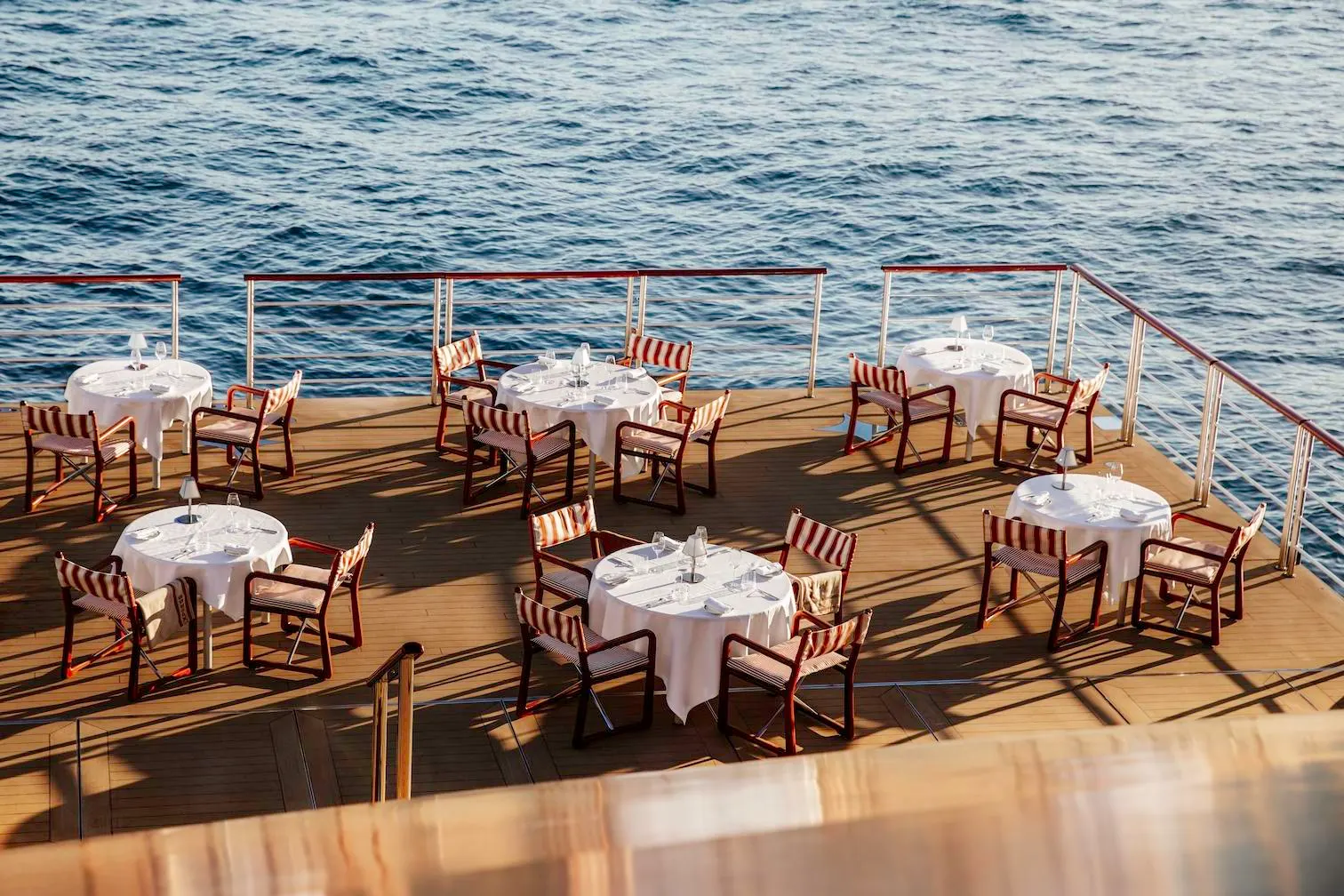
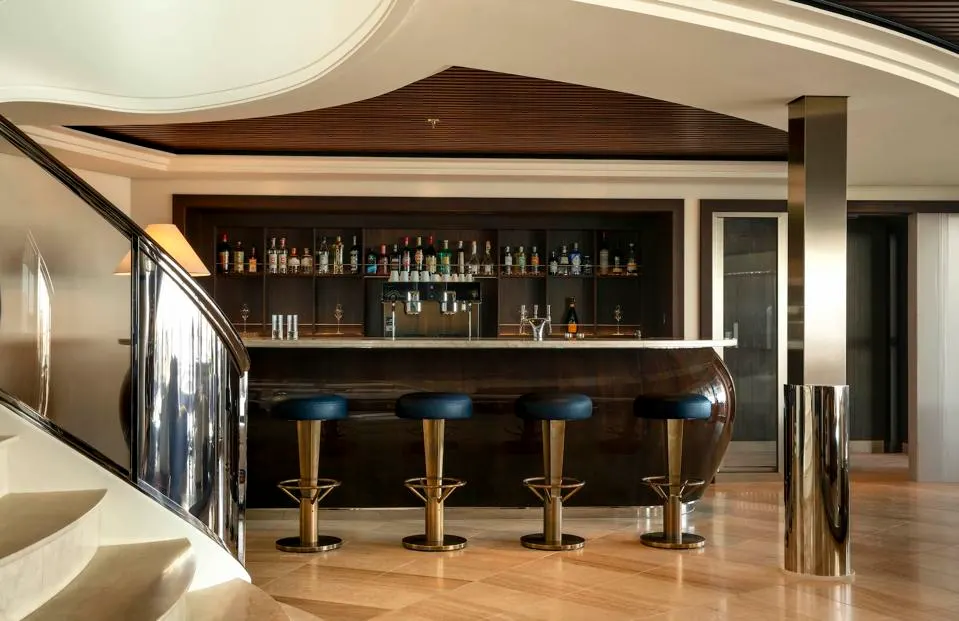
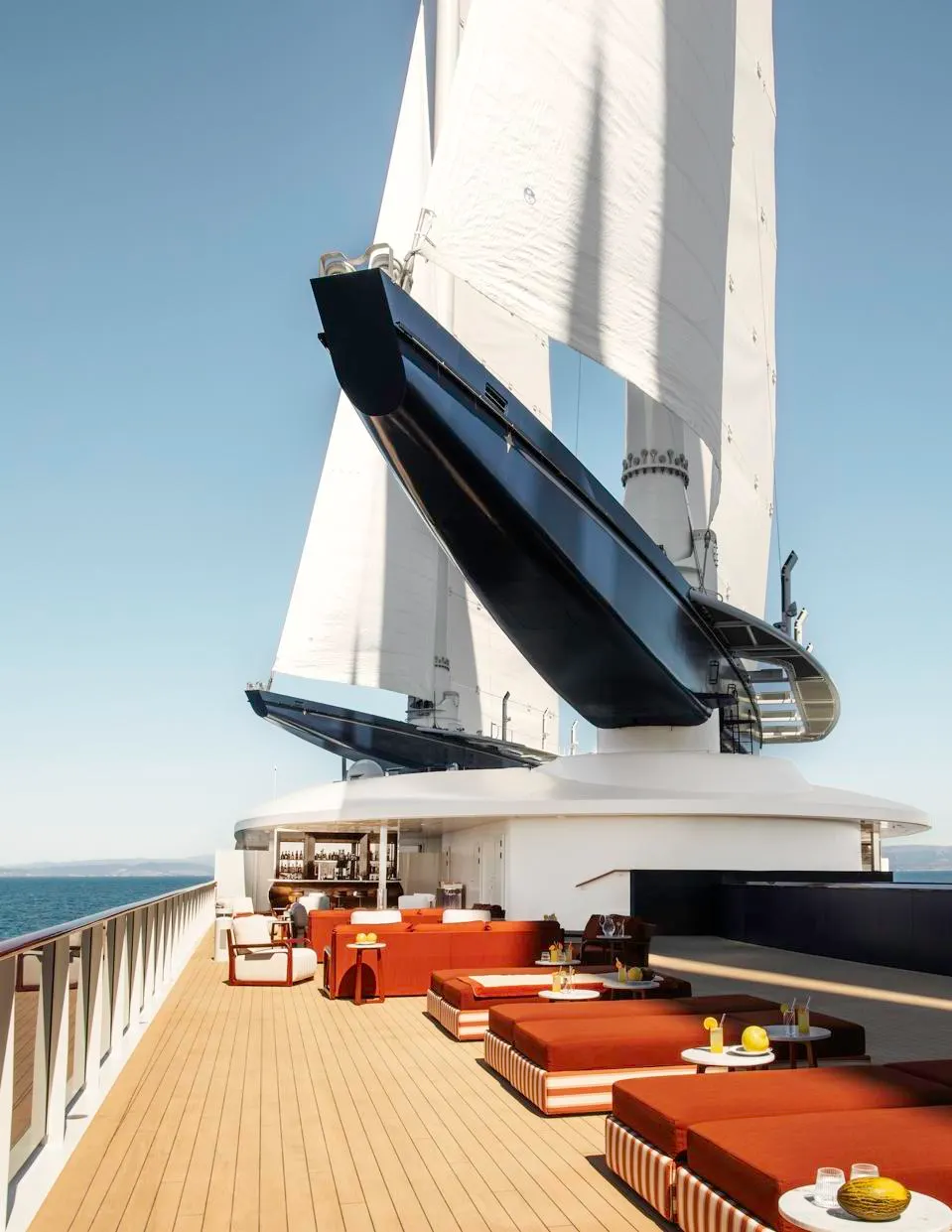
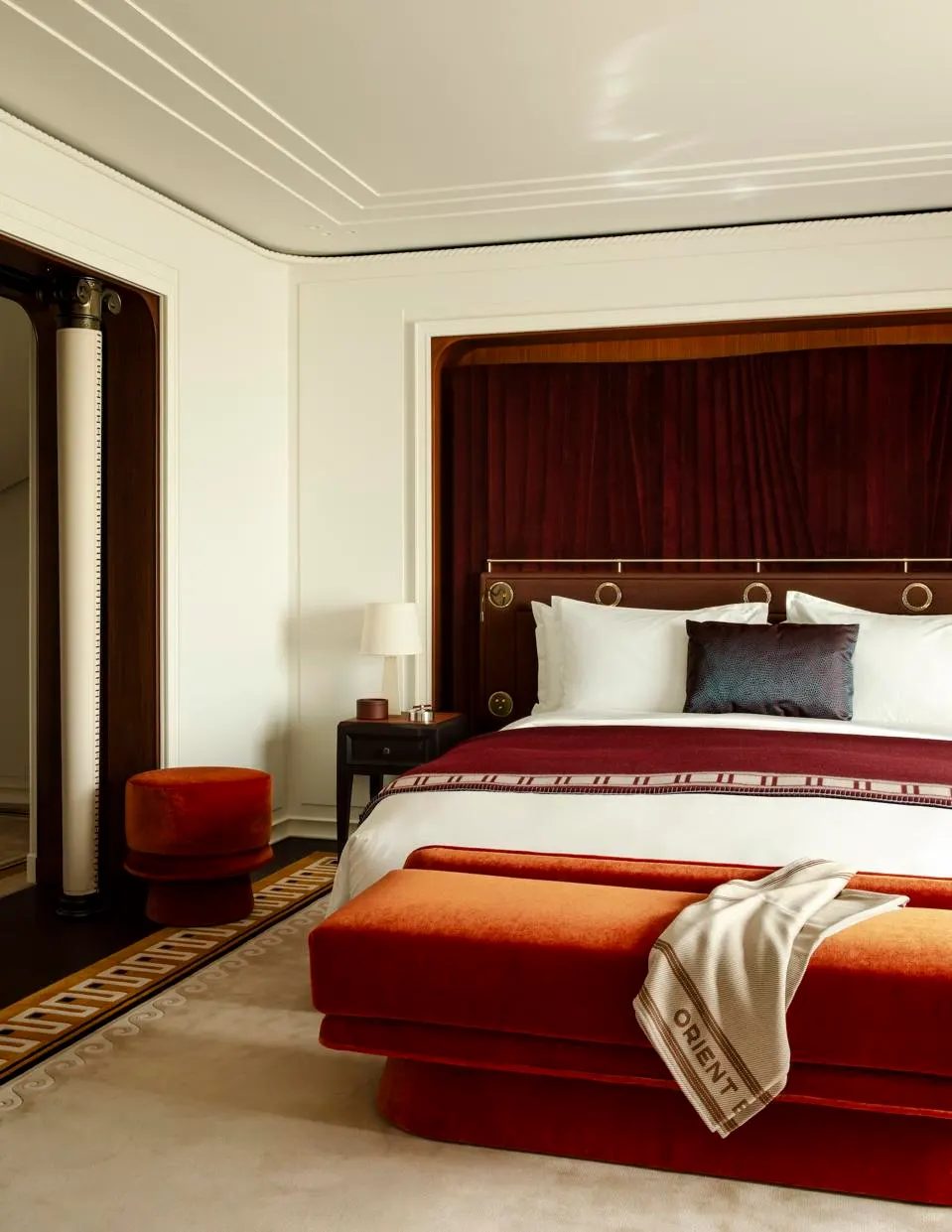
We also focus heavily on slow travel, which makes a big difference. I think the ship is a bridge between sailing and cruising. The spaces, materials, and huge windows in the suites create a feeling much more like that of a yacht than that of many traditional cruise ships. What surprises people the most is the amount of space on board and the outdoor living experience. The marina is especially important—it changes the way guests interact with the sea.
The boating industry can be very particular when it comes to defining what counts as a “sailing yacht.” What’s your answer?
I want us to remain humble. We’ll only consider ourselves a yacht when our clients see us as one. Yes, our brand is “Orient Express Sailing Yachts,” but ultimately, it will be the guests who decide whether the experience feels like an authentic yachting voyage.
For me, one of the defining features is the swimming area. Weather permitting, the swimming area is set up, and guests can swim directly from the boat and use inflatables and water toys. If we offer the chance to jump into the water and have some toys available, then we’re a yacht. If you have to take a limo to the harbor and then to the beach, you’re on a cruise ship.
Are rentals and exclusive reservations part of the business plan?
Of course. We had five fully booked exclusive reservations—even before most people had seen the boat—from both individuals and companies. Since we can accommodate 124 guests while still offering a yacht-like experience, the exclusive charter market will be a major part of our business model.
What is the long-term vision?
The long-term vision is to combine hotels, trains, and ships into a seamless travel experience. Imagine a cruise where you start in Paris, sleep on the train on your way to Istanbul, and end up on a cruise ship. Or perhaps an American couple who spend a week in a villa and then take a cruise to Italy before heading home. That sounds like the ultimate dream.