







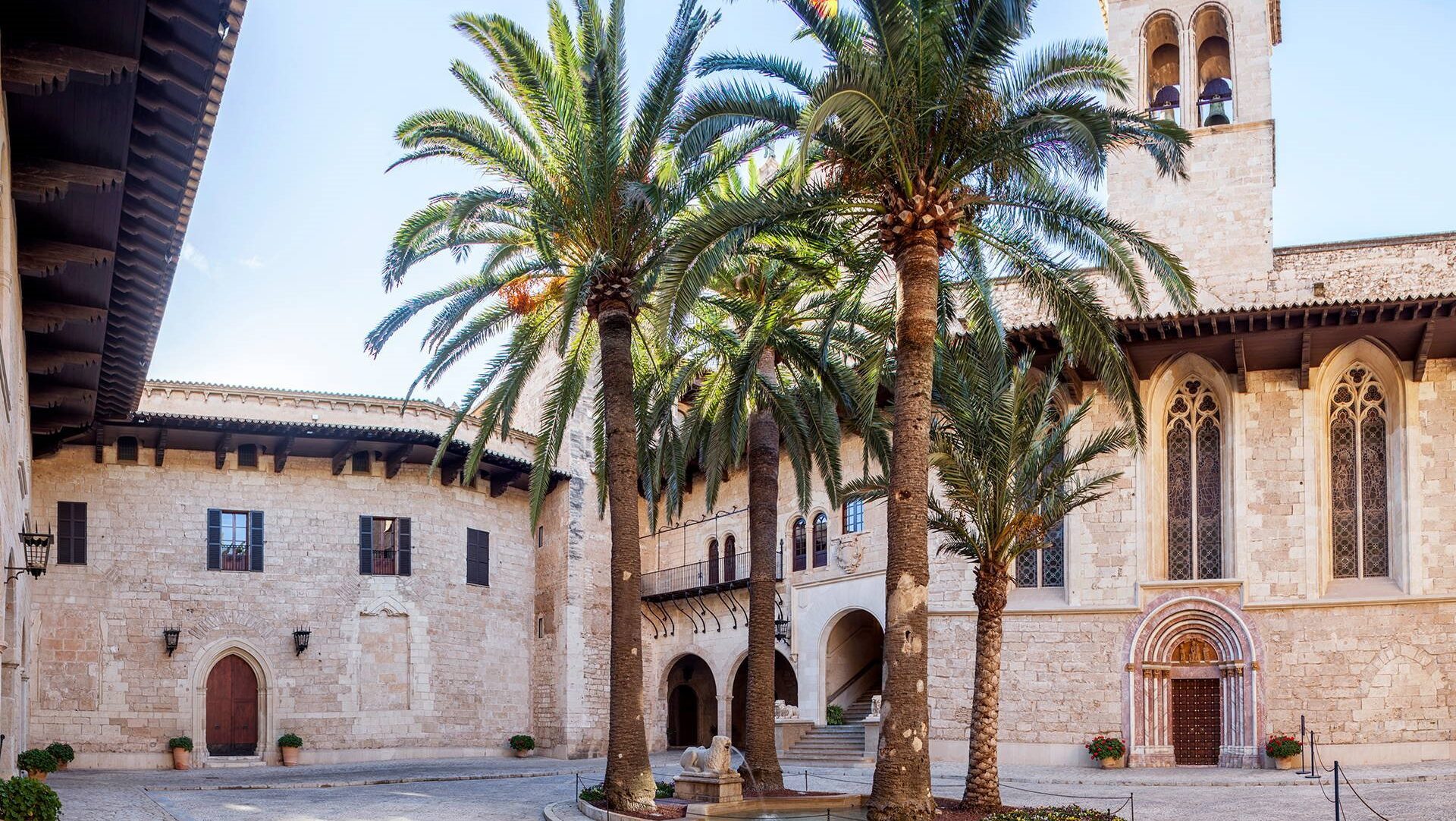
Sustainability is no longer a secondary consideration in the management of historical heritage, but has become a strategic factor. The Royal Palace of La Almudaina has reopened its doors after a comprehensive €2.57 million renovation, which combines energy efficiency, conservation, and a renewed museum experience, with the goal of adapting one of the main monuments of the Balearic Islands to the new demands of cultural tourism.
The project, driven by National Heritage, will reduce the building’s energy consumption by 30 percent by completely replacing the interior and exterior lighting with more efficient systems. The project reflects a growing trend among cultural institutions: preserving heritage while reducing operating costs and minimizing environmental impact.
But the rehabilitation goes beyond energy savings. The new layout reorganizes the visitor experience into a chronological order that traverses the building’s various historical periods—Roman, Islamic, and Christian—and expands the cultural offering by opening spaces previously closed to the public, including the Queen’s Palace. The renovation of the museum’s layout and the monument’s lighting also aim to improve the quality of the visitor experience.
“The sustainability of our heritage is a public responsibility,” said Ana de la Cueva, president of Patrimonio Nacional, during the reopening, arguing that the modernization of historic buildings must balance conservation with criteria of efficiency and accessibility.
The initiative is part of a broader strategy to transform the tourism model of the Balearic Islands, with the support of the Next Generation European funds. As noted by Secretary of State for Tourism, Rosario Sánchez, the Balearic Islands have received 300 million euros to fund projects aimed at promoting sustainability, digitalization, and the modernization of tourist destinations. In total, the investments cover 59 municipalities throughout the archipelago.
At a time when travelers increasingly value cultural experiences and destinations’ commitment to the environment, initiatives like La Almudaina illustrate how historical heritage can become an economic asset capable of generating greater value without compromising its role in conservation.
The reopening brought together representatives of the main public authorities, including the Regional Councillor for Tourism, Culture and Sport, Jaume Bauzà; the President of the Council of Mallorca, Llorenç Galmés; and the Mayor of Palma, Jaime Martínez.
