








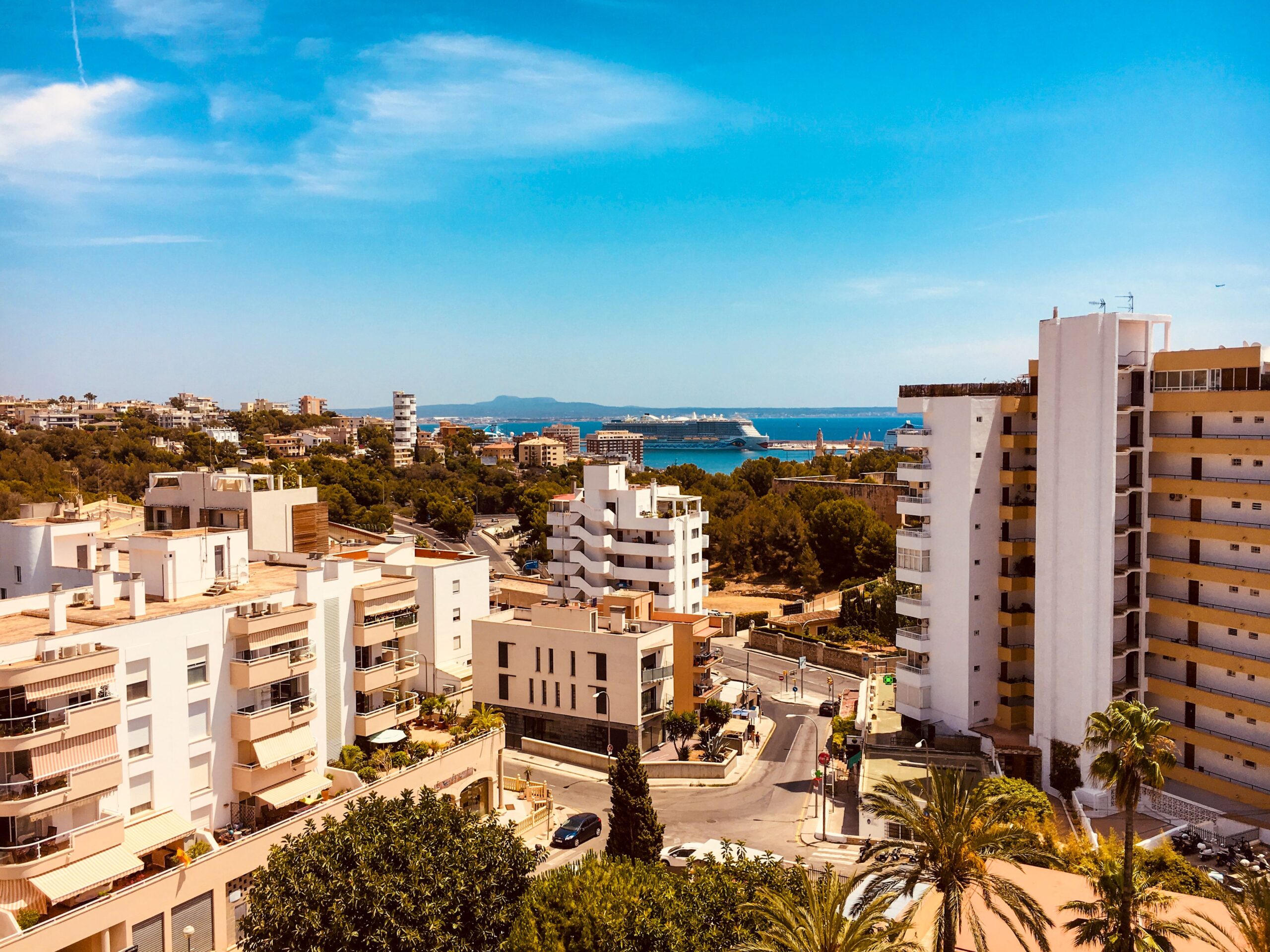
The residential construction market in Mallorca is showing clear signs of recovery in 2026. Building permits for new homes rose by 28.7 percent during the first half of the year, reaching 1,296 units – the highest figure for this period in the last five years and an indication that real estate development is regaining momentum, especially in the multifamily housing segment.
The figures, presented on Monday by the Association of Quantity Surveyors and Technical Architects of Mallorca (COAAT Mallorca), indicate a change in trend that the sector attributes both to the high demand for housing and to the impact of the regulatory changes introduced by the Balearic Government. The Association considers these results to be the first signs that these policies are beginning to take effect and predicts that activity will continue to grow during the second half of the year.
Growth, however, is not uniform. While single-family housing projects remain practically stable, with 527 building permits—only two more than a year ago—the construction of multifamily housing experiences a strong rebound, with 769 housing units having been granted building permits, 59.5 percent more than in the same period of 2025. In total, between January and June, 289 more building permits were granted than a year earlier, consolidating the recovery that began in late 2025, a year that closed with 2,139 building permits for new homes.
This rebound is especially significant in the multi-occupancy housing sector. After several years of sharp declines, the market is not only regaining ground but is also accelerating its growth rate – a trend the sector interprets as a response to the need to increase housing supply.
Palma is home to the most dynamic real estate sector.
By municipality, Palma continues to lead the island’s real estate market. The capital has 415 multi-family homes with building permits, followed by Calvià (144) and Capdepera (58). In the single-family home sector, Palma also leads the ranking with 83 projects, ahead of Manacor (31) and Santanyí (29), which confirms that much of the market’s dynamism remains concentrated in these municipalities.
For Luis Alfonso de León, president of the Association of Quantity Surveyors and Technical Architects of Mallorca, the increase in activity reflects the pressure that residential demand continues to exert on the island’s market, although he warns that the volume of new developments is not yet sufficient to balance it. “In the first half of 2026, there has been a significant increase in new construction permits, following the slight upward trend with which we ended 2025. The need for housing on the island is driving an increase in multifamily construction, which is not yet enough to meet public demand, but has reached its best figures in the last five years.” According to De León, the forecast is that this growth trend “will continue for the rest of the year.”
De León also believes that market trends point to a greater presence of multifamily housing. According to him, a balanced ratio would be four multifamily homes for every single-family home – a scenario that is still far from achievable.
Along the same lines, the Association’s technical secretary, Mateo Moyá, maintains that regulatory changes are altering developers’ investment decisions. “Thanks to the policies promoted by the regional government, developers see an opportunity to invest in multifamily housing,“ he said, emphasizing that “we believe the trend is set to grow,” as “there are many projects underway.”
According to Moyá, these measures are also helping to shift the focus of some residential developments toward more affordable housing. In his view, multifamily housing is no longer exclusively associated with the high-income segment but is increasingly aimed at ordinary people.
Rehabilitation is gaining importance.
Meanwhile, the rehabilitation sector continues to consolidate as another of the sector’s main drivers. During the first half of the year, 1,771 housing and other building rehabilitation projects were approved, 17% more than in the same period of 2025 and the highest figure in recent years.
Beyond year-over-year growth, the figures reflect a fundamental shift: the number of rehabilitations has nearly tripled over the past twelve years, driven by an aging housing stock, rising home prices, and investment in improving buildings’ energy efficiency.
Moyá attributes part of this increase to the Next Generation EU funding for energy efficiency rehabilitation, as projects from this program have been implemented on a large scale over the past year. He also notes that the 1,771 approved applications do not necessarily correspond to the same number of households, as many projects involve entire buildings. In total, he estimates that these projects could benefit between 5,000 and 6,000 households on the island.
Hotels are focusing on renovating their properties.
This trend is also evident in the tourism sector. During the first six months of 2026, building permits were granted for renovation or expansion projects at 40 hotel establishments, double the number in the same period of the previous year. In contrast, no building permits were issued for the construction of new hotels, a sign that the sector continues to prioritize the modernization and repositioning of its assets over increasing its accommodation capacity.
Overall, the figures for the first half of the year paint a picture of a construction market regaining momentum in three key areas: the growth of multi-family housing, the sustained rise of rehabilitation, and the renewal of the hotel supply. These three trends point to a gradual transformation of the real estate market in Mallorca, although the sector itself acknowledges that the current pace is still insufficient to meet the pressure of residential demand.


