








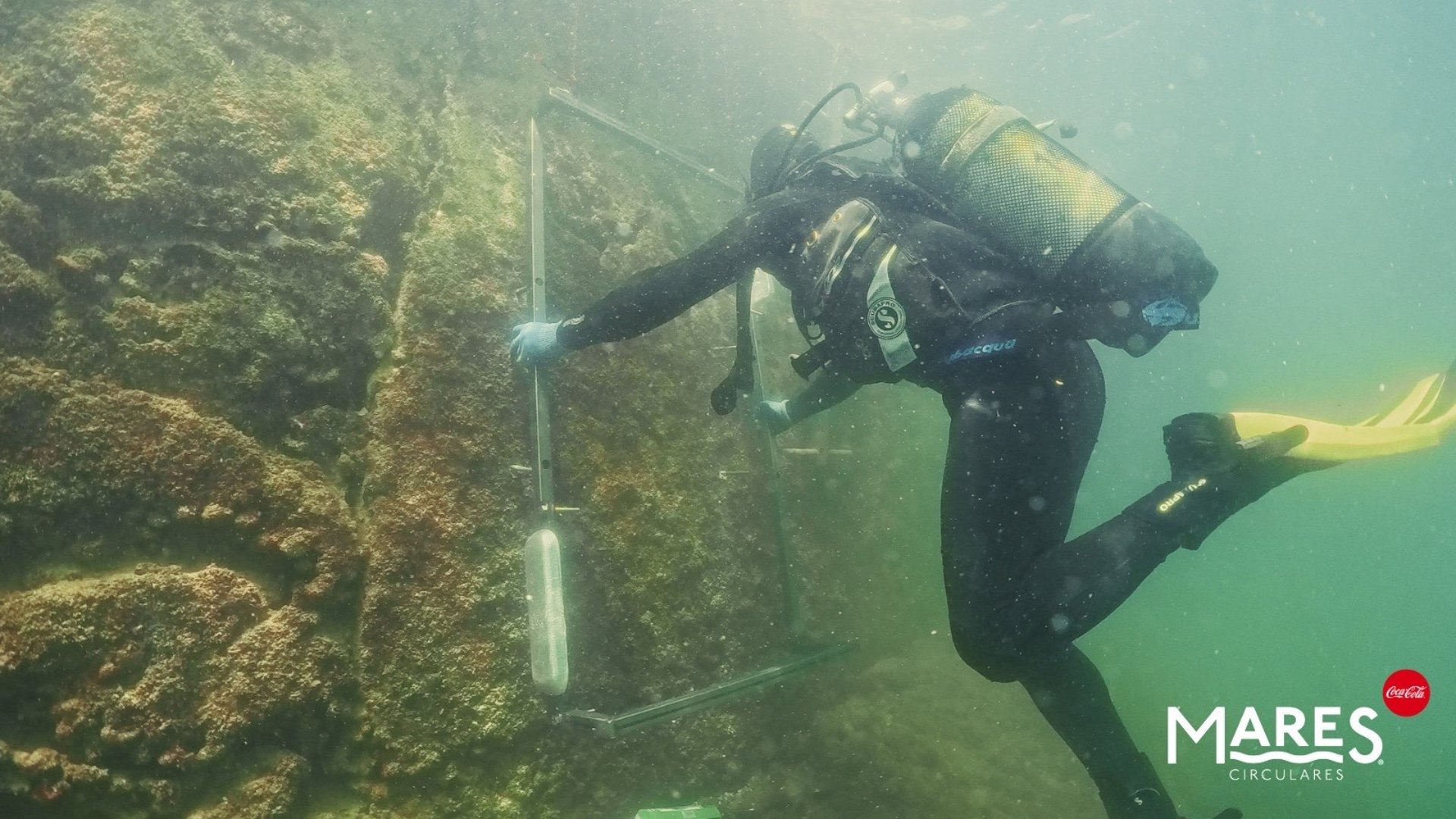
Mares Circulares, Coca-Cola‘s program in Spain and Portugal for the protection and conservation of marine environments, and Ocean Ecostructures, a start-up specializing in solutions for the renaturalization of marine infrastructure, will collaborate on ecological restoration at the Real Club Náutico de Palma and the Baiona sports port in Galicia.
Mares Circulares is taking a new step to make its vision of connecting oceans, territories, and people to build a resilient and sustainable future a reality, as highlighted in a press release.
This initiative is part of the new phase of Circular Seas, which, starting in 2026, will strengthen its 360-degree approach to integrate science, innovation, the circular economy, natural capital, public participation, and public-private collaboration in order to improve the state of our seas and oceans.
The port infrastructure is subject to significant environmental pressure resulting from maritime activity and ship traffic.
This has an impact on coastal and marine habitats, local biodiversity, and the environmental quality of these areas. Faced with this challenge, Mares Circulares is committed to promoting solutions based on scientific knowledge and applied innovation that help regenerate marine environments and enhance their ecological capacity.
The resulting project from this collaboration with Ocean Eco-structures will involve the installation of LBUs – biomimetic structures coated with calcium carbonate and designed to promote gradual colonization by marine flora and fauna.
Each of these units can contribute to the regeneration of up to 50 square meters of the marine environment, promoting the recovery of natural capital in port areas and providing a measurable basis for the ecological restoration of these areas.
The project also includes a data science and traceability component, with a two-year monitoring program that will include underwater robotics monitoring campaigns, laboratory analyses, executive summaries, and annual ESG reports.
The progress of the works can be monitored through a dedicated application, which will allow for the precise measurement of key indicators such as biodiversity, biomass, blue carbon, and the renaturalized area.
“At Mares Circulares, we work to promote solutions that combine scientific knowledge, innovation, and on-the-ground action, with the goal of advancing the recovery of our aquatic environments,” explained Gabriel Mulet, Director of Public Affairs, Communication, and Sustainability for Coca-Cola Europacific Partners Iberia in the Balearic Islands.
Mulet also highlighted that this collaboration with Ocean Ecostructures allows for progress in the regeneration of marine habitats in areas that have been especially altered by human activity, using a methodology that can be replicated in other environments.
For her part, Mireia de Mas, Chief Operating Officer and co-founder of Ocean Ecostructures, noted that the renaturalization of marine infrastructure represents a great opportunity to restore biodiversity and generate environmental value in strategic locations like marinas. “Doing this in collaboration with a program like Mares Circulares also allows us to expand the reach of these solutions and demonstrate their transformative potential,” she added.
The president of the Royal Yacht Club of Palma, Rafael Gil, has stated that this initiative is part of the club’s commitment to sustainability and, from a new perspective, complements the programs it is already carrying out in the field of good environmental practices.
“No one has a greater interest in marine conservation than those who have chosen the sea as a place for recreation or for their professional development,” said Gil, who sees improving the condition of the port’s enclosed waters as a challenge.
“We know that renaturalization has worked very well in other marinas, and we are convinced that this collaboration with Mares Circulares and Ocean Ecostructures will be a success,” he added.
A long-term impact on the Balearic Islands
Mares Circulares has a proven track record in the Balearic Islands in the protection and conservation of marine ecosystems. Since its launch in 2018, the program has carried out 168 initiatives on the islands’ beaches and in aquatic environments, mobilized more than 9,000 volunteers, and reached 23 municipalities in the archipelago. establishing a broad collaborative network with public authorities, social organizations, educational institutions, and local entities.
This campaign has enabled the removal of more than 26 tons of waste from the marine environment of the Balearic Islands and has helped drive initiatives that combine awareness-raising, science, and innovation for biodiversity conservation. After nine years of work, the program brings together science, the local community, and the public to accelerate the transition toward healthier seas and oceans.
The project planned at the Royal Yacht Club of Palma expands the scope of the Mares Circulares program in the Islands to include new ecological regeneration solutions applied to port infrastructure, and consolidates its role as a platform for promoting science-based intervention models capable of generating a positive and lasting impact.
The initiative is also in line with current environmental restoration frameworks and moves toward a more balanced relationship between human activity, ports, and the integration of nature into the coastal environment.