







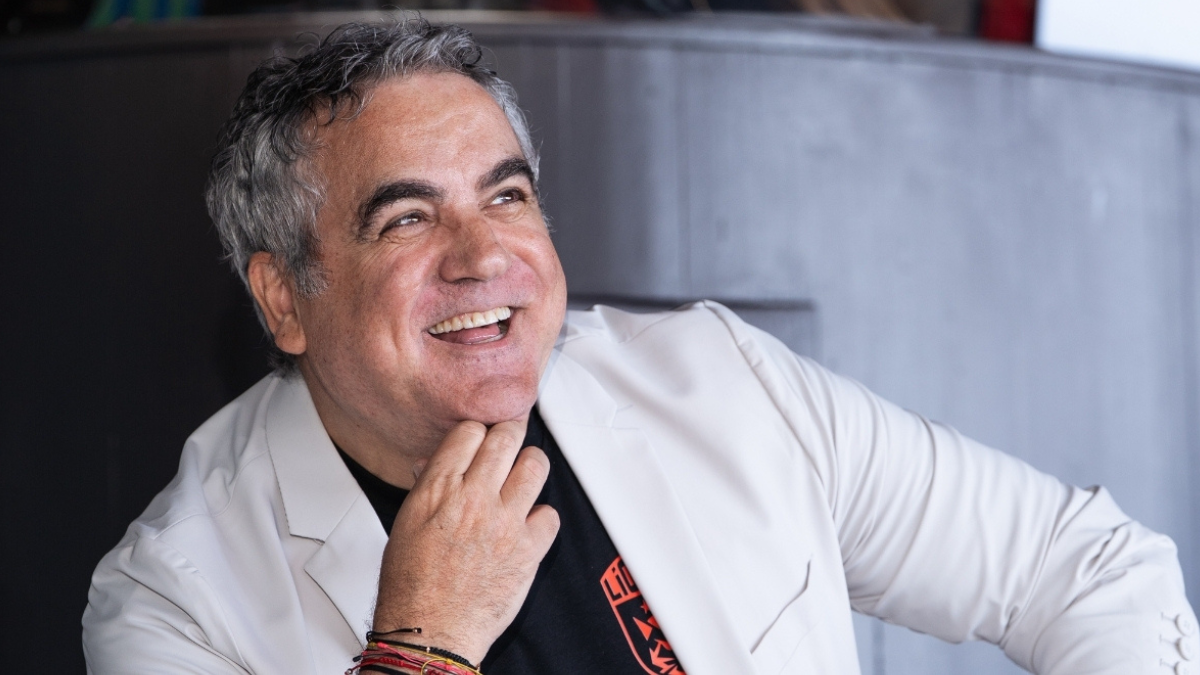
Some people talk about business. Others talk about life while building businesses. Julio Bruno clearly belongs to the latter group.
The conversation begins just as conversations with truly brilliant people do: unhurried, unpretentious, and with no need to prove anything. He talks about New York, Paris, Asturias, happiness, his father, dancing, Donald Trump, Mediterranean terraces, and a Colombian word that ends up defining Ibiza better than any official campaign: “descualquierarse.”
“You arrive in Ibiza and you’re blown away,” he says with a laugh. And that’s probably one of the keys to it all. Because after leading global multinationals like Time Out Group, TripAdvisor, and Travelport; transforming the international media and leisure industry; living between London, the United States, and Europe; advising companies around the world; and becoming one of Spain’s most influential entrepreneurs in hospitality and entertainment, Julio Bruno still speaks with the same enthusiasm as someone who deeply enjoys what he does.
Maybe that’s why Lío works. Because behind the luxury, the spectacle, and the sophistication, there’s something much harder to create: authenticity.
“Ibiza has a certain magic that can’t be replicated”
Bruno has spent years watching Ibiza transform itself without completely losing its essence. And he speaks of the island with the perfect blend of fascination and insight that comes from knowing it from the inside. “Ibiza was already magical two thousand years ago,” he says. “It has something special that you feel when you drive around the island. That energy is still there.”
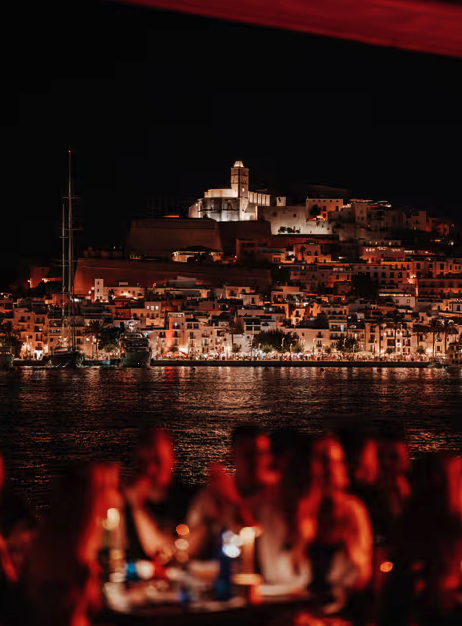
But he also acknowledges that the tourism model has changed radically. Today’s Ibiza no longer thrives solely on the electronic music scene or the wild nightlife that defined the 1990s and 2000s. Today’s visitors are looking for something else: experiences.
“Before, there were only nightclubs. Lío helped bring a different kind of culture: sitting down, enjoying a good dinner, taking in the show, dancing, dressing up for the night. A much more aspirational experience.” And that’s not just an empty phrase.
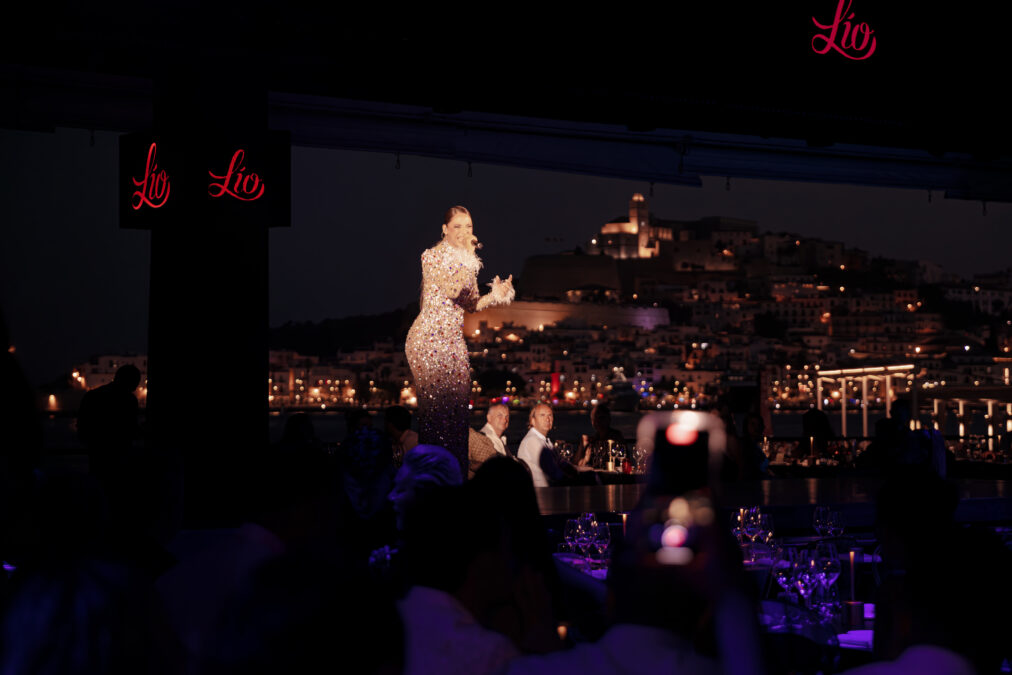
Lío isn’t a restaurant, a nightclub, or even a traditional cabaret. It’s an emotional experience carefully choreographed to make guests feel like they’re the stars of a once-in-a-lifetime event.
Haute cuisine, live music, visual storytelling, art direction, set design, technology, performance, lighting, and nightlife come together in a single experience that has made the group one of the symbols of the new Mediterranean luxury. A luxury that is less ostentatious and far more emotional.
“Ibiza is shifting from selling parties to selling an identity”
Julio Bruno also believes that the island is undergoing a much more profound transformation than it appears from the outside. And he’s not just talking about luxury or high-end tourism, but about a cultural shift in the way Ibiza wants to position itself in the world.
“Ibiza is evolving into something much more experiential, sophisticated, and global,” he explains. “It’s no longer just about coming here to party. Now people want fine dining, wellness, art, design, music, nature—they want to feel like they’re part of something.”
For someone who has been observing the global evolution of major tourist destinations for decades, the change is clear. Today’s Ibiza exists between two realities: the legacy of the free, hedonistic, and spontaneous island that captivated the world during the hippie years, and a new generation of visitors seeking exclusivity, privacy, and much more curated experiences. And in the midst of that transition, projects like Lío have come to play a key role in the island’s new narrative.
“Fifteen years ago, there was nothing like this in Ibiza,” he recalls. “The island was dominated by nightclubs and a very specific model of nightlife. We helped open another door.” Today, that door connects to an Ibiza where restaurants have become international destinations, where beach clubs function almost as contemporary cultural centers, and where luxury is no longer measured solely by price, but by the ability to inspire.
But Bruno also warns of something important: Ibiza’s success could become its greatest risk if the island loses what made it unique. “The danger would be trying to copy other destinations,” he reflects. “Ibiza cannot lose its authenticity. People come here because they find freedom, beauty, and a unique energy.”
And that is likely the big question the Balearic Islands will have to answer in the coming years: how to continue growing without destroying the very thing that made Ibiza a global phenomenon that cannot be replicated.
“We don’t sell tables. We sell how you feel.”
There’s a moment in the conversation when Julio Bruno inadvertently sums up the entire philosophy behind Lío. “People don’t just remember what they saw. They remember how they felt.” And this comes from someone who likely understood earlier than most where global luxury is headed today.
In a world saturated with screens, perfect videos, and artificial intelligence, true value is returning to the physical. To the real. To the shared. “We’re oversaturated with images. What people want now is to experience things in three dimensions. To touch them. To dance to them. To live them.” That’s why he places such emphasis on the emotional experience.
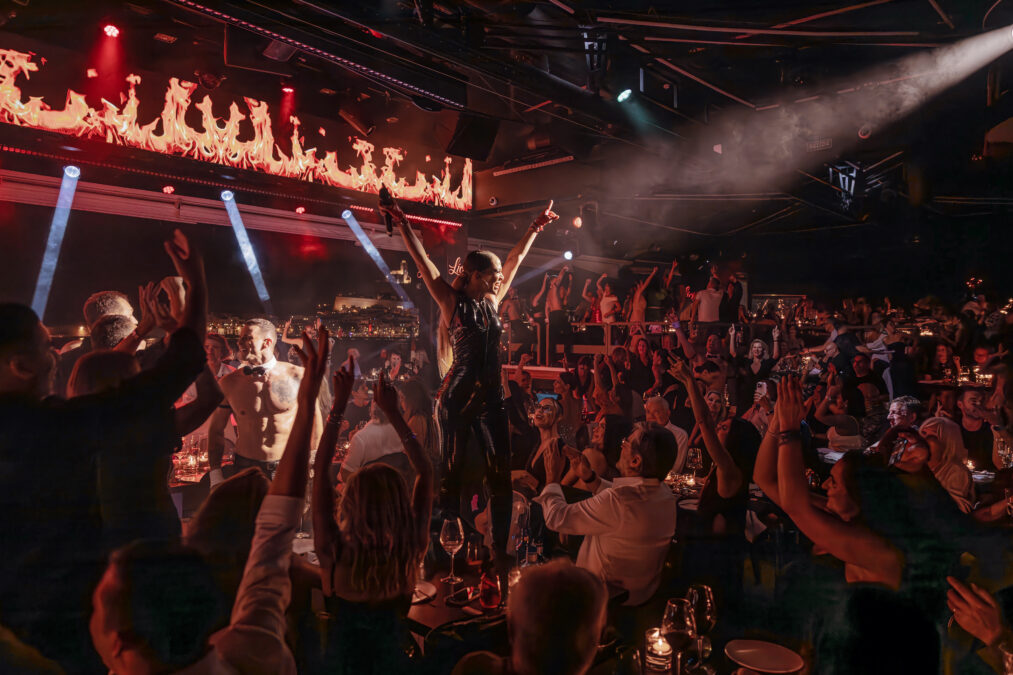
At Lío, the performers don’t stay isolated on stage: they interact with the audience, come down to the tables, sing among the crowd, and make the audience part of the show. The audience stops watching and starts participating. And that’s when something important happens.
“There are people who arrive feeling shy and end up dancing. Because they realize that no one is judging them.” That freedom—so hard to find these days—is precisely one of the things that Ibiza continues to offer better than anywhere else in the world.
The art of surprising on an island that has seen it all
Few industries are as challenging as the entertainment industry. And even less so in Ibiza, where every summer seems to have to outdo the one before it.
However, Bruno talks about creativity with an almost artisanal ease. He explains that the Lío team is already working on future seasons even as the current one has barely gotten underway. That ideas take years to mature. That the show never stops evolving. “You can’t repeat exactly the same thing. Art needs to constantly transform itself.”
Behind every season are hundreds of people: choreographers, musicians, dancers, technicians, creative professionals, designers, producers, and international artists selected through auditions across Europe.
The standard is so high that some of its performers have been finalists on major international TV shows or winners of global competitions. And yet, Bruno places more emphasis on emotion than on spectacle. Because the ultimate goal isn’t to impress. It’s to evoke a response.
“Luxury today isn’t about excess. It’s about feeling special.”
The conversation inevitably turns to one of the major debates in the Balearic Islands: tourism, overcrowding, and the future of Ibiza. And here, Julio Bruno surprises us with his honesty.
He acknowledges the real problems the islands face regarding housing, tourism pressure, and regulation. He openly criticizes the unchecked impact that platforms like Airbnb have had on cities and tourist destinations. He speaks of corporate responsibility. Of balance. But he also raises an uncomfortable question about the social contradiction surrounding tourism. “We often want the economic benefits of tourism, but we don’t want to live with what it creates.” He says this without cynicism and without oversimplifying a complex problem.
Because Julio Bruno understands both sides of the conversation perfectly: the business side and the human side. Perhaps that is why he insists so strongly that contemporary luxury is no longer just about spending money.
“Premium customers are still looking for premium experiences. But even those who are more price-conscious want to feel special when they come to Ibiza.” And that is likely where the island’s real challenge lies in the coming years: not just competing on the basis of parties or exclusivity, but on creating experiences with soul.
The businessman who still considers himself privileged
There is something profoundly unusual about Julio Bruno: after decades in the international business elite, he has retained his sense of wonder.
He says that when he lived in Paris, he made a point of reminding himself every morning that he was walking down the Champs-Élysées on his way to work. That he did the same thing in New York. That he needs to constantly repeat a very specific thought to himself: “This isn’t normal. You’re privileged.” And perhaps that’s why he exudes such a unique energy.
He doesn’t speak from the vantage point of success. He speaks from a place of enthusiasm. From someone who still enjoys sitting with his team during an empty dress rehearsal in Ibiza while everyone dances around them before a big opening. “This is really beautiful,” he says at one point in the conversation. “We’re creating something very special.”
And for a few seconds, it feels as though Julio Bruno isn’t just running a business. It feels as though he’s still pursuing exactly what people are looking for when they arrive in Ibiza: to feel alive.