








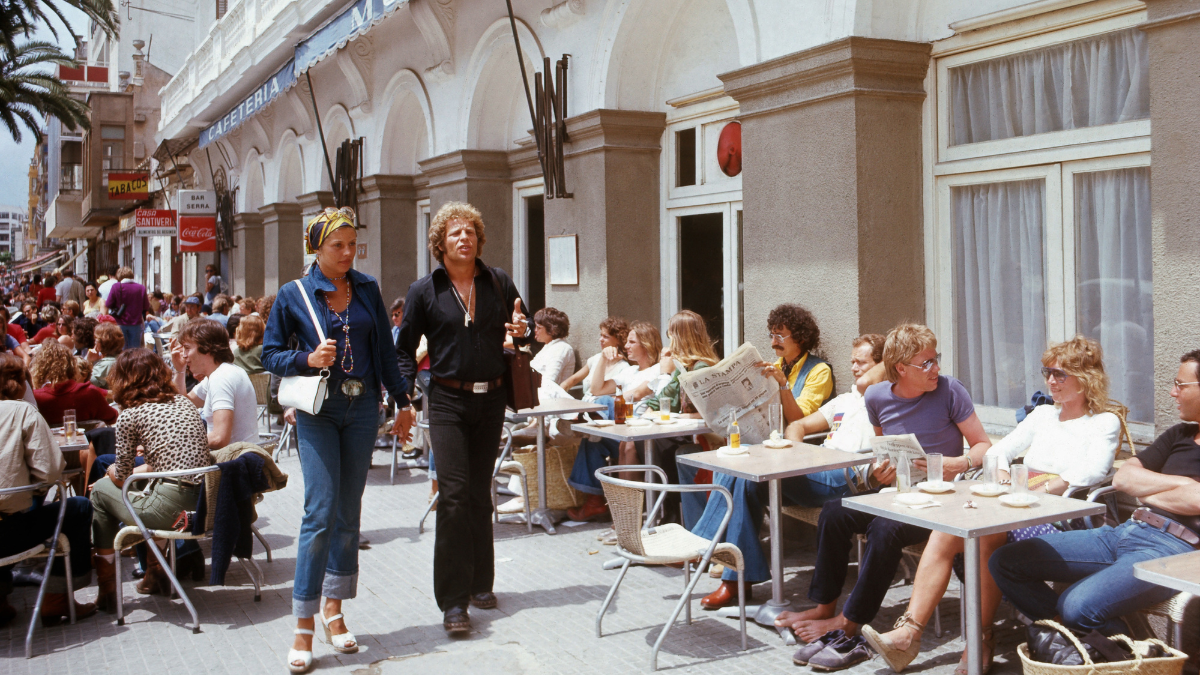
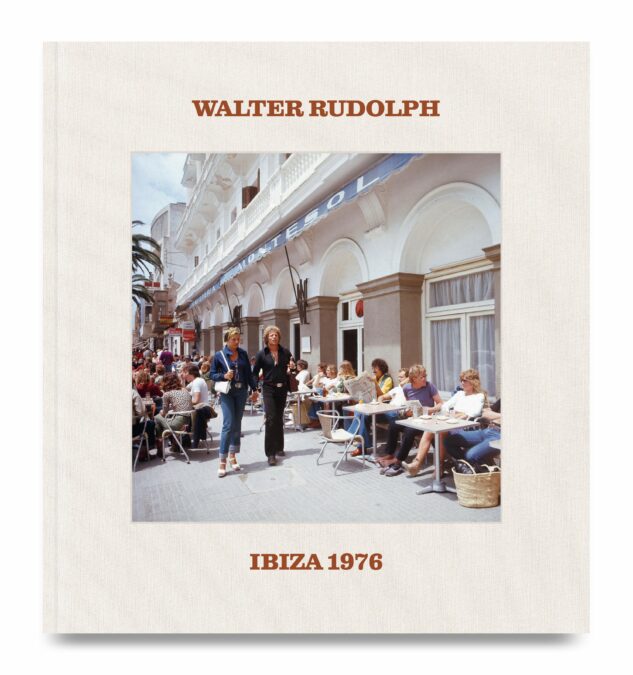
Some photographs document places. Others capture the exact moment when a place is about to disappear forever. That is exactly what happens when you open *Walter Rudolph: Ibiza 1976*, the new book edited by Emma Salahi and published by Agony + Ecstasy Gallery. It doesn’t look like an archive. It looks like a portal.
Each page transports the reader back to an Ibiza caught between two worlds: too modern to remain entirely rural, yet still too innocent to imagine the tourist and symbolic machine it would eventually become decades later.
Walter Rudolph arrived on the island in 1976, working as a photographer for Thomson (now TUI) and Iberia, at the height of the boom in European Mediterranean tourism. The German had spent years traveling to emerging destinations around the world, photographing what would soon become the mass vacation destination of choice: Portugal, Italy, Hong Kong, Kenya, or the Mediterranean of the 1970s. But Ibiza turned out to be something else entirely. Because what Rudolph found here was not just a growing tourist destination. He found a one-of-a-kind atmosphere.
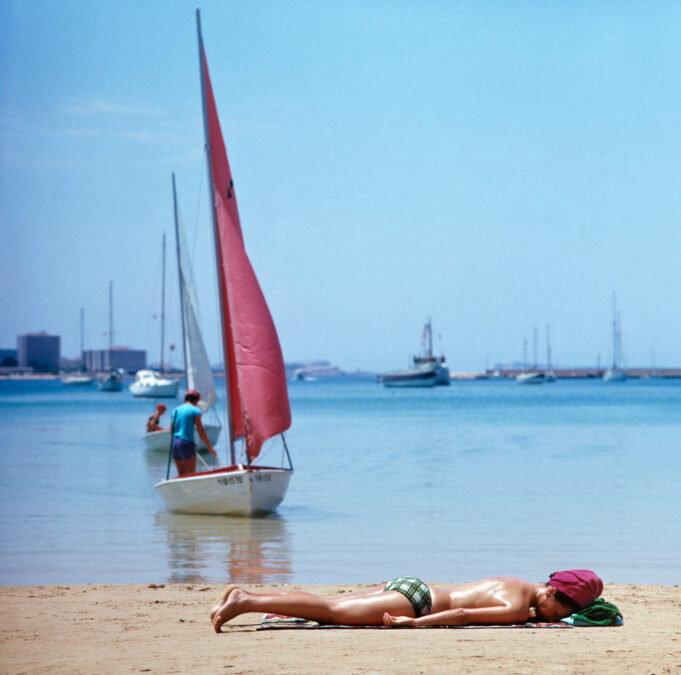
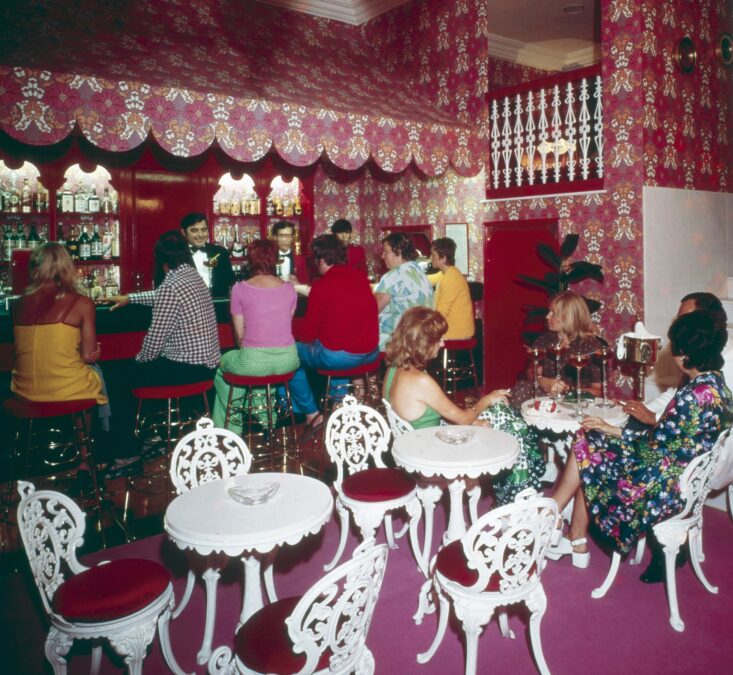
His images—shot on Kodak color film—depict an Ibiza that was still imperfect, unhurried, and deeply human. An Ibiza where little Fiat 600s filled the cobblestone streets during siesta time, where Ibizan women whitewashed facades under the Mediterranean sun, and where Dalt Vila still felt more like an old village than an international postcard.
We see the old Hotel Montesol, the narrow stairways of the walled city, El Corsario, squares filled with classic cars, elegant tourists at the Penta Club, Iberia flight attendants posing with passengers, and everyday scenes that today seem almost impossible in modern-day Ibiza. But what is truly extraordinary about the archive is not the nostalgia. It is the calm.
Rudolph photographs the island without artifice, without spectacle, and without any intention of turning it into an icon. His gaze is unobtrusive. He simply observes. There is something profoundly delicate about the way he captures the light, the streets, and the people. It is as if even he knew that Ibiza deserved to be treated with a certain gentleness.
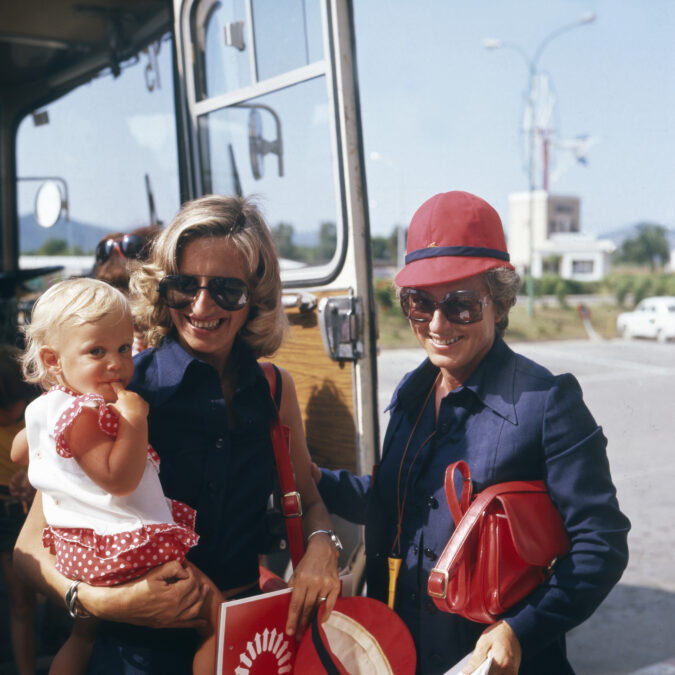
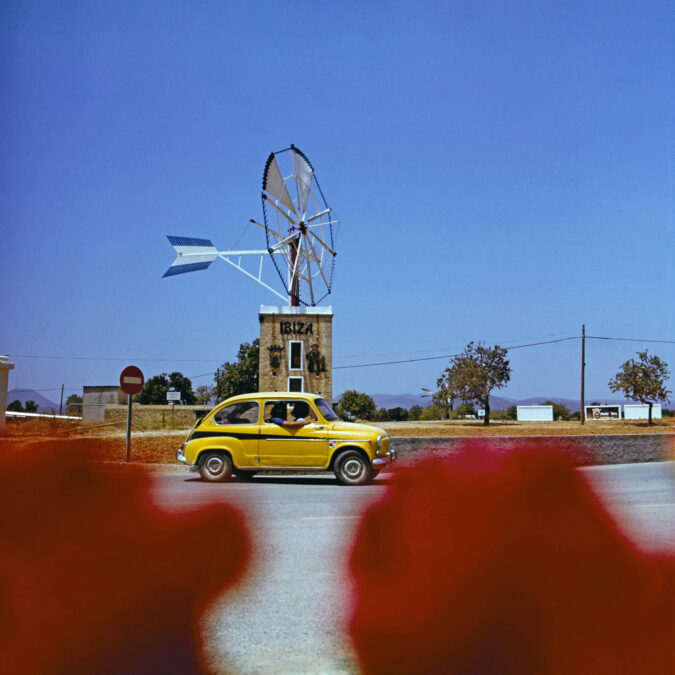
The result has a cinematic quality to it. The saturated colors, the almost accidental compositions, and the obsession with the golden hour are inevitably reminiscent of Wes Anderson’s visual universe. But here there is no fiction or retro stylization. Everything happened exactly as depicted. And perhaps that is why the book is so moving. Because it confronts the reader with an uncomfortable question: what really remains of that Ibiza?
The island remains one of the most sought-after destinations on the planet. It is more sophisticated, more international, and economically much more powerful than it was in 1976. But Rudolph’s photographs remind us of something important: Ibiza didn’t become a legend solely because of its beaches or its climate. It became a legend because it offered a different way of life—slower, freer, and more spontaneous.
Emma Salahi, founder of Agony + Ecstasy Gallery and the person responsible for preserving this archive, understands that emotional value all too well. For years, her curatorial work has focused on recovering historical photographs of Ibiza, as if she were trying to reconstruct the visual memory of an island that is constantly at risk of forgetting itself.
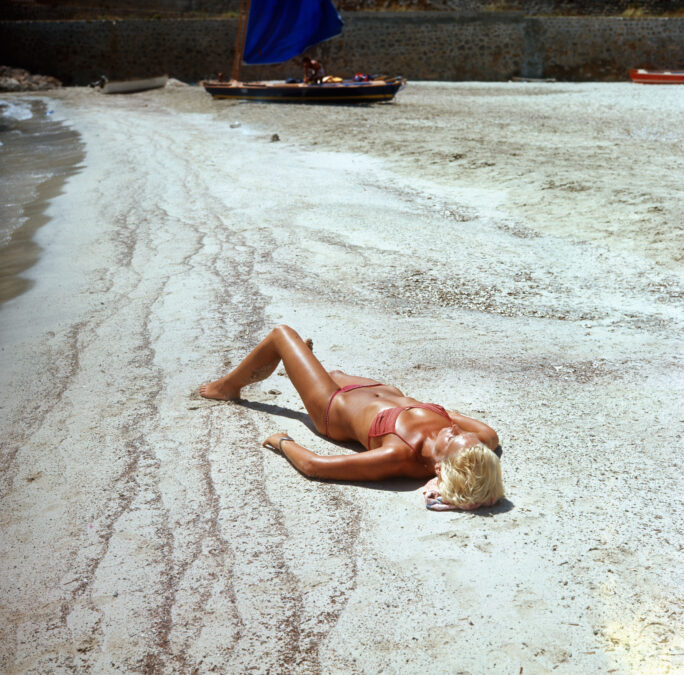
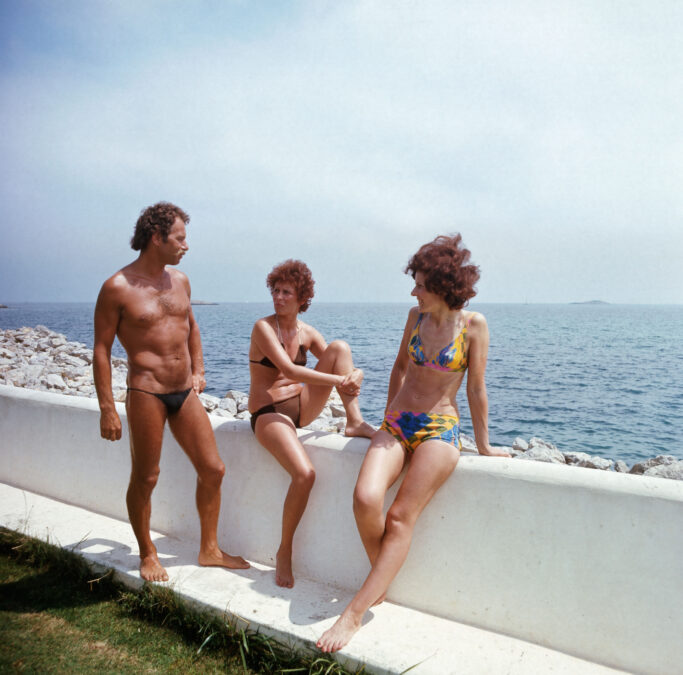
And that makes *Walter Rudolph: Ibiza 1976* much more than just a photography book. It is an act of cultural preservation. An emotional time capsule of Ibiza before excess, before algorithms, and even before its own global legend. Looking at these images evokes a strange feeling: happiness and grief at the same time.
Joy at discovering that Ibiza really did exist. And a sense of loss because, deep down, we all know it will never return. Although perhaps that is precisely the true power of great photographs: to allow certain places to remain alive even after they have changed forever.
Photographs courtesy of United Archives, Walter Rudolph, and the Agony + Ecstasy Gallery.