







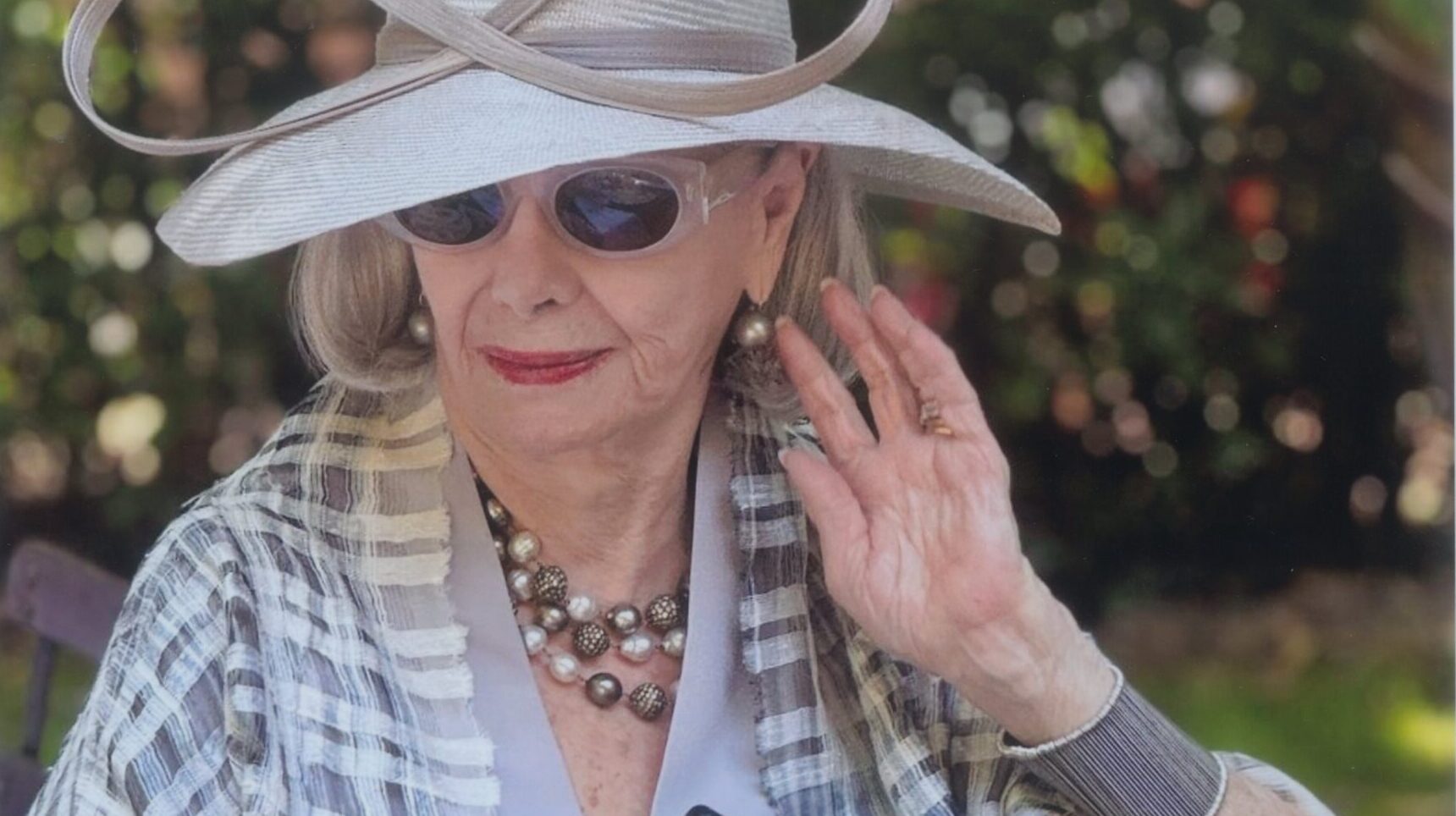
Paola Fendi is the eldest of the five sisters in the second generation of the Fendi brand, founded by her parents in 1925 in Rome. A businesswoman and leather goods specialist, she championed the artistry of leatherwork in handbags, luggage, and leather accessories, always embodying Italy’s universally recognized taste and style. Paola is a unique figure who spearheaded the brand’s international expansion. She was the first woman in the family to open stores on Fifth Avenue in New York and in downtown Tokyo—a city she adores and has visited 35 times during her tenure as president of the Roman fashion house.
At 95, Paola retains her Roman beauty, an extraordinary memory, an impressive ability to synthesize ideas, and a forward-looking vision for the industry. In this exclusive interview, the woman who served as president of Fendi for decades discusses the current state and future of fashion, the consolidation of major brand groups, the use of new technologies, and her dreams after nearly a century of life. Fendi has maintained a personal and family connection with Ibiza for more than three decades, where she has regularly spent her summers and purchased a traditional country house.
Can new technologies and artificial intelligence replace traditional craftsmanship and jeopardize its future?
Artificial intelligence, if misused, can become a tragedy. I believe, however, that it should be used to improve life, not to destroy it, because the moment a human being stops exercising their own mind, what happens? They die inside. That is what worries me. Artificial intelligence is an incredibly powerful tool and runs the risk of ending up in the hands of a select few: those with economic, political, financial, and private power. Power today is a very complex thing; it’s made up of politics, business, and money. I don’t think it’s fair that one person—or just a handful of people—should be able to make decisions about the lives of millions of human beings. And I don’t think this can be called democracy—which is a beautiful word, but one that must also have real meaning.
Based on your extensive experience in the fashion world, how do you view today’s fashion?
When a designer creates, they are simply interpreting and reflecting the times in which they live, since fashion is a mirror of its era. If we look at today’s collections, we see many rigid, minimalist, and very linear silhouettes, with numerous dark, almost military-style colors. And this tells us something about the moment we’re living through. In contrast, when evening gowns make their appearance, we see almost an explosion: incredible creations, colors, fantasy—something that seems to belong to another world, perhaps because it represents what people would like to have but feel they cannot have in their real lives. This exaggeration of the evening world thus becomes an expression of a desire, of an aspiration. Through his own creations, the designer portrays today’s world. It could not be any other way.
Italian fashion is famous for its exquisite craftsmanship in clothing production and in working with leather and fine materials. Will this handmade clothing industry disappear, or will it be strengthened in the future?
Technology and artificial intelligence will undoubtedly change fashion, but I don’t think they can replace the artisan’s hand. The hand is guided by the mind, the spirit, experience, and many years of work. The artisan puts a part of themselves—of what they know and have learned—into their work. If a machine were to completely replace all of this, we could no longer call it craftsmanship. Italian fashion is famous worldwide precisely for its artisanal quality, its craftsmanship, and the use of fine materials. That is why handmade work will continue to be of enormous importance in the future as well. Moreover, I believe this heritage must be strengthened and shared more and more with the world.
Will the artisans of the future be different?
These days, there’s hardly any time left for self-education. In my day, it was different; you could learn by doing. Today, everything has become much more complex. I dream that in the future we’ll have artisans with college educations—people with a strong cultural background who bring that culture into their craft as well. Just imagine how wonderful that would be! An artisan who possesses not only extraordinary manual skill but also a deep cultural education! All parents want their children to go to college, and rightly so, since culture is a form of wealth, another kind of knowledge. But why couldn’t a college graduate later choose to become an artisan? We would have artisans capable of creating things that are increasingly beautiful, valuable, and significant. And perhaps, in the future, it will be even harder to find a great artisan than a doctor or a lawyer.
Will young people develop a new concept of fashion?
I’ve seen much of contemporary fashion emerge and evolve, and I think that, alongside the already established big names, a very interesting new generation of young people is coming to the fore. It seems to me that there are more and more of them. I follow fashion because I’m curious. I’ve always been curious, and I think it’s important to stay that way until the very end. I watch how young women dress, I go into stores, and I see what’s happening. It’s my way of continuing to observe fashion up close.
What do you know about Ibiza’s fashion scene and its designers?
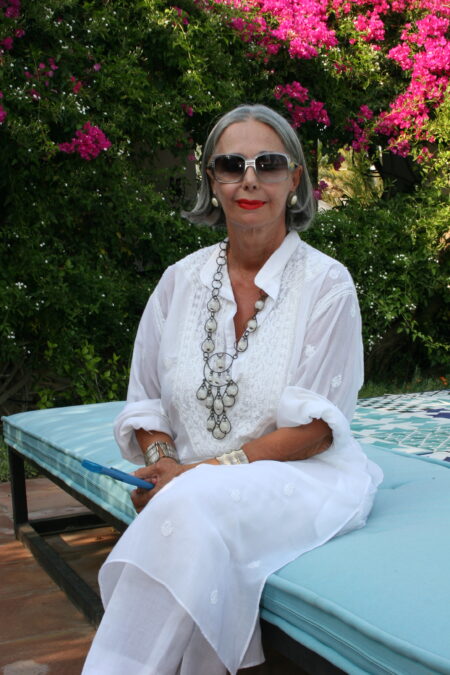
I believe that Ibiza’s fashion has something special because, even though it changes with time and technology, it continues to maintain a distinctly artisanal and international character. As long as this product captures the soul of Ibiza, it will be successful. Ibiza is the island of the blue, crystal-clear sea, of green pine trees that slope down the hills to the sea. It is the island of freedom, where you can walk barefoot, where the sun shines and the moon lights up the night. It is color, it is energy, it is life. This is the effect Ibiza has on people. How many times have I seen tourists—especially those from Northern Europe—arrive at the port, dressed in a very stiff manner, with their shorts and their orderly way of life. Two or three days later, after they’d visited the island’s boutiques, I could hardly recognize them. They seemed like different people.
Is the evolution of Adlib Ibiza fashion, after 55 years of history, focused on the future?
It’s not just the way people dress that changes—their habits change, too. Those tourists no longer ate at noon or at seven in the evening; they learned to have lunch at two and dinner at ten. This is the change that Ibiza manages to bring about in people. It’s extraordinary that a fashion trend like Ibiza’s has managed to endure for so long, because it’s both traditional and modern at the same time. Naturally, it must evolve with the times. If life changes, if the waistline rises or falls and proportions shift, the silhouette must change as well. Perhaps the fabric, the spirit, and the colors remain the same, but the silhouette changes. The customer may not be able to explain this difference technically, but they perceive it as a whole.
Can you explain how a brand as local as Adlib Ibiza has survived changes, technology, and the passage of time while maintaining its artisanal and international character?
We need a project for Ibiza’s creative young people because new names and new brands are constantly emerging. Joint fashion shows are organized, but then everyone goes their separate ways. If I were young and still eager to start something, this is exactly what I’d think about. Ibiza lacks a place that brings these new brands together—a large retail space, like the department stores found in New York, Paris, or other major cities. I envision a place dedicated to Ibiza’s new fashion scene, where many young brands can have their own small spaces but showcase their work together. The impact would be incredible. Anyone arriving on the island—even if only for a few days—could find all the creativity of the new Ibiza in one place. These young designers need exactly this: a shared space and greater commercial clout.
Will the future of multinational brands and their consolidation into large conglomerates increase their power?
In the future, we’ll see more and more large groups in the fashion world. Being part of a large group offers enormous strength, even when it comes to simply buying advertising space or gaining visibility. Think about the difference between a group that owns ten or twelve brands and a single independent company. Clearly, the large group will have much greater bargaining power. These large groups may even have the power to help a brand grow or hold it back, depending on their own interests. Without a doubt, this is a form of concentration of power, and it’s an issue worth reflecting on.
Will Zara, H&M, Uniqlo, and the ready-to-wear brands that have democratized fashion remain leading brands in the future?
Some companies have done extraordinary things; they’ve even democratized fashion. In this regard, I always think of Zara’s founder, Amancio Ortega, who started practically from scratch in Galicia and managed to build a global empire. And something I find particularly smart is that the heart of the company has remained there, in the place where it all began.
Is online shopping a good distribution method for young people, or does it lead to impulse buying?
Online shopping, especially for young people, is now an unavoidable reality. They’re constantly on their phones, shop using their phones, and can easily return or exchange what they buy. Furthermore, some of these trends have made fashion accessible to virtually all social classes. Personally, I don’t particularly like shopping online. I use my phone for convenience and for emergencies, but I still really enjoy other things.
Was your long-standing relationship with the famous designer Karl Lagerfeld something special?
Throughout history, we have had great poets, great writers, and great artists. These are gifts that come along rarely. And every now and then, the same thing happens in fashion: a true creator is born—not merely a stylist or a designer—and this was the case with Karl Lagerfeld. Great talent inevitably emerges sooner or later, but I also deeply believe in another principle: unity is strength. I remember when Count Giorgini, a brilliant man from Florence, invited us—the brands of the fashion world—to come together and present our collections jointly in Florence, in the White Hall of the Palazzo Pitti. He worked tirelessly to make it happen because he believed that presenting ourselves as a group would have given much greater strength to Italian craftsmanship and style. We followed his lead, and that unity helped create a much stronger and more concrete image of Italian fashion.
You have fulfilled many of your personal and professional dreams and aspirations. What are your dreams now that you are 95?
Above all, I dream of the salvation of humanity. I’d like to see a world where my grandchildren and great-grandchildren can live happily. That is my greatest dream. I’d like them to start reading newspapers again and rediscover the charm and smell of printed paper, to rediscover the pleasure of touching the materials even before looking at them on a screen. I’d like them to read books and fall in love with paper, instead of living with their eyes glued to their cell phones. And, above all, I dream that people will continue to dream, because without dreams, you don’t live—you merely exist. These are my dreams. I’m 95 years old, and I’m still here. My body may be 95, but my mind is 25.
Looking back from a distance, how do you see the future of Fendi after its glorious past?
My professional relationship with Fendi has been something special: it has lasted more than 50 years. There were five of us sisters, and we’ve always worked together. In the fashion world, it’s not all that common to see people working together for more than half a century. Based on my experience and observing from the outside, it seems to me that Fendi is going through an interesting phase. There’s now a new designer, Maria Grazia Chiuri, which in a way represents a return. In fact, Maria Grazia Chiuri and Pierpaolo Piccioli cut their teeth at Fendi and worked with the brand for many years. That’s why their return holds special significance. I can’t help but wish them tremendous success, because my love for Fendi has never changed. And love is different from interest—because love lasts.


