







Long before it became the global epicenter of summer leisure, Ibiza was a haven for artists and creators fascinated by its light. One of its most prominent figures was Carloandrés (1926–2018), a painter and mentor to several generations on the island, whom local institutions are honoring on the occasion of his 100th birthday.
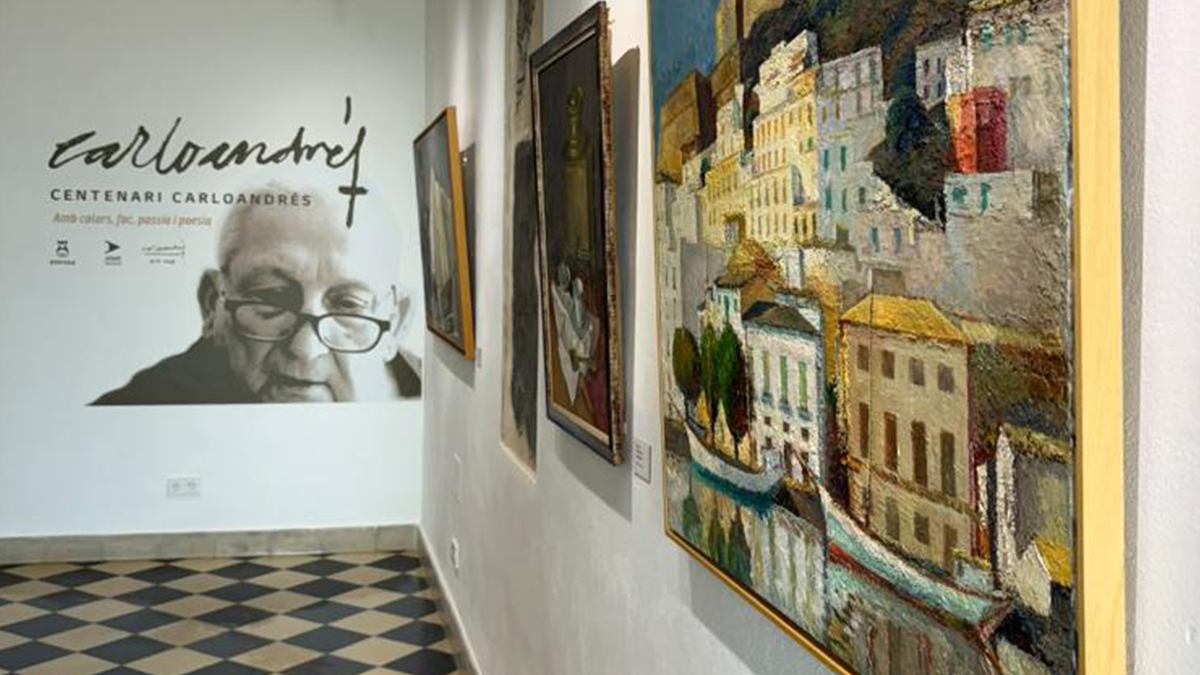
Under the titles “With Colors, Fire, Passion, and Poetry” and “With the Same Colors, other visions,” the Eivissa City Council has organized two exhibitions commemorating the centennial of the painter’s birth, which will be open to the public through January 22, 2027.
The exhibitions bring together some sixty works by the artist from the 1940s to the early 2000s, featuring various painting techniques such as oil on canvas, drawing, encaustic, ink, and prints, most of which were created in Ibiza. Among the oil paintings are landscapes of Ibiza from the middle of the last century, as well as various portraits and other subjects.
The Refectori Gallery houses some of the artist’s most representative works, as well as a small collection of documents and biographical materials—including bookplates, illustrations, and publication headers that he designed himself—while Es Polvorí primarily showcases the artist’s lesser-known styles and motifs.
The cultural program concludes at Sa Nostra Sala (Aragón Street). There, on Thursday, November 19, the Consell Insular d’Eivissa will open “Arts longa, vita brevis,” a third exhibition featuring some thirty pieces that blend his works created on the island with those he painted elsewhere.
The professor who chose Ibiza against all odds
Carloandrés’s story is that of an artist with a wanderer’s spirit who found his place in the world. He was born almost by chance in Sada (A Coruña) in 1926, grew up and was educated in Valencia and Madrid, but always took pride in his triple heritage—Galician, Valencian, and Ibizan.
His turning point came in 1958. After earning the second-highest score in Spain on the competitive exam for a professorship in Artistic Drawing, he surprised everyone by accepting a position at the School of Applied Arts and Artistic Trades in Ibiza. Not only did he end up directing the school, but he also became the go-to teacher for hundreds of young people at the school, at the Colegio Seminario, and at the Monjas de la Consolación.
Although his work traveled halfway around the world—from Madrid, Barcelona, and Valencia to Buenos Aires and Switzerland—and every summer he would escape with his paintbrushes to places like Morella, Castro Urdiales, and the Pyrenees near Jaca, Ibiza was always at the heart of his painting. Now, one hundred years after his birth, the island is returning the favor by opening wide the archives of its memory.


