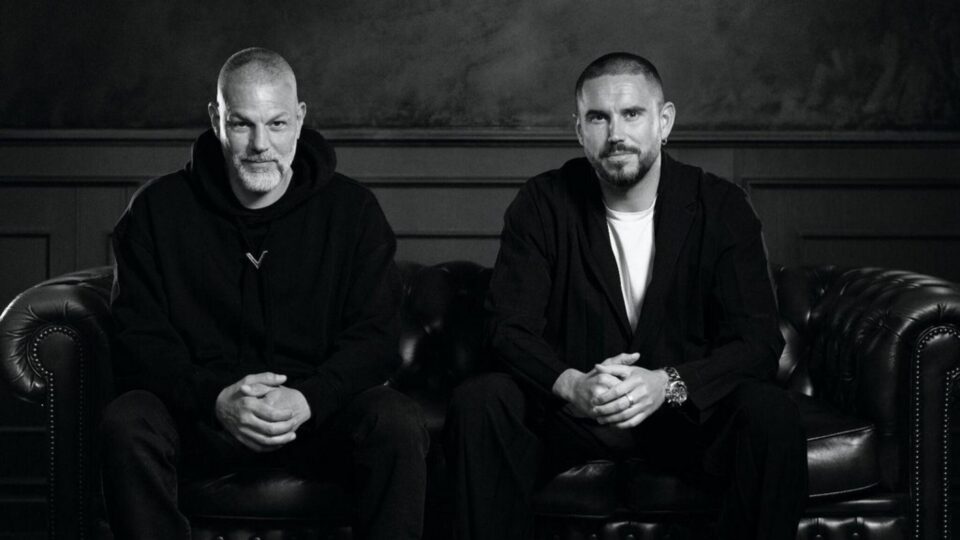








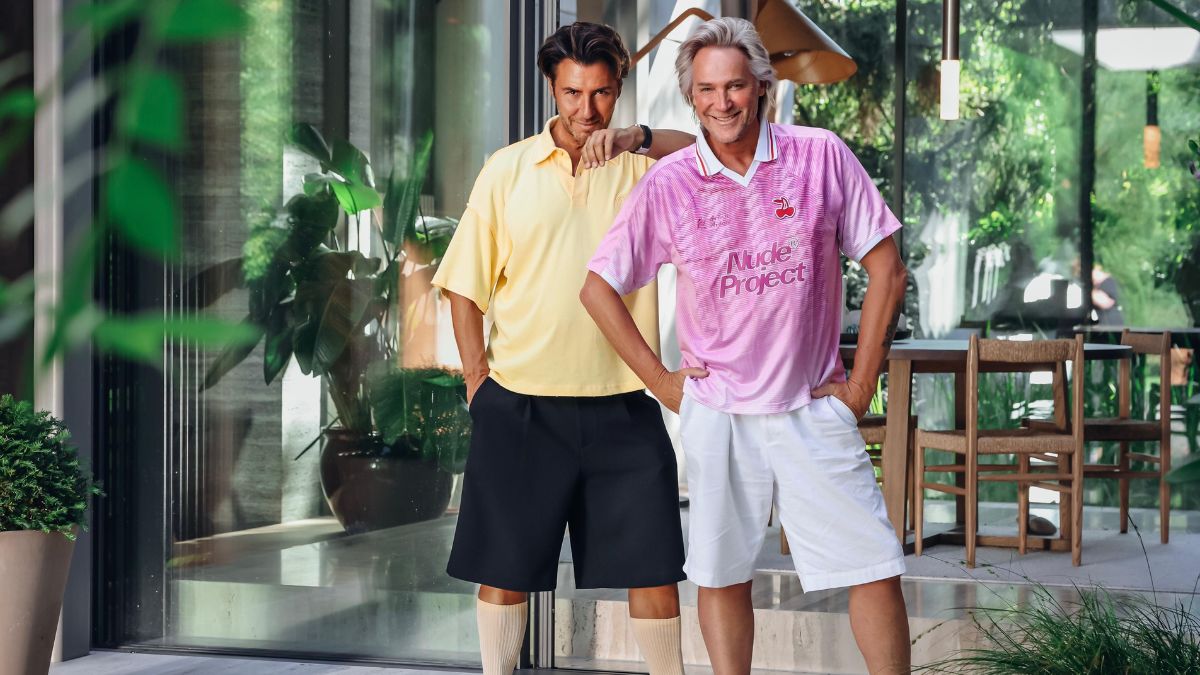
Ger Valkenburg and Dyon Hagenaars are two Dutch fashion entrepreneurs based in Ibiza who have integrated well as residents and want to make a life there and build a business.
Has DC Models grown rapidly as a company?
We founded DC Models Netherlands 35 years ago in the Netherlands as a small company and, step by step, have succeeded in creating a leading modeling agency. Our philosophy is to climb the ladder step by step. It’s better to climb them one by one than to fall all at once. We don’t just work with image and fashion; we also value people’s character when we approach a company or a market. People are people, not products.
What were they looking for in Ibiza and what did they find?
We have lived here for 22 years and have come to understand the local lifestyle and culture. From the very first day, we set aside our Dutch culture to fully integrate into the Ibizan way of life. We have taken the time to get to know the roots of Ibiza and its people, and that’s why we have so many Ibizan friends. Based on this understanding of the island, we plan to expand our business.
How did you start your business?
We started by collaborating with the Council on Adlib Fashion and expanding our work to other events. We thought about the Ibizan way of doing things, since there’s a difference between how things are done in the Netherlands and in Spain – it’s quite fun. We got in touch with the Council and Adlib Fashion when Marta Díaz was the vice president; didn’t speak a word of English, so to the first meeting in Ger she went with an interpreter, then we were advised it would be better to speak in Spanish, so Gea spent a week in a convent to learn the language ‘express’ style and in record time. A translator can translate your conversation, but they can’t convey your passion.
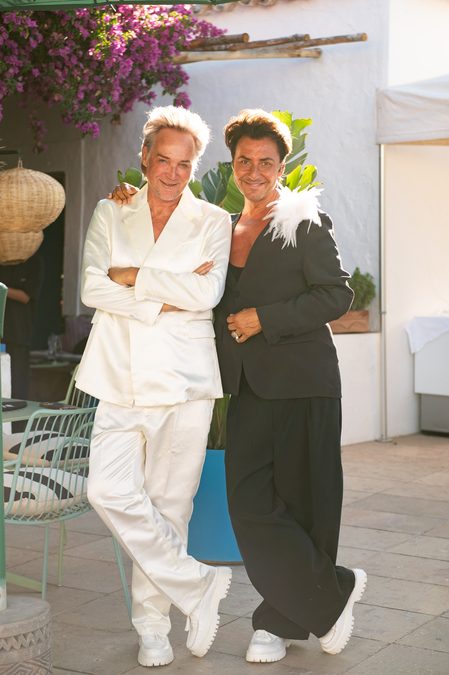
(Photo by DC Models; Photographer: Noortje Dalhuijzen)
What does Ibiza mean to you?
We really like living here; it’s a very big city where everyone knows each other, as if it were a small island. We love its culture and traditions, but we have a different approach to business. It’s a beautiful island that lends itself well to international use, since it’s close to the equator; it has culture, values, nature, beautiful light, and various elements we can use to photograph fashion and accessories for our European clients. We prefer the Spanish to the Dutch; the people here are friendlier, warmer, and quickly invite you to their homes for a meal, and it’s easy to make friends. Communication is more fluid, intimate, and personal.
What is your business objective on the island?
We want to start slowly; we have a 35-year-old business that’s doing well, but there are so many business challenges and opportunities here that we’ve thought about opening a small office in front of the Teatre Pereyra in 2027. This is our plan to raise our profile on the island. We’ve worked with other partners in the past, but now we want to do it on our own. This is our future project in Ibiza, as we spend more and more time here than in the Netherlands; in fact, we’ve even received a ‘tax reminder’ for spending more time here than in our own country. DC Models Ibiza will be an independent company, separate from the parent organization, DC Models Nederland. We share the management and scheduling; Ger spends more time in Ibiza and I’m in the Netherlands when needed.
How do they work as a couple and as a business?
Ger started as a model 35 years ago, then became a partner in the company, which was originally Dyon’s. We are both strong-willed, so we share the business responsibilities but complement each other well. Ger handles administration and business relations, while I (Dyon) take care of planning, creativity, decoration, and shows. We maintain our freedom by working together because it’s better to let each other do things our own way; we apply this same approach to the people who work with us, allowing them to take initiative. People work better when they bring their own ideas and creativity, and this leads to better results.
How has your collaboration with Adlib been?
We believe it’s a brilliant idea for the Council to support Moda Adlib; it’s charming and incredible, as it’s a fashion line with its own distinctive identity. However, we don’t want to focus solely on Adlib, since we’re looking for other challenges. We would like to bring Italian shoes to the island to photograph, or sportswear from the Acics brand, for example. We have also photographed a range of cosmetics from Australia, and we believe that the combination of all these projects is what makes our work as an agency so interesting.
Are they also collaborating with Moda de Formentera now?
The Council of Formentera asked us to work for them, and we have already organized the show twice as a modeling agency. Fashion in Formentera is more commercial; it features various shops trying to establish themselves and sell their products, which has its charm, but it’s not a fashion brand like Adlib. It’s similar to the runway shows we organize in Belgium, Germany, or the Netherlands. We didn’t realize there was such a wealth of fashion in Formentera; it has surprised us.
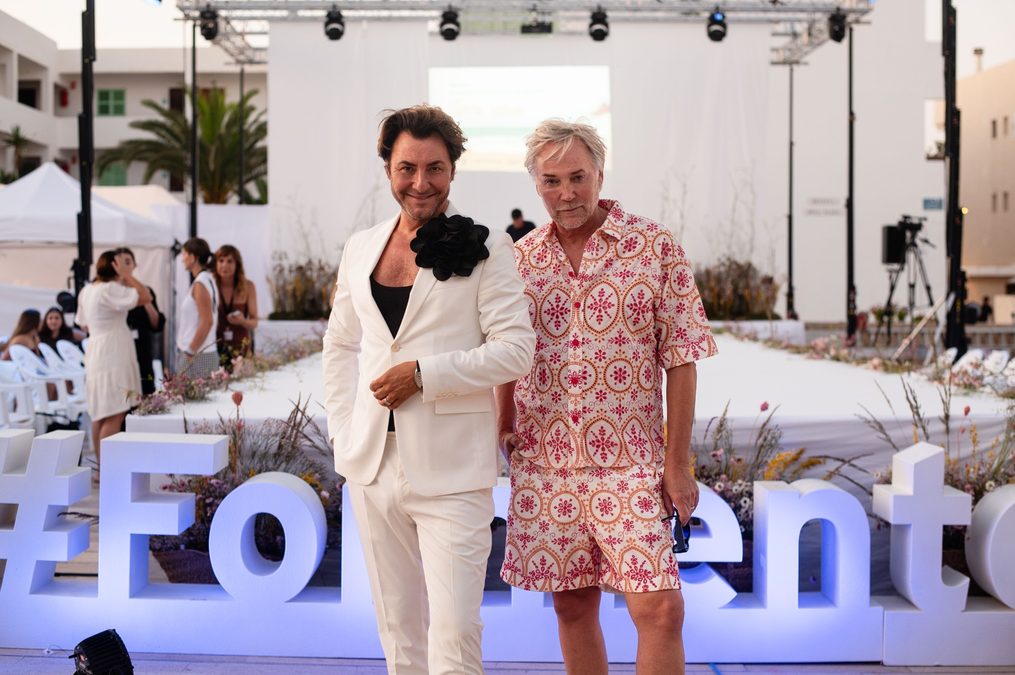
(Photo by DC Models; Photographer: Noortje Dalhuijzen)
Has fashion changed on a global scale?
Fashion is cyclical; models are expected to be more or less thin at certain times. It’s a constant cycle that we’ve experienced several times throughout our careers. Above all, we want to prioritize the human factor and respect for the person; now you see again that there is a great demand for older women because that’s what sells in Europe. In the famous Victoria’s Secret fashion shows, there are models between 30 and 45 years old. On the other hand, we are facing a somewhat problematic change in the form of artificial intelligence; we have to consider how we can respond creatively to AI in our field, as it is something new and we have to approach it with care and creativity.
Why are there so many internationally famous Dutch models, such as Doutzen Kroes, Lara Stone, Karen Mulder, Yolanda Hadid, and Rianne Van Rompaey?
The Dutch are genetically very tall, which makes them more striking and ideal on the runway. The Spaniards are a bit shorter and slimmer, and this highlights a difference in fashion culture. One thing we find quite charming—and do quite often—is to swap our Spanish models with those from Belgium, Germany, and the Netherlands, and bring European models to the Balearic Islands so they can see different faces and different ways of modeling. Spanish women are beautiful and elegant, and the men are masculine, while European models are taller and blond, and there are attractive young people who stand out among the Spanish models. This exchange is interesting because airfare is cheap, which makes it feasible to mix it all up and create a surprise. This is the secret of our agency.
What is the difference between working as a modeling agency in the Netherlands and in Ibiza?
In the Netherlands, everything moves very quickly; it’s impersonal. In Ibiza, it’s quieter, friendlier, and more relaxed. We’ve had to adapt to the island’s work pace. We wanted to introduce the Dutch high-speed model, but we’ve come to realize that there’s another way of working, a more leisurely one. Here, time takes on a different dimension and works differently.
Why do all your countrymen want to live in Ibiza now?
Haven’t things always been this way? I’m surprised that the Dutch who have houses on the island and those who come here on vacation seek out their fellow countrymen to socialize; they’re like rabbits that want to stick together. They go to the same restaurant, the same beach, and when they move here they do exactly the same things they do at home; they don’t learn the local culture or way of life. Few speak Spanish, they don’t integrate, and they want to eat their own food; they have a hard time adapting. I just don’t get it.
Is clothing and the way people dress very important in Amsterdam?
Spanish women are more elegant than European women; current European fashion is a reflection of social status. Everyone wants expensive brands to flaunt their economic power and social standing; a company director wears a suit and tie, just like those who work at a bank or a traditional company in Spain – that’s how it has to be, and that’s what we do.
Is Ibiza more cosmopolitan and bohemian, and do people dress differently there?
There are still echoes of the hippie and bohemian era; in everyday life, people dress casually and fun, but our friends put on more traditional clothing to attend a wedding or a funeral, at which time they wear classic jewelry and outfits, linked to their traditions and roots. When we go to a party with friends, they take out all the Ibizan jewelry from Elisa Pomar’s jewelry box, which is really charming and interesting.