








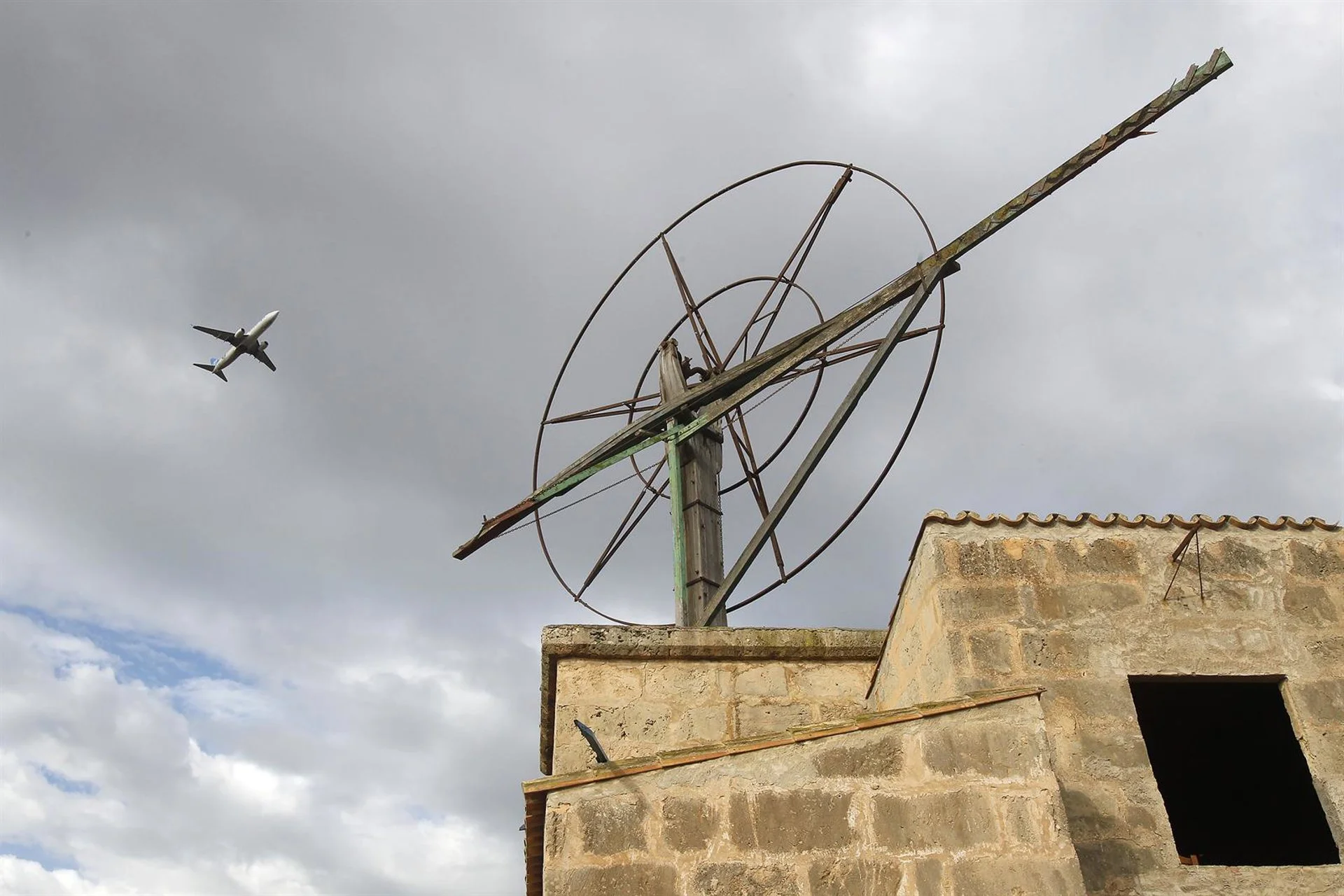
Airlines are facing the winter season in the Balearic Islands with a 4.4 percent increase in their passenger capacity, up to 10.37 million, according to the Airlines Association (ALA). By airport, Palma Airport will see a 6 percent increase in seat capacity, to 7.98 million, while Menorca Airport will record a 1.2 percent increase, to 700,392 seats. At Ibiza Airport, on the other hand, a 1-1.% reduction in the number of seats is expected, to 1.6 million this winter.
In total, 145.6 million seats have been scheduled for the current winter season in Spain, which runs until March 2027, an increase of 5.5 percent compared to the same period last year, although possible schedule adjustments cannot be ruled out due to the high level of geopolitical uncertainty and rising fuel prices.
In this context, the president of the airline association, Javier Gándara, warned on Monday at a press conference that the situation is “drastically” reducing airlines’ profit margins worldwide, with “no clarity on how long it will last.” Currently, major airlines have between 60 and 80 percent of their jet fuel costs covered for this winter season.
As for regional performance, capacity in the Canary Islands remains stable this winter, while the Balearic Islands and Andalusia are experiencing growth of over 4 percent. Meanwhile, Adolfo Suárez Madrid-Barajas Airport stands out with a 10 percent capacity increase, while Barcelona-El Prat Airport has experienced 1.9 percent growth.
As for the summer season, the number of passengers, which reached almost 192 million, recorded a year-on-year increase of fewer than 1.35 million flights, that is, a +4.4 percent increase compared to +4.7 percent, respectively. According to Gándara, the decisive factor in this was the price of kerosene, which affected load factors, despite significant fuel hedging policies.
These increases were driven by the intra-European segment, which recorded a 5.5 percent increase in traffic during the summer season, compared to the domestic and intercontinental segments, which showed similar performance, with increases of around 3 percent.
According to these forecasts, the business association expects a new all-time record for passenger numbers before the end of the year, as this positive trend is based on the strong performance recorded during the first nine months of the fiscal year, a period in which passenger numbers reached 257 million in September, an increase of 4.1 percent.
Looking ahead to the summer of 2027, the ALA president has warned that uncertainty is at a ‘historic high,’ comparing the situation to the Covid-19 pandemic, as hedging policies are disappearing or being reduced, in some cases covering only 15–50 percent of the price of hedged crude oil.
Other challenges: rising costs
Aside from the war, during his speech, Gándara highlighted a series of challenges that the aviation sector also faces, such as the review of the European Union Emissions Trading System (ETS), and called for the additional costs associated with the use of sustainable aviation fuels (SAF), the price of which is three to eight times higher than that of conventional fuel, to be taken into account.
In their opinion, the 110 million additional emission allowances reserved to incentivize the use of SAF are clearly insufficient to offset the additional costs that airlines are required to bear under the RefuelEU Regulation, and, therefore, this License Fund should be increased to a minimum of 500 million allowances.
As has been stated, this regulation would “substantially” increase companies’ environmental costs by expanding its geographical scope of application to a distance of 5,000 kilometers from the center of Europe, jeopardizing the continuity of the global emissions reduction and offset system, CORSIA, sponsored by the ICAO.
Regarding SAF, the ALA president has stated that its high price and limited availability are barriers to its large-scale implementation. Therefore, he reiterated his call for public authorities to provide support by introducing incentives to encourage its production and consumption.