







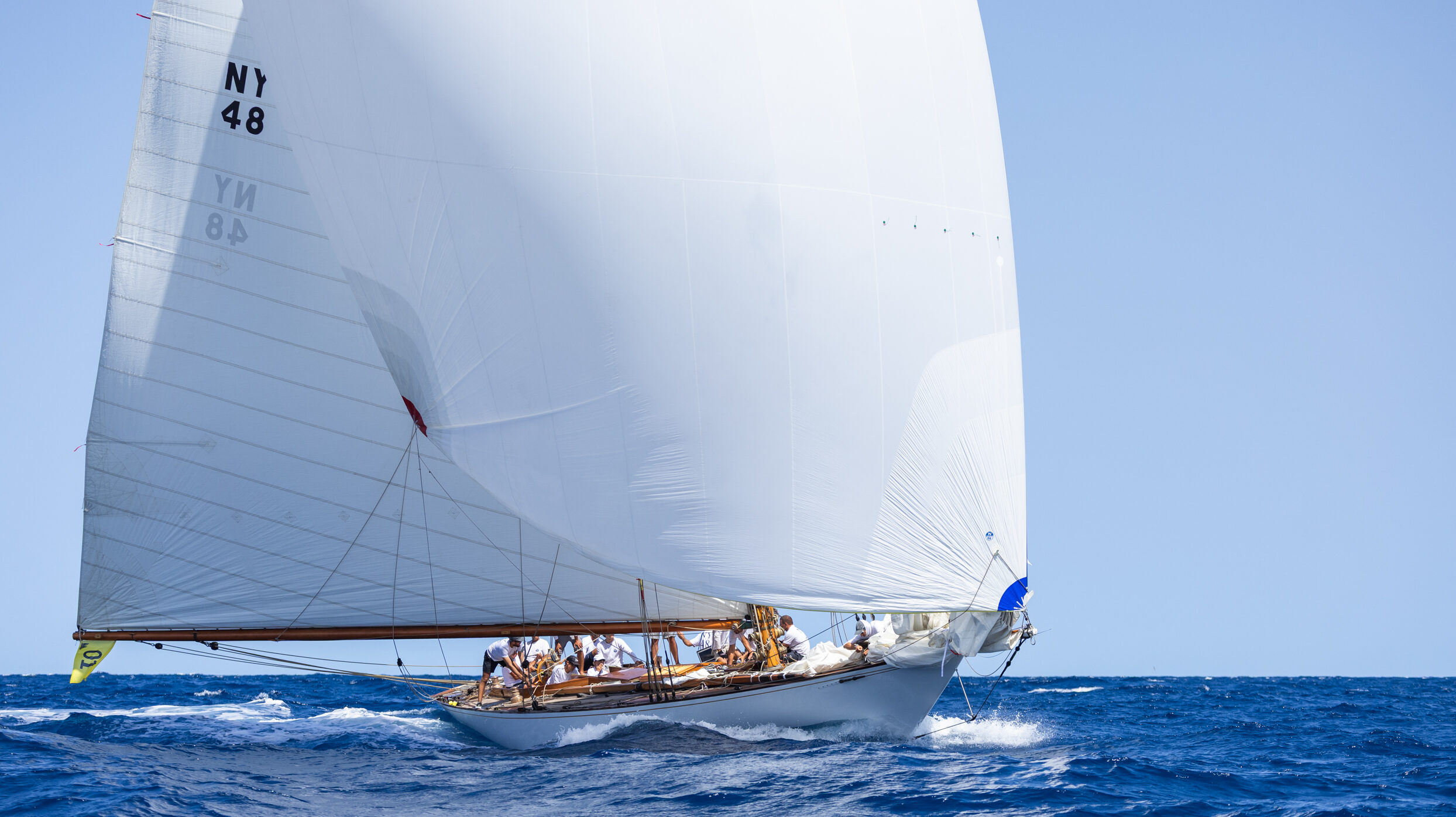
The 22nd Repsol King’s Cup of Classic Sailing has concluded in the waters of Maó, in an event characterized by fierce competition, tradition, and changing weather. The five leaders from the final day were ultimately crowned champions in an edition that brought together 41 boats from 12 countries and managed to complete the planned four-day program, with a race held each day.
Organized by the Maó Maritime Club, the competition has once again consolidated the Menorcan port as one of Europe’s main hubs for classic sailing. The fleet, with an average build year of 1957—about 69 years old—and an average length of 16.6 meters, has offered throughout the week an unusual combination of naval heritage and high sporting performance.
The final day also saw the participants compete under a finally clear sky after three days of overcast weather. The five categories tackled a 13-mile coastal course along the northern coast, near the port of Maó.
Lady Anne commands among the great ships.
Among the large sailing yachts, the predictions proved accurate. The Lady Anne (1912), a 15-meter yacht designed by William Fife III, confirmed its status as the favorite and took the overall classification with undisputed authority. The yacht owned by Gonzalo Botín won three of the four races and finished well ahead of the rest. Keith Mills’s Viveka (1929) took second place, while George Ruiz’s Altair (1931) completed the podium after Cariad (1896) was forced to retire due to damage on the second day.
“We were the favorites, but if Viveka hadn’t retired on the first day, he would have been just as much of a favorite as we were,” explains Gonzalo Botín. The skipper acknowledges that the last day was “enjoyable, although complicated, like the rest of the week, because of the wind and waves.” The victory also has an element of redemption. It allows the team to make up for last year’s race, when a broken jib pole and a broken crossbar left them out of the title fight.
A three-way battle among the NY40
The gaff-rig era category was the center of much of the week’s competitive tension. The three NY40s present in Maó were engaged in a very close battle that ultimately went in favor of Chinook (1916), designed by Nathanael Herreshoff and owned by Paolo Zannoni. The boat stayed in the lead throughout the competition and took the title ahead of Marilee (1926), owned by Alessandra Angelini. Donna Dyer’s Rowdy (1916) had to settle for third place despite winning the last two races.
The paradox for the boat based at the Royal Yacht Club of Palma arose on the first day: a disqualification ended up affecting their entire Copa campaign and prevented them from capitalizing on their excellent finish in the competition. For the Chinook crew, strategy on the final day was as important as speed. “We knew we just had to finish the race to win, so we played it safe,” explains Louis Bave. “The Repsol King’s Cup is our favorite event of the season, and winning here is a great satisfaction.”
Varuna dominates the Bermudian Era
In the Bermuda Classic regatta, the Varuna (1939), skippered by British actor Griff Rhys Jones and winner of the first race, finished in second place. The Sonny (1935), skippered by Harold Goddijn, completed the podium. The Argyll (1948), owned by British actor Griff Rhys Jones and winner of the first regatta, took second place. The Sonny (1935), owned by Harold Goddijn, completed the podium thanks to a particularly consistent performance: three third-place finishes and a fourth.
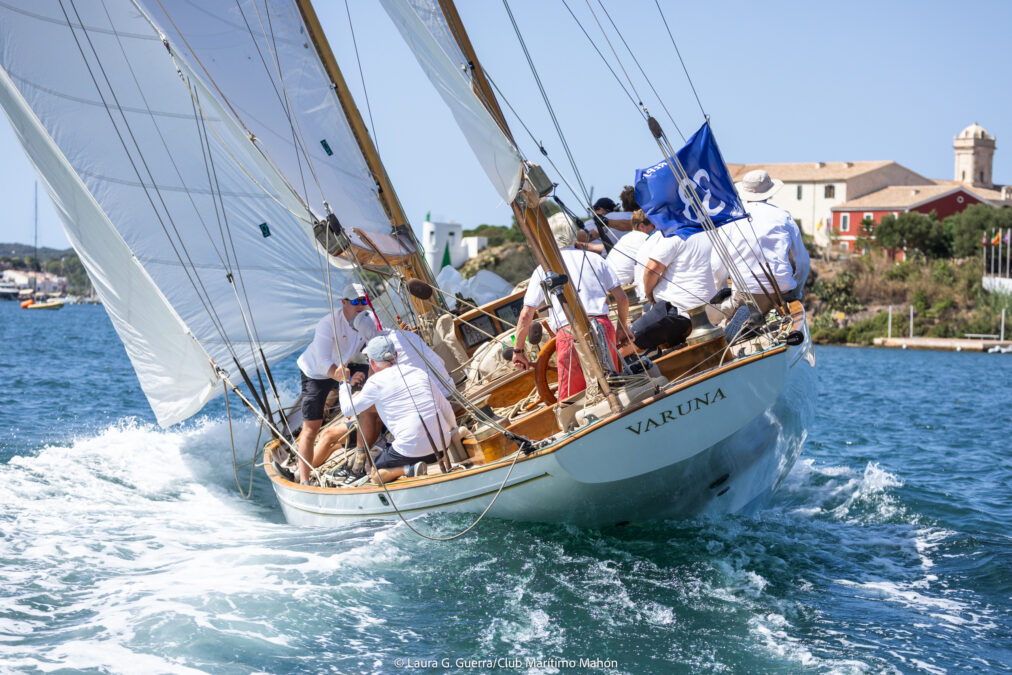
“We are very pleased because the team has done a great job in weather conditions that are not ideal for this vessel,” says Chloë Whitton, a crew member of the Varuna. The key, she adds, was “keeping the situation under control and staying on top of everything throughout all these stages.”
Argos: eleventh title in Maó
There are victories that solidify a legacy, and others that build a dynasty. In the Classics category, Argos (1964) – a Holman 42 designed by Kim Holman and built by Barbara Trilling – clearly belongs to the latter category.
His victory in Maó marks his eleventh title in the Repsol Vintage Sailing King’s Cup, after winning all four races. Andrew Harvey’s Clarionet (1966) finished second after failing to beat Argos in any of the races, while the Harris brothers’ Mowgli (1965) took third place. The result once again underscores Argos’s extraordinary affinity with these waters.
“It was a very hard-fought and difficult victory. What we do looks easy, but in reality, there’s a lot of work behind it,” summarizes Juan Colomar, goalkeeper for Argos. The Clarinet was their main threat, although the team managed to take advantage of the conditions: “Here, with stronger winds, we managed to make the most of our strengths to beat them.” The victory also had an emotional component. The team wanted to dedicate it to Gonzalo Infante, a former member of the Argos crew who recently passed away.
Andalusia-Barlovento, four for four
If there was ever a yacht that managed to turn consistency into absolute dominance, it was the Andalucía-Barlovento (1973). Designed and built by Harry Becker, Torres’s yacht won all four races it entered and enjoyed a perfect Cup campaign.
With local navigator Fernando Rita at the helm, the boat finished ahead of three models from the Spirit Yachts shipyard. Jens Ricke’s Legolas (1996) came in second, while Flight of Durgan (2007), owned by David Grylls, took third place. The result brings the Andalucía-Barlovento’s win tally in the Repsol Copa del Rey to two and confirms its ability to compete at the highest level in the waters of Maó. Rita attributes much of the success to the human factor. “The key to this victory was the crew, which is exceptional,” she explains. The team is made up of sailors from Málaga and Menorca, a combination that, according to the skipper, has been especially beneficial when it comes to “strategy and tactics.”
The victory, however, was not a simple matter from the start. “During the first two days we had more difficulties with the boat’s setup and the wind lulls,” Rita admits. The team managed to stay steady and gradually climbed the standings until, during the last two days, they found “the ideal conditions for the boat.”
A floating museum with 130 years of history
The importance of the Cup goes beyond the sporting standings. For four days, the port of Maó has served as a showcase for the evolution of sailing, with vessels representing more than a century of design, shipbuilding, and competition. The average age of the fleet is 69 years, but this figure hides extraordinary differences between the categories. The boats in the ‘Spirit of Tradition’ category have an average age of 32 years, compared to 60 for the ‘Classics’, 91 for the ‘Bermudian Vintage’, 104 for the ‘Gaff-Rigged Vintage’, and 106 for the ‘Big Boats’.
The range extends from the Cariad, built in 1896 and with 130 years of history, to the Victoria, a new build for 2026. It is precisely this coexistence of heritage and competition that explains much of the event’s appeal. In Mahón, century-old boats compete alongside much more recent designs, with age not necessarily determining the outcome. Technology, strategy, the boat’s condition, and above all, the experience of the crews remain decisive factors.
With its five champions decided in the previous round and an international fleet that once again has filled the port of Maó with naval history, the 22nd Repsol Vintage Yachting Copa del Rey thus brings another edition to a close, having consolidated its position as one of the most important classic sailing events in the Mediterranean.