






Skip to content

Forbes España

  • Listas
  • Economía
  • Empresas
  • Funds
  • Women
  • Travel
  • Health
  • Summit
  • Baleares
  • Tienda
  • Best Content Creators
  • Forbes 30 under 30
  • ÑanÑam
  • Nautik Magazine
  • Tapas Magazine

Latest issue

Latest issue
  • X Forbes
  • Instagram Forbes
  • Facebook Forbes
  • Linkedin orbes
  • YouTube Forbes
  • Listas
  • Economía
  • Empresas
  • Funds
  • Women
  • Travel
  • Health
  • Summit
  • Baleares
  • Tienda
  • Best Content Creators
  • Forbes 30 under 30
  • ÑanÑam
  • Nautik Magazine
  • Tapas Magazine
Balearic

The UIB's new solar panels will prevent 3.2 billion metric tons of emissions

The University of the Balearic Islands expects to save 1.2 million euros on its electricity bill and reduce CO2 emissions by 3,213 metric tons

  • Español
  • Català
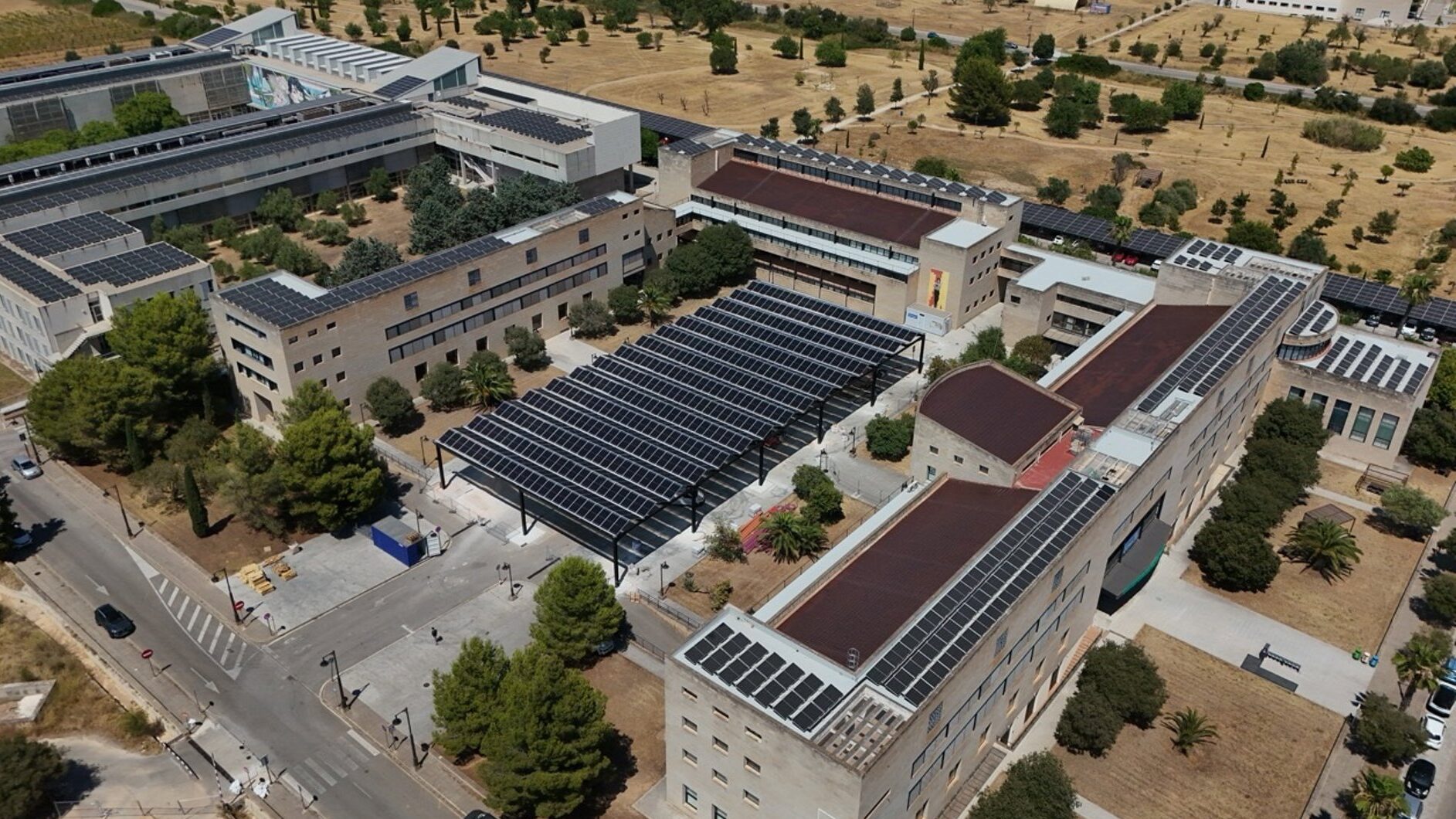
The UIB's new solar panels. Photo: Europa Press
by Forbes Baleares29 July 202630 July 2026Reading time 2 minutes

The University of the Balearic Islands (UIB) has completed the installation of a photovoltaic system with a total capacity of 7,357 kWp (kilowatts peak) on its Palma campus, a project that represents a significant step forward in sustainability and energy efficiency. Thanks to this initiative, the institution estimates savings of 1.2 million euros on its electricity bill and will prevent the emission of 3,213 metric tons of carbon dioxide (CO₂) into the atmosphere—a reduction equivalent to the annual carbon absorption capacity of approximately 160,650 trees.

To carry out this initiative, the university has utilized the rooftops of six campus buildings—Guillem Cifre de Colonya, Beatriu de Pinós, Anselm Turmeda, Gaspar Melchor de Jovellanos, Archduke Lluís Salvador, and Son Lledó—where 2,086 photovoltaic modules have been installed, with a total capacity of 1,251.60 kWp.

The project also included the installation of photovoltaic canopies in four parking areas, with a combined capacity of 2,133.26 kWp. In addition, various existing spaces on campus have been repurposed to create solar fields capable of generating 3,792.18 kWp, thereby optimizing the use of available land without impacting new natural areas.

These new facilities are in addition to the 473.62 kWp of photovoltaic capacity that was already operational on the roofs of the Antoni Maria Alcover i Sureda, Margalida Comas i Camps, and CampusEsport buildings. Taken together, the total installed capacity will enable the production of more than 100% of the electricity consumed by the Palma campus, establishing the UIB as an energy-self-sufficient university and reinforcing its commitment to the transition toward a more sustainable and environmentally friendly energy model.

Etiquetado:
  • CO2 emissions
  • University of the Balearic Islands

Artículos relacionados

  • The QS World University Rankings 2027 includes UIB among the top 1,400 universities in the world
    Balearic

    The QS World University Rankings 2027 includes UIB among the top 1,400 universities in the world

    by Forbes Baleares / EP
SpainMedia logo
  • The Newsroom Logo
  • Forbes Logo
  • Highxtar Logo
  • Nautikmagazine Logo
  • Tapas Magazine Logo
  • Forbes Logo
  • Forbes Women Logo
  • Forbes Travel Logo
  • Forbes House Logo
  • Forbes Baleares Logo
  • X Forbes
  • Instagram Forbes
  • Facebook Forbes
  • Linkedin orbes
  • YouTube Forbes

© 2026 Forbes España. Todos los derechos reservados. -

  • Aviso legal
  • Política de privacidad
  • Términos y condiciones para el registro y uso del sitio web
  • Política de cookies