








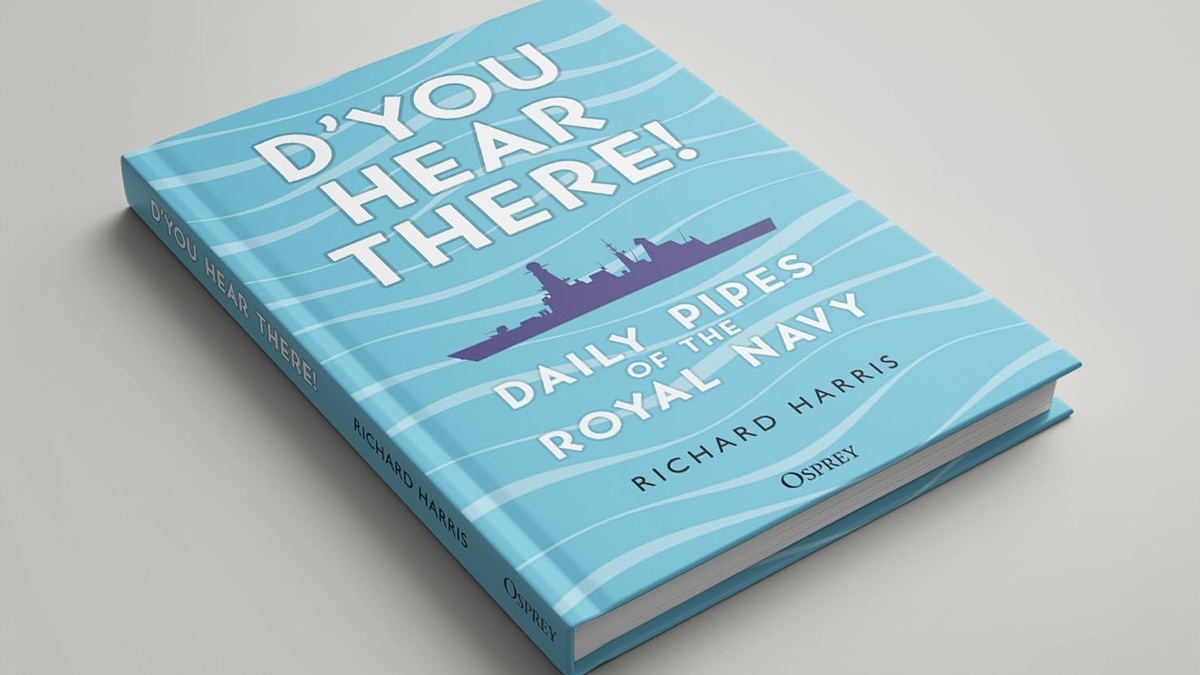
*D’you Hear There!* is a small but great book about a great naval tradition. The book shows that maritime history isn’t just found in battles, famous ships, or great expeditions—it also lives on in the everyday sounds that have set the rhythm of life on board for centuries. Sounds like the lapping of the sea against the hull, the hum of the engines, the thud of a hatch closing… and, in the British naval tradition, the voices that for centuries have set the rhythm of life on board. These messages or announcements, known as “pipes,” were much more than mere orders relayed to a crew: they constituted a language of their own, a blend of discipline, history, and seafaring culture.
In *D’you Hear There!: Daily Pipes of the Royal Navy*, Commodore Richard Harris delves into this unique world to explain the meaning of expressions that have been part of the daily routine on British ships and submarines for generations. Published by Osprey Publishing, the book offers a unique insight into life at sea through one of those traditions known only to true insiders—but which every maritime enthusiast should be familiar with.
A Dictionary of Life on Board
Before the advent of modern communication systems, sailors were guided by acoustic signals such as the bosun’s call or bugle calls. Although technology has transformed modern ships, the Royal Navy has retained the tradition of using pipes—signals used to organize everything from daily tasks to ceremonial occasions and operational situations.
Each entry is accompanied by an explanation that helps readers understand the human experience behind those words: the daily life of a crew, the hierarchy, the shared sense of humor, and the unique camaraderie that developed among those who spent long periods at sea.
