








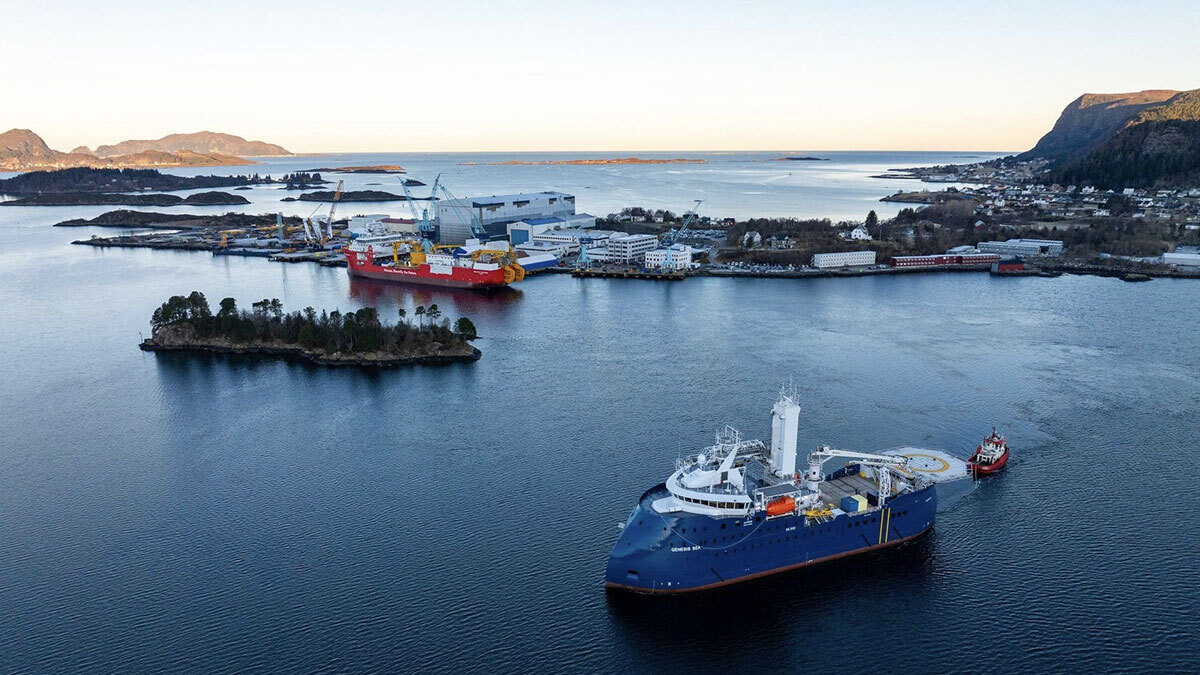
Herring disappeared in the early 1960s. By the early 1970s, stocks had completely collapsed in the North Sea. For many coastal communities, that could have marked the beginning of a long decline. Today, however, the area around the town of Ålesund, on Norway’s northwest coast, is a thriving marine ecosystem. Industry leaders compare it to Silicon Valley because of its ability to repeatedly turn local knowledge into globally competitive technology.
Nearly 200 companies employ more than 15,000 people and generate annual revenue of around 85,000 million Norwegian kroner (8,000 million dollars). Shipyards, equipment manufacturers, software developers, battery specialists, robotics companies, research institutions, and startups are all concentrated within a few hours’ drive of one another.
“What you see in the companies here, ten years after the oil and gas boom, is something special,” says Richard Inkster, who moved here from the Shetland Islands. “Norway can build a ship very quickly, but it’s the know-how, the trust, and the ability to bring it all together that are exceptional here. If you respect the maritime cluster, the world is your oyster.”
The contrast with Aberdeen is striking. The former oil capital of Scotland has suffered thousands of job losses and economic stagnation following the decline of the oil industry, and has struggled to generate the same momentum in offshore wind and hydrogen. In Norway, that transition began about 20 or 25 years ago.
“Fosnavåg was the center of the herring industry,” recalls Vegard Sævik, CEO of Havila Holdings. “That fishing mentality is still part of the philosophy here: earn your money, save it, and invest it; make it safer, bigger, and better. The entire region took the knowledge gained from centuries of fishing and applied it to shipbuilding and offshore shipping.” His father, Per, bought his first fishing boat at age 15 with the money he had earned working on other vessels. When herring stocks collapsed, the boats had to go farther out to sea, which required safer and better vessels and equipment.
In the early 1980s, Per sold the ship and founded his own company before eventually establishing Havila Shipping. Today, Per’s children run the family business, whose interests span offshore shipping, tourism, real estate, renewable energy, and maritime services. The company is also the majority shareholder in Havila Kystruten (Havila Voyages), one of only two companies authorized to operate Norway’s famous Coastal Route. In keeping with Norwegian shipping tradition, Havila also invests in real estate. The company owns 40% of a local hotel in Fosnavåg. “We felt it was necessary to attract business and help keep the maritime industry here,” explains Sævik.
Planet One Images/Universal Images Group via Getty Images
When Community Is a Competitive Advantage
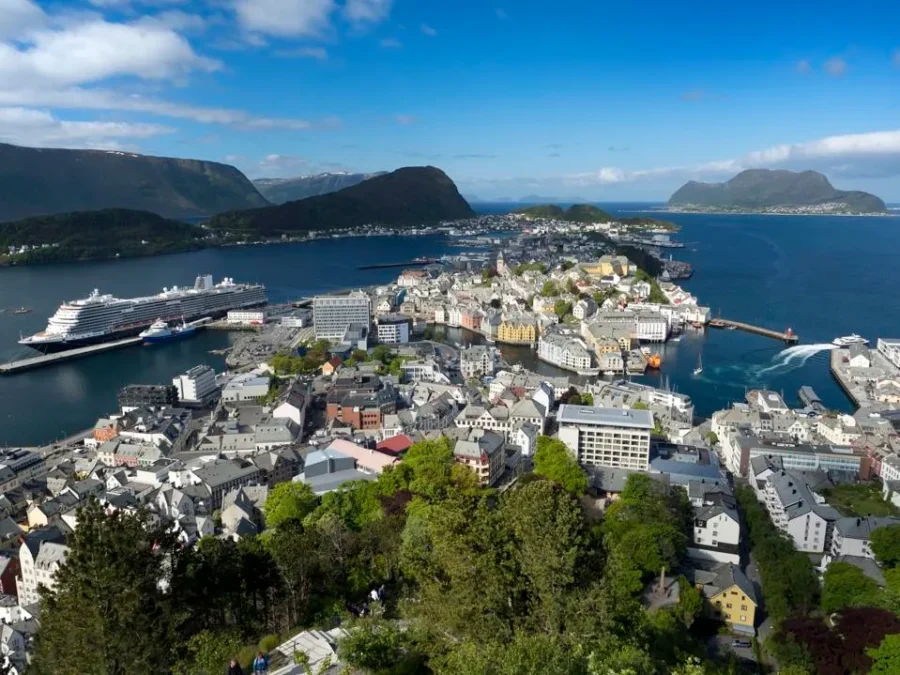
In picturesque Ålesund, Gunnar Haagensen explains why local investment is essential to the region’s success. It is a city that has literally risen from the ashes: in 1904, a fire destroyed nearly the entire town. Within three years, it had been rebuilt, thanks in part to international donations, including a generous contribution from Kaiser Wilhelm II. Today, Haagensen is the president and co-owner of Jangaard Holdings, one of Norway’s largest exporters of salted cod and clipfish. The company is one of the city’s leading employers.
Haagensen believes that investing in the community is essential to retaining young people in the region and preserving the skills on which its industries depend. He speaks enthusiastically about NTNU’s technical campus, though he is undoubtedly even more excited that the local soccer club’s women’s team will play in the Norway Cup final in September. He has also invested his own money in the city, including the restoration of the dilapidated theater and the frescoes discovered there.
During a dinner at the Polar Bear rooftop restaurant, atop the Scandic Park Hotel—owned by Jangaard— Haagensen expresses concern that Norway’s tax policies risk driving entrepreneurs abroad, drawing parallels with Sweden in the 1970s and 1980s. His own roots are likely too deep for him to leave. But he is concerned about the next generation. Between 2022 and 2023, 82 Norwegians with a combined net worth of about 46 billion Norwegian kroner ($4.3 billion) left the country. More than 70 moved to Switzerland, according to Dagens Næringsliv.
Building the Ships of the Future
Although Norway’s maritime heritage dates back centuries, the industry that emerged from the fishing fleets along the west coast looks very different today. Shipyards that once built trawlers now deliver some of the world’s most sophisticated offshore support vessels, as well as research vessels, expedition and cruise ships, cable-laying vessels, and Arctic icebreakers. Companies like VARD have become global leaders in highly specialized vessels, integrating advanced automation, digital systems, and increasingly energy-efficient propulsion technologies.
The region has become a testing ground for the future of naval engineering—not because of a single technological breakthrough, but thanks to decades of continuous adaptation.
Few people illustrate that evolution better than Stig Remøy. When Remøy bought his first fishing boat in 1978, the richest fishing grounds were found near the Norwegian coast. As fish stocks shifted in the following decades, the vessels ventured further out to sea. The industry’s expertise evolved alongside them.
Today, Remøy is CEO of Olympic Subsea, whose fleet serves both the offshore oil and gas industry and the rapidly expanding renewable energy sector worldwide. Olympic’s own vessels have also changed over the years to make them more efficient. For example, the Olympic Boreas is equipped with four-wheel drive, allowing it to use less power to move; magnets have replaced the propeller shaft, and thanks to a large battery, it needs only one auxiliary engine. “The ability to read the signs early on has always been important,” he says. “When oil was discovered in the North Sea, it was the Americans who brought much of the initial technology. They found shipyards, designers, and suppliers here. Before long, however, the Norwegian cluster took the lead in technology.”
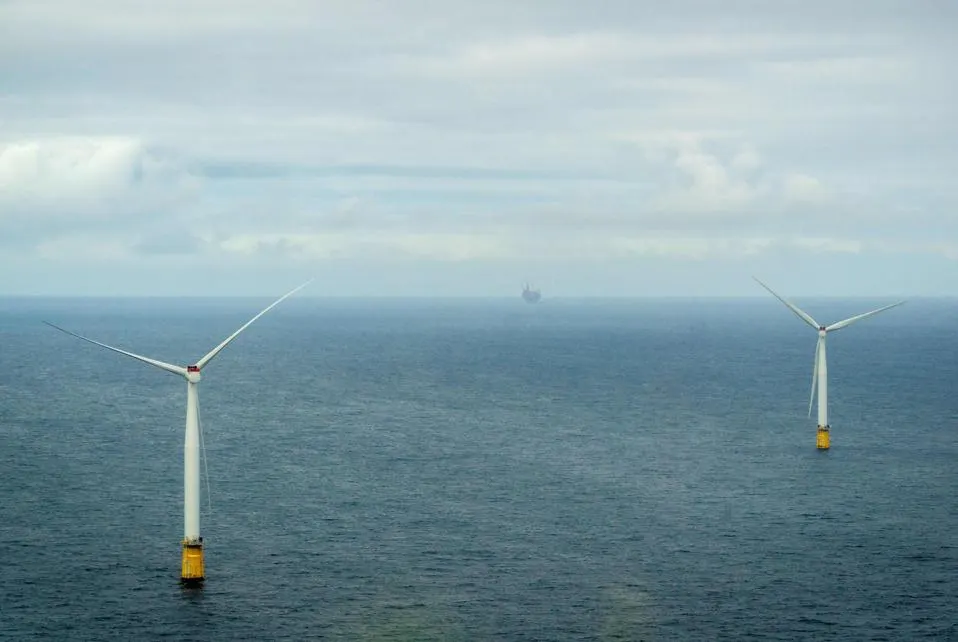
PHOTO: NTB/AFP via Getty Images.
By 2012, when offshore wind power was beginning to take off, Olympic had already started diversifying into the alternative energy sector. “Even before the decline in oil and gas, we had already begun working with renewable energy companies,” he says. “At that time, many people believed there would always be enough oil and gas
. Rather than viewing the energy transition as a choice between rival industries, Remøy sees efficiency as the constant.”
“Energy efficiency is the way forward, and the bridge to the next stage, no matter who the next U.S. president is.” That pragmatic approach reflects the prevailing philosophy throughout much of the Norwegian maritime cluster. Companies are less concerned with betting on a single winning technology than with building businesses capable of adapting as markets, fuels, and customer demands evolve.
Global offshore investment continues to grow, but Remøy believes that the industry’s major transformation has been technological rather than geographic. “We’ve gone from working in shallow waters to operating at depths of 2,000 to 3,000 meters,” he says. “We want to be in the blue ocean, not the red one.”
Timing matters. The OECD estimates that the global ocean economy could double in value by 2030. Seizing that opportunity will require new technologies, but also industrial ecosystems capable of developing and commercializing them.
Along Norway’s northwest coast, that transformation began more than half a century ago, when the herring disappeared.
The fish never returned.
Ingenuity, however, did.
