








Some political conventions serve to reorganize structures. And then there are those that function as a show of power.
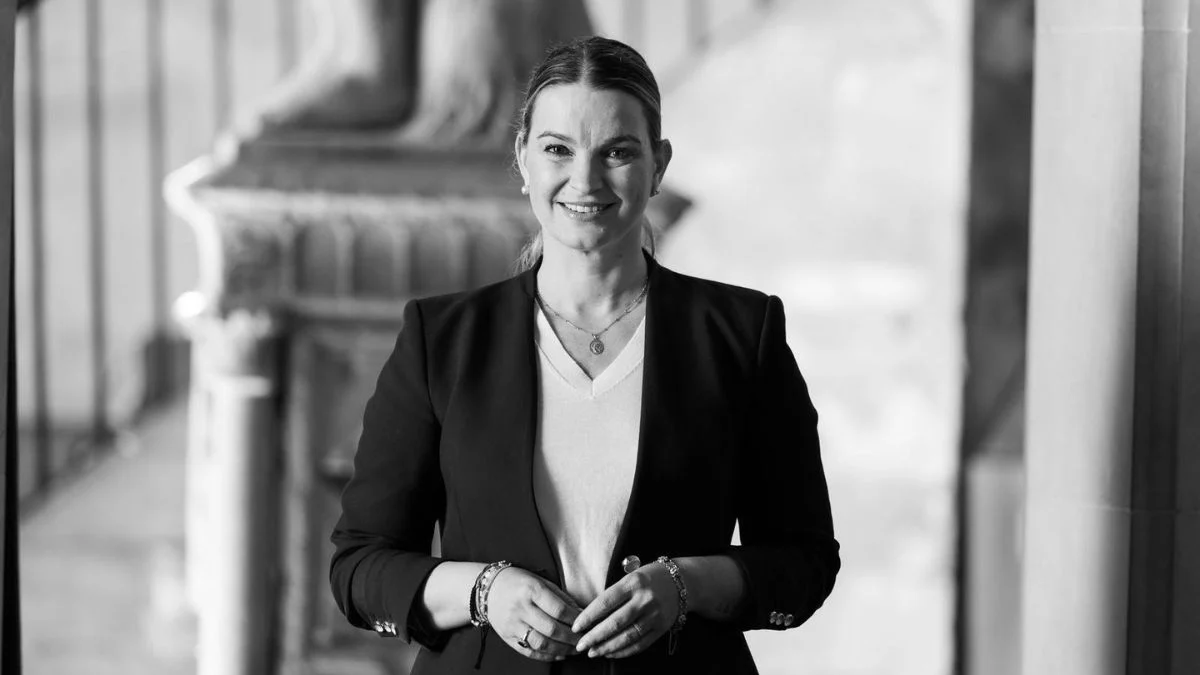
The 17th Regional Congress of the Popular Party of the Balearic Islands, held this Saturday at the Palma Convention Center, clearly fell into the second category. Marga Prohens was reelected president of the Balearic PP with 99.93% of the vote, a virtually unanimous endorsement that consolidates her internal leadership and strengthens her position just one year ahead of the next election cycle.
The result leaves no room for interpretation: the party is rallying behind a leader who, in just five years, has gone from leading the opposition to controlling the archipelago’s main institutions.
The political image Prohens projects today is very different from the one she projected in 2021, when she assumed the party presidency on the very same stage where she has now been reelected. Back then, she spoke of rebuilding. Today, she speaks of continuity, stability, and electoral expansion.
And the Balearic PP wants to convey exactly that: a sense of a stable government.
Backed by the party’s national chairman, Alberto Núñez Feijóo, and by leaders such as Cuca Gamarra and Miguel Tellado, Prohens used her speech to assert the Balearic Islands’ distinct identity within the PP’s national structure and to advocate for a political model centered on “centrality,” effective governance, and institutional stability.
But the convention also served to send a clear message looking ahead to 2027: the Balearic PP is not content with merely holding on to power. It wants to expand its influence.
During her speech, the president of the regional government hinted at her intention to seek a stronger majority than the current one, citing the trust built up over the course of the legislative session and highlighting issues of particular concern to the archipelago, such as housing, tourism management, immigration pressure, and regional funding.
Housing has, in fact, become one of the Balearic Islands government’s key strategic priorities. Prohens emphasized the need to build more affordable housing for residents and advocated for measures aimed at reducing bureaucratic red tape, promoting work-life balance, and strengthening public services such as healthcare and education.
All of this is taking place against a particularly sensitive political backdrop for the Balearic Islands, where striking a balance between economic growth, regional sustainability, and tourism pressure has become the legislature’s greatest challenge.
The conference also highlighted another significant point: the growing importance of the Balearic Islands on the national political scene.
It is no coincidence that Feijóo chose Palma to personally show his support for one of his most reliable regional leaders. The PP now considers the Balearic Islands to be one of its strategic regions, both for their institutional weight and their symbolic significance within the narrative of regional governance that the party is trying to project across Spain.
Aware of this, Prohens emphasized in his speech the idea of the Balearic Islands having their own identity within a pluralistic Spain. This is a particularly sensitive political stance in a region where language, insularity, and the territorial model continue to shape much of the public debate.
Unlike during other political periods in the islands, the Balearic PP is now trying to craft a narrative that emphasizes economic stability and pragmatic governance rather than constant ideological confrontation.
And that partly explains the overwhelming internal support received this Saturday. Because beyond the result—a nearly unanimous 99.93%—the real message from the convention was this: the Popular Party of the Balearic Islands is no longer in a phase of reconstruction. It is in a phase of consolidation.