








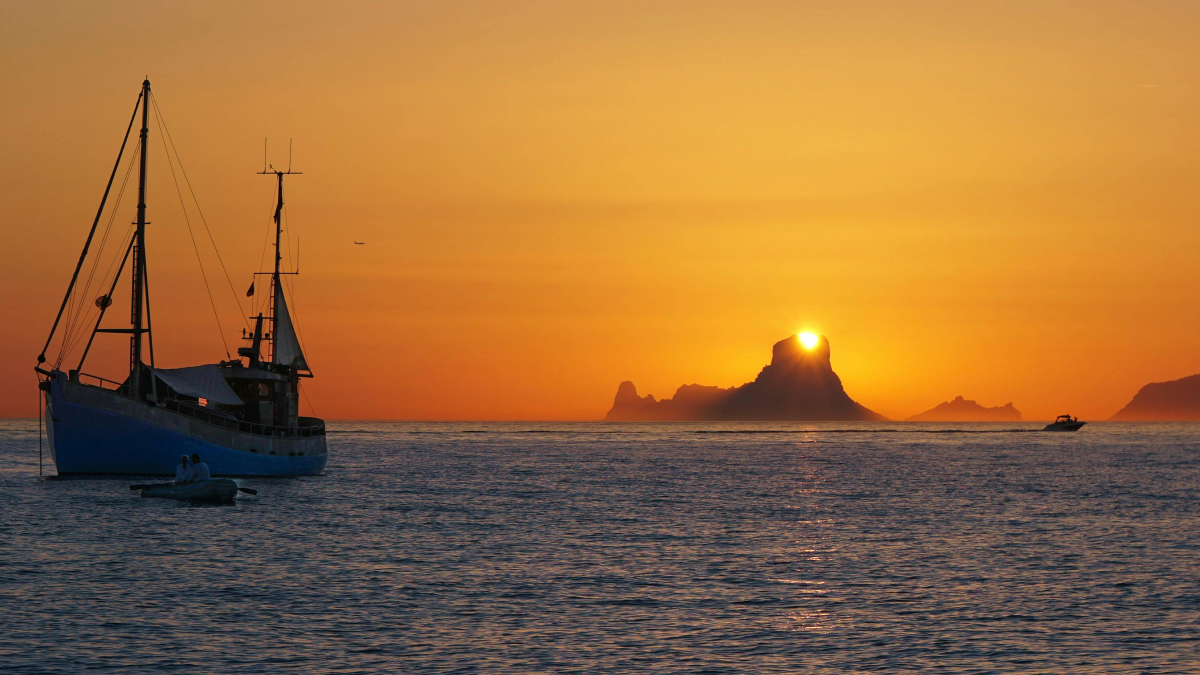
Ibiza is used to drawing crowds to its terraces with its music, sunsets, and parties. This summer, however, the main attraction will come from the sky.
With just under three months to go before the total solar eclipse on August 12—the first visible from Ibiza since 1905—the island is already experiencing a completely unusual tourism phenomenon: restaurant reservations have skyrocketed by 565.5%, according to data from CoverManager, reflecting the extent to which this astronomical event has evolved from a mere scientific curiosity into a genuine economic and experiential driver.
Visitor behavior is also changing. Reservations are being made much earlier than usual, online bookings are on the rise, and groups are larger. The average size of tables reserved for that day is now 5.49 diners, compared to the usual 3.2—a clear sign that the eclipse will be experienced as a collective and social event.
The island is thus entering a new category of experiential tourism where gastronomy, scenery, and astronomy begin to blend together. Because August 12 won’t be just any night in Ibiza.
For about a minute and a half, the Moon will completely block out the Sun, plunging the Mediterranean sunset into an almost surreal darkness. The eclipse will place the Balearic Islands within the path of totality, making Ibiza one of the best places in Europe to view it.
And the tourism industry has already caught on.
Hotels offering special experiences, beach clubs hosting stargazing dinners, tour operators planning trips to scenic overlooks, and restaurants filling up months in advance are beginning to paint a picture that’s very different from a typical summer. The island isn’t just waiting for visitors. It’s waiting for spectators.
Where to watch the eclipse in Ibiza
Experts agree that the best places to view the eclipse will be those facing west with a completely clear horizon, since the Sun will be very low in the sky when totality occurs.
Cliffs, natural lookouts, and high vantage points along the west coast are among the island’s most sought-after spots for viewing the eclipse. Areas such as Cala d’Hort, the surroundings of Sant Antoni, and certain high points inland will offer a particularly spectacular view of the eclipse over the Mediterranean Sea.
The Ibiza Observatory and the Ibiza Astronomical Association are also preparing educational activities and special events to allow people to observe the phenomenon safely and with capacity limits in place. Safety will be key. Experts remind the public that the eclipse can only be viewed directly using ISO 12312-2-certified solar filters or through indirect projection systems. Looking at the eclipse without proper protection can cause irreversible damage to your eyesight.
But beyond astronomy, what is beginning to happen in Ibiza is particularly interesting from a tourism perspective.
For years, the island has been evolving toward a model in which visitors increasingly seek out one-of-a-kind, exclusive, and emotionally memorable experiences. The eclipse fits perfectly into this new narrative: a unique natural phenomenon combined with fine dining, luxury, stunning scenery, and the Mediterranean.
And that explains why demand is growing so rapidly even before summer. Because Ibiza has always known how to turn the moment into an experience. Only this time, for exactly ninety seconds, the island won’t be looking toward its clubs, or its beaches, or even the sea. It will be looking straight up at the sky.