








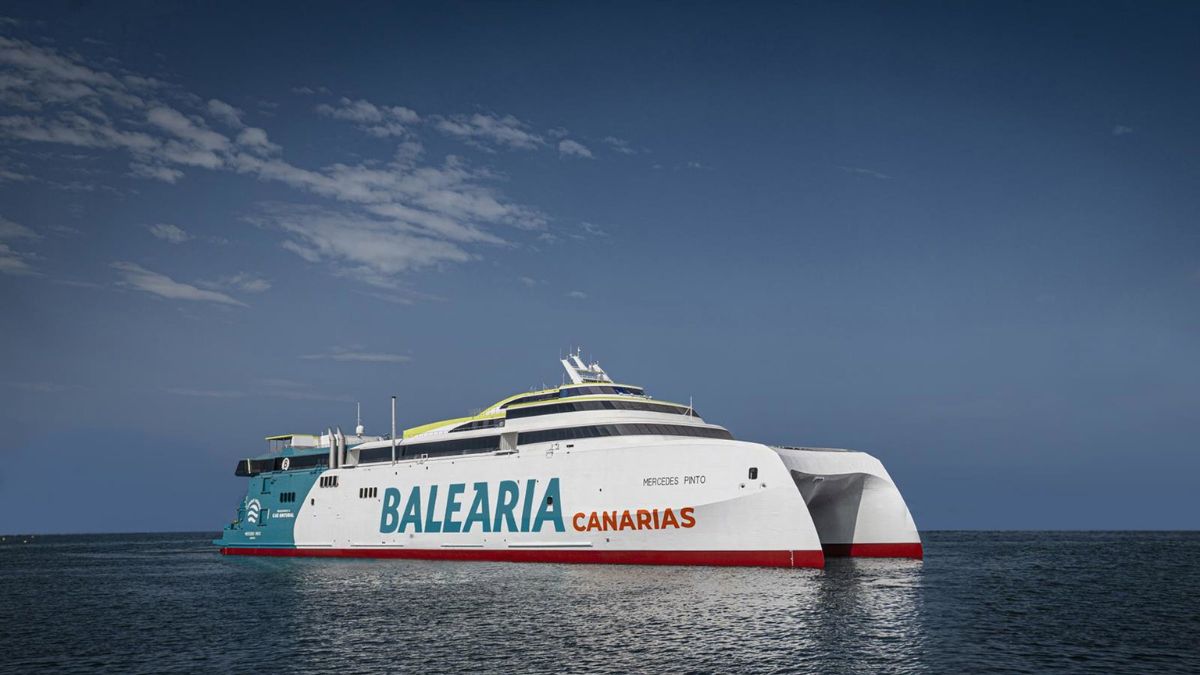
We were working on this story when, on the very computer where we were drafting the text, an email arrived from Baleària. Date: May 18, 2026. Subject: Effective takeover of Armas Trasmediterránea’s operations in the Canary Islands. The Alicante-based shipping company announced that it had just taken over all of the historic company’s Canary Islands routes (both inter-island routes and connections to the mainland), completing the first phase of a takeover process that, once concluded, will permanently wipe one of the longest-standing names in Spanish maritime transport off the map.
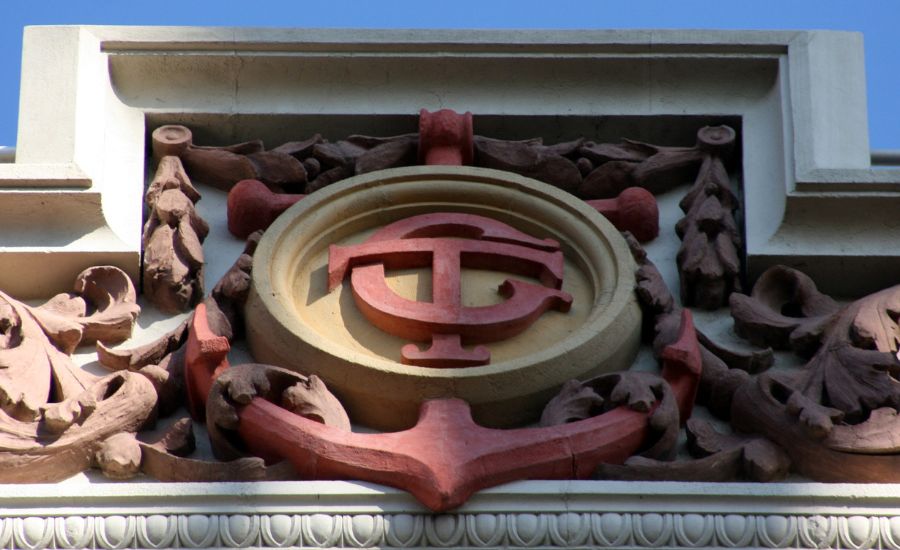
The email arrived as inevitable endings do: without fanfare, in a corporate format, with a press release attached. It couldn’t have been any other way. Trasmediterránea—the eternal Trasme—had been slowly dying for years, with that resigned slowness characteristic of institutions that have lasted so long that no one can imagine the world without them until, suddenly… they’re gone. One hundred and nine years of history, from the Barcelona of 1916 to the Barcelona of 2026, where its CT emblems remain engraved in the stone of Via Laietana number 2, a building now quite removed from that maritime history, as it is the headquarters of the Department of Universities of the Generalitat.
And it’s no coincidence that this story begins in Barcelona. Anyone walking down Via Laietana, across from what is still the headquarters of Correos, and looking closely will see in that façade not just a company, but an entire era: the cast-iron streetlamps, the CT emblems, the stone that witnessed how, from those windows, the destinies and courses of dozens of ships linking mainland Spain with its island and African territories were charted.
Further up that same street, Francesc Cambó lived for many years: a prominent Catalan nationalist politician, owner of one of Spain’s first large yachts, the Catalonia, and a man who knew the seas and the men who sailed them well. It was he who coined the phrase that would forever define one of the shadiest figures in the shipping company’s history: “the last pirate of the Mediterranean.” Via Laietana holds two intertwined memories. But let’s take it one step at a time.
The four shipowners who actually founded it
On November 25, 1916, four shipowners from Valencia and Catalonia signed an agreement in Barcelona, giving rise to the Compañía Trasmediterránea. Their names deserve to be remembered: José Juan Dómine, of the Compañía Valenciana de Vapores Correos de África; Vicente Ferrer Peset, of Ferrer Peset Hermanos; Joaquín María Tintoré, of the Línea de Vapores Tintoré; and Enrique García Corrons, of Navegación e Industria. Four shipowners who understood that the fragmentation of Spanish coastal shipping was a waste and that together they would gain what they would lose apart. The intellectual architect of the operation was the maritime lawyer Ernesto Anastasio, who convinced, one by one, the Mediterranean shipowners of Catalonia and the Levante of the advantages of forming a large joint company.
Popular history has tended to add a fifth name to this founding group: that of the Mallorcan financier Juan March Ordinas. More rigorous historical accounts, however, are clear: March does not appear among the signatories of the articles of incorporation or on the first boards of directors. What he did do was arrive later, with the infallible instinct that characterized him for spotting promising business opportunities, and forge ties with the company until he became an influential figure within it. It was his usual method: joining and taking control in order to lead. The man whom Cambó called “the last pirate of the Mediterranean” knew exactly what he was talking about when he said it. Let’s leave it at that.
From 44 ships to Spain’s leading shipping company
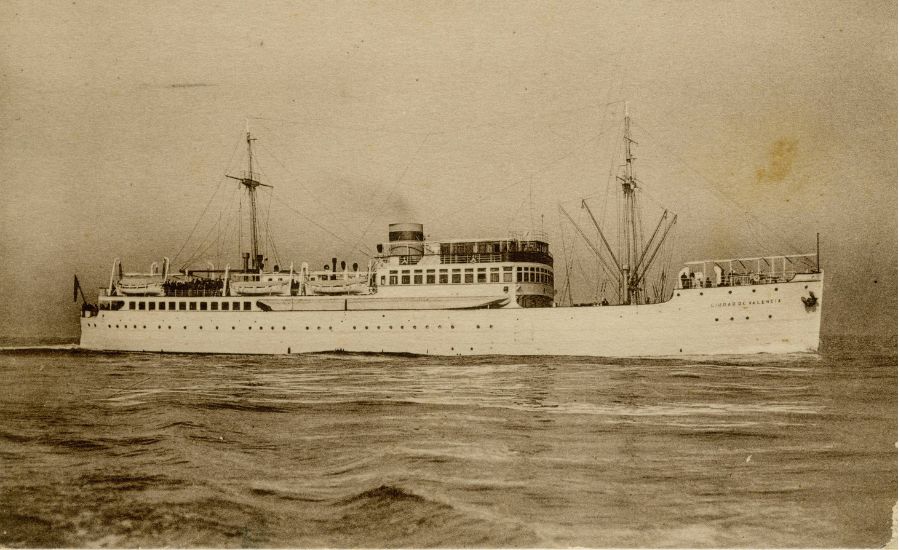
On January 1, 1917, Trasmediterránea began its maritime operations with a fleet of 44 ships. It instantly became Spain’s leading shipping company. Growing rapidly in its early years, it absorbed four other companies within its first three fiscal years. In 1923, it moved its management to Madrid, although its corporate headquarters remained in Barcelona, and began an extraordinarily long period of monopoly over the sovereign routes: the Balearic Islands, the Canary Islands, Ceuta, Melilla, and the rest of Africa. Three-quarters of a century of almost exclusive control over maritime communications between mainland Spain and its island and overseas territories.
That monopoly made Trasmediterránea more than just a company: it was a state institution, a maritime arm of the government, even though it was technically a private entity. A resident of the Canary Islands, the Balearic Islands, Ceuta, Melilla, or the colonies who needed to cross the sea had no other choice. Its fares, schedules, and ships were, in practice, public policy encased in steel.
An interesting fact that says a lot about the times: with the establishment of the Second Spanish Republic in 1931, all ships bearing names associated with the monarchy were renamed after Spanish cities. The company would maintain this tradition, with some variations, for the rest of its history.
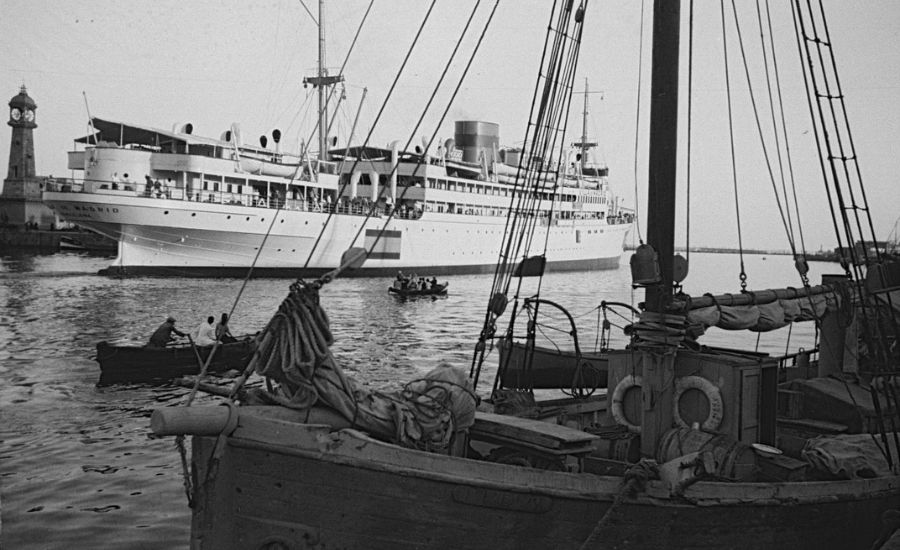
The Spanish Civil War split it almost in two, just as it did the whole of Spain. The fleet was divided between Republican and Nationalist territory, with ships carrying out military operations on both sides. Eleven vessels did not survive the conflict: sunk, torpedoed, and lost forever. The postwar period was one of slow and austere reconstruction, under the shadow of Francoism and with the monopoly intact. The 1950s and 1960s were a time of quiet modernization, of new ships and new routes, of a Spain that was beginning to move forward.
Speed, Modernity, and The Long Goodbye
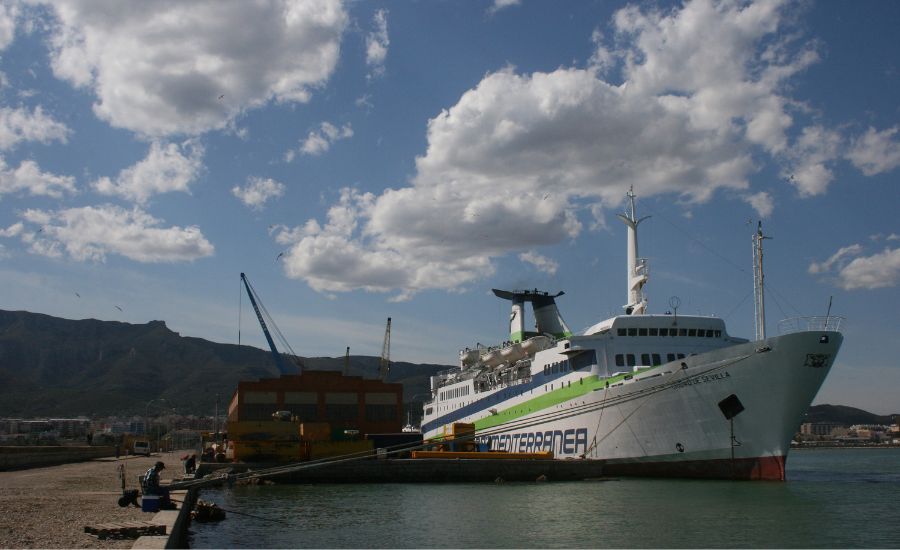
The 1980s brought a major technological leap forward. The first Jet-Foils revolutionized inter-island travel in the Canary Islands with speeds that seemed like something out of science fiction, and hydrofoils made the Strait of Gibraltar accessible to anyone in a matter of minutes. The 1990s saw the arrival of the Fast Ferries: the first high-speed catamarans for passengers and vehicles in all of Europe. In the year 2000, the Superferries Sorolla and Fortuny were added to the fleet. Trasmediterránea modernized its fleet, certified its processes, and renovated its ferry terminals in Barcelona, Valencia, and Las Palmas. From the outside, it looked every bit the part of a company with a bright future.
Purists might think that summarizing a century of naval history in four paragraphs is a bit of a stretch. They’re right. But that period is so rich that there’s a real risk of getting lost in it, and this is a news article, not a doctoral thesis. Let’s continue.
Once democracy was restored in 1978, the government acquired 93% of the company’s capital through the INI. In 2002, a new round of privatization took place, with Acciona as the majority shareholder: a period of stable, professional management that lasted until 2018, when the Canary Islands-based company Naviera Armas took control of the firm. It was this miscalculation that precipitated the outcome. Armas was solid in its home archipelago, though on a much smaller scale than Trasmediterránea, but it had swallowed a company too big for its stomach. Debt climbed to 800 million euros.
The pandemic was the final straw. In 2023, the company went into receivership, with its creditors taking control. The infamous “bondholders,” who wanted to offload the company and couldn’t care less about the industry. By then, Trasmediterránea, still present as a brand, was a far cry from what it had once been: its Balearic Islands business had already been acquired by Trasmed, the Spanish subsidiary of Italy’s Grimaldi Group.
The email that confirmed everything
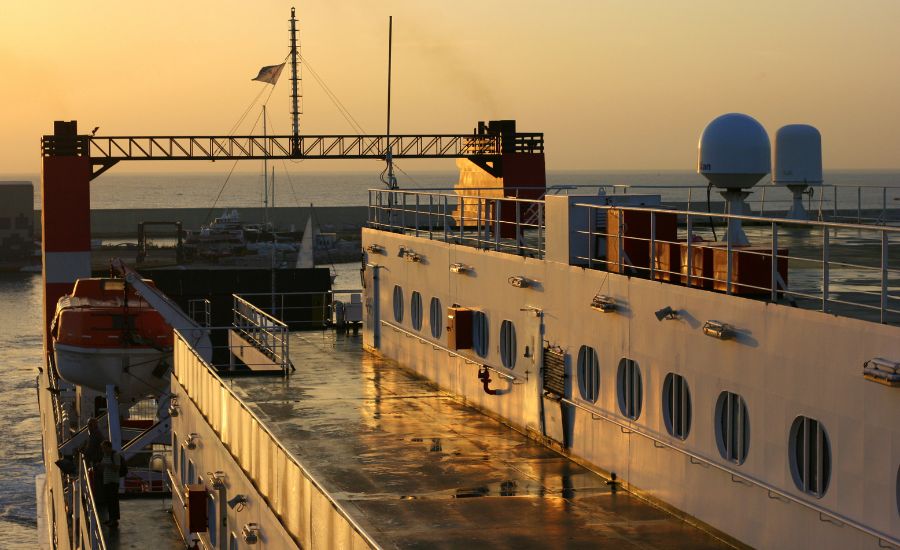
And so we come to May 18, 2026, and the email from Baleària that interrupted the writing of this text. The group resulting from the transaction has nearly 4,500 employees, a fleet of more than 50 vessels, over eight million passengers a year, and consolidated revenue exceeding 1 billion euros. Baleària will invest 45 million euros in modernizing the acquired Canary Islands fleet and will operate in the archipelago under the new Baleària Canarias brand, which will temporarily coexist with the Armas Trasmediterránea brand while the Strait and Alboran routes are finalized.
Its president, Adolfo Utor, summed it up with the solemnity the occasion deserves: “We are a company with domestic capital capable of guaranteeing sovereignty in a sector that is strategic for the country.” The statement also highlighted something worth reading twice: this operation brings together into a single group three histories that encompass nearly all of Spain’s maritime transport from the 20th century and so far in the 21st. Trasmediterránea, founded in 1916. Armas, established in 1941. Baleària, created in 1998. One hundred and ten years of Spanish maritime history condensed into a single balance sheet, a single name, and a single future.
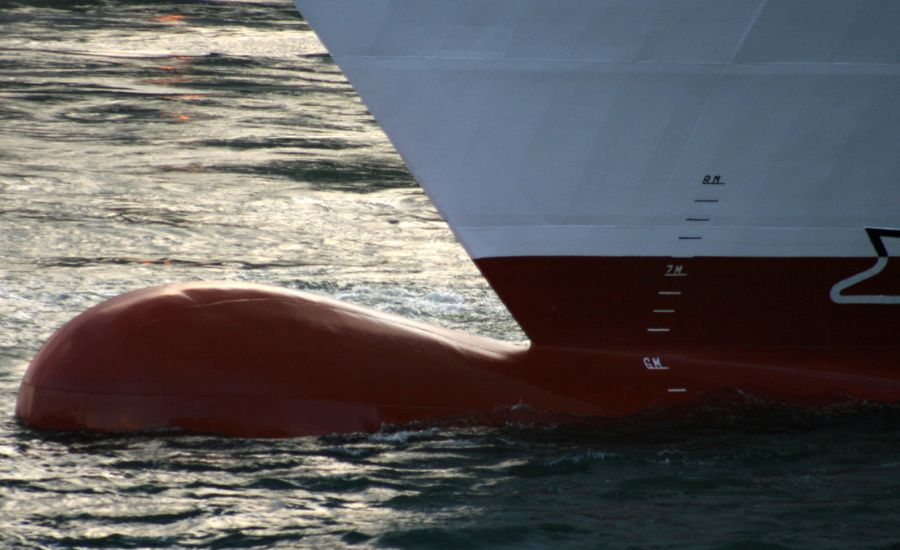
The CT logos on the façade of Via Laietana will remain there. Stone outlasts companies and is far more difficult to reinterpret. The sea, indifferent as ever, will continue to watch the ships that connect destinations and docks come and go.