








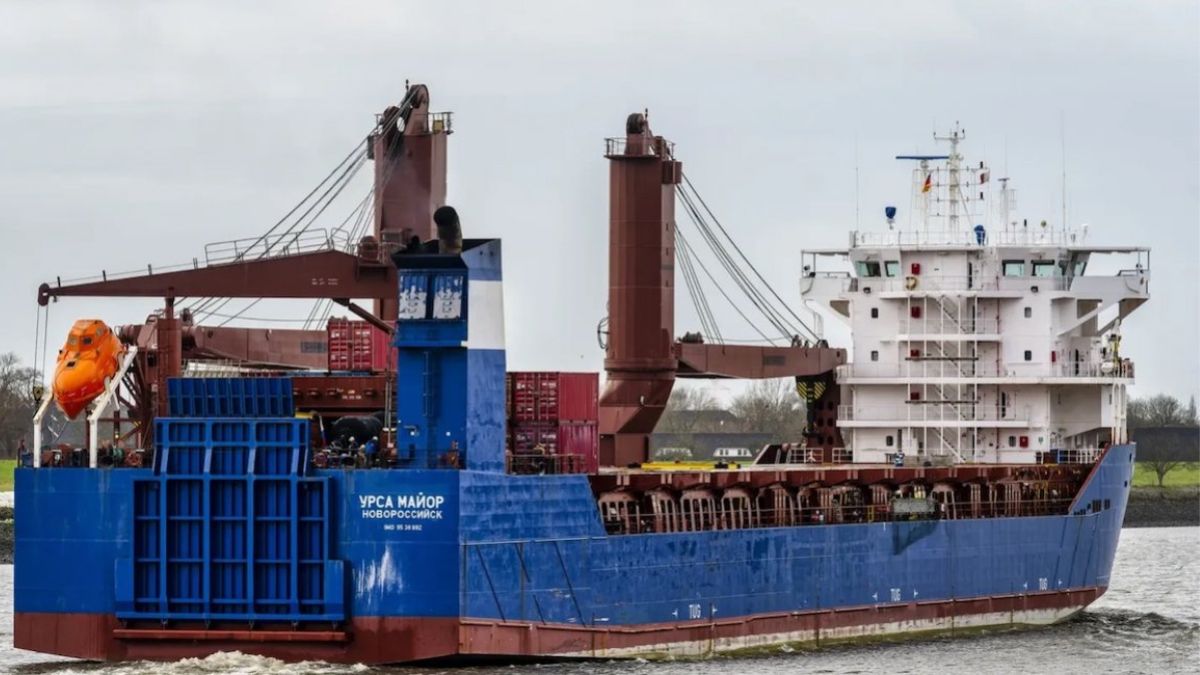
The sinking of the Russian cargo ship ‘Ursa Major’ off the coast of Murcia in late 2024 has returned to the international spotlight following new reports suggesting the possible presence of nuclear components on board. Speculation regarding sabotage, the involvement of intelligence agencies, and the strategic nature of the cargo have made the case one of the most sensitive maritime incidents recently recorded in the western Mediterranean.
A shipwreck shrouded in mystery
The ‘Ursa Major,’ a 142-meter-long cargo ship linked to the Russian company Oboronlogistics, sank on December 23, 2024, in international waters, about 60 miles off the coast of Cartagena. Initially, Russian authorities attributed the incident to an explosion in the engine room.
However, several investigative reports published in recent days have reignited doubts about the true causes of the shipwreck. Some sources suggest that the ship may have suffered several consecutive explosions before sinking, which supports the theory of possible sabotage or a targeted attack.
The ship was officially sailing from St. Petersburg to Vladivostok, although various reports suggest that its actual destination may have been linked to North Korea.
Suspicions about a strategic shipment
One of the issues that has raised the most concern is the possible presence on board of components intended for nuclear reactors in submarines. Although there is no definitive official confirmation regarding the exact nature of the cargo, several international media outlets have reported that the ‘Ursa Major’ may have been transporting sensitive technological equipment.
The Spanish government acknowledged months ago that the vessel contained reactor-related components, although it did not contain active nuclear fuel. Even so, the lack of transparency and the depth at which the wreck lies—about 2,500 meters—make any independent technical verification difficult.
The case has raised concerns both about the potential environmental risk and the geopolitical implications of shipping strategic materials along routes near the Spanish coast.
Murcia, at the center of geopolitical tensions
The renewed media attention on the case has once again placed the Region of Murcia in the international spotlight. In recent days, regional officials have demanded more information from the central government regarding the contents of the cargo and the actions taken following the sinking.
In addition to the environmental aspect, this development highlights the growing strategic importance of the western Mediterranean as a maritime corridor for sensitive logistics operations linked to the current international situation.
Maritime security analysts believe that the case of the ‘Ursa Major’ demonstrates how commercial shipping can also become a source of geopolitical and military intelligence disputes.
A wreck that is difficult to investigate
The depth at which the cargo ship lies greatly complicates any inspection or recovery operation. Technically, an underwater operation of this kind would require high-capacity remotely operated vehicles and complex international coordination. At this time, there is no official confirmation regarding future operations to analyze the wreck. Meanwhile, theories about the sinking continue to multiply, and the ‘Ursa Major’ remains one of the great recent maritime mysteries of the Mediterranean.