








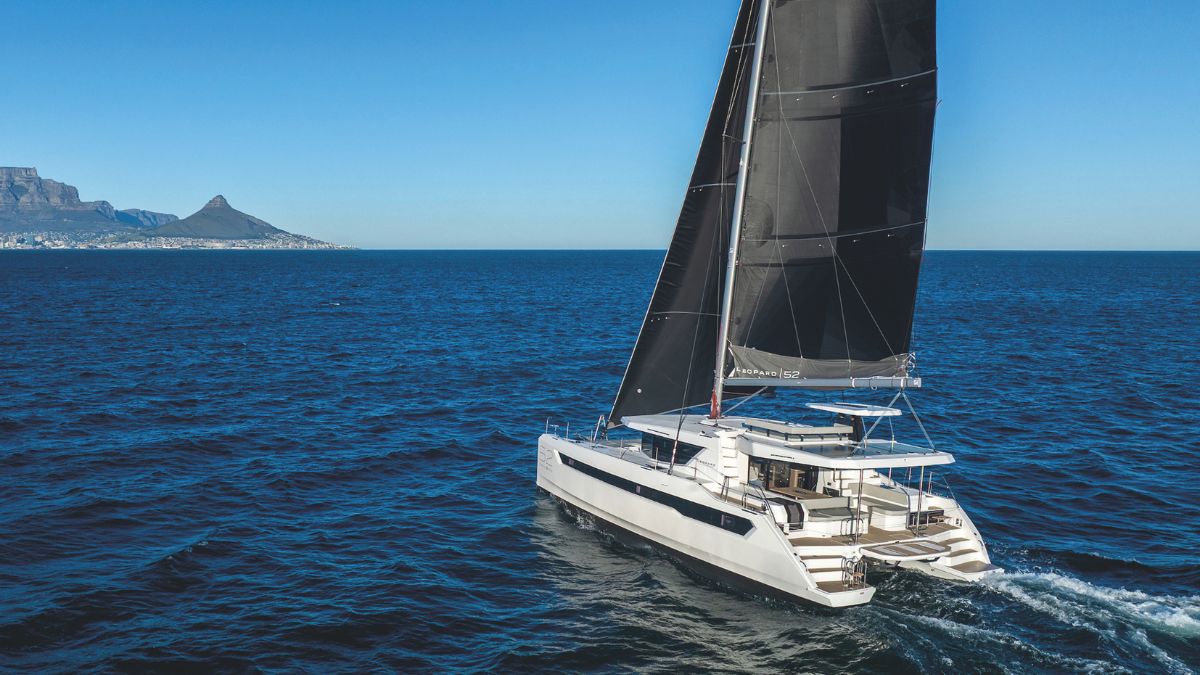
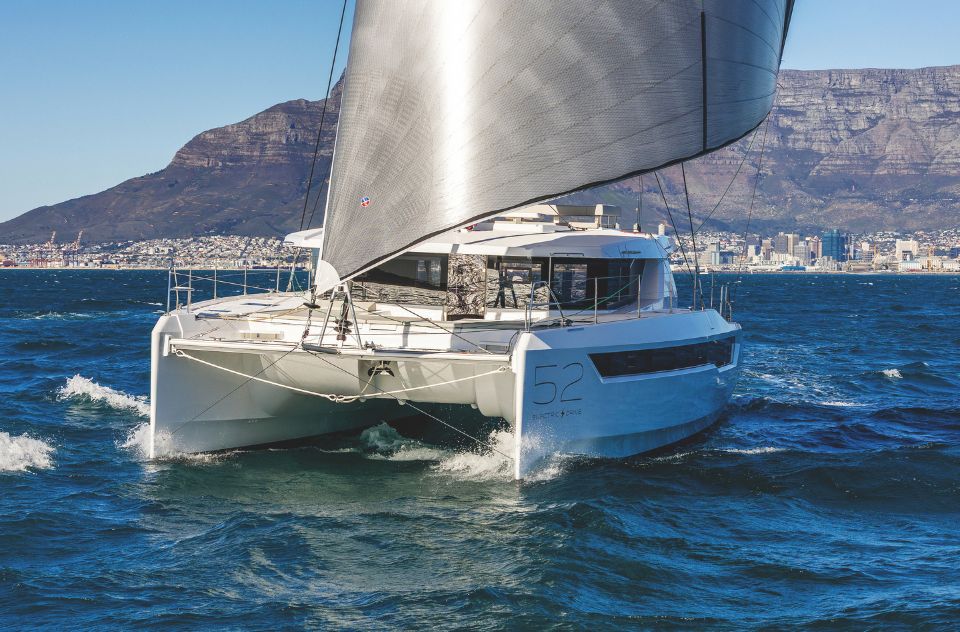
The Leopard 52 is the evolution of the previous 50-foot model, conceived and built in South Africa by Robertson & Caine in collaboration with the naval architecture firm Simonis Voogd Design. This cruising catamaran, with its sleek lines and pronounced volumes, features an aggressive exterior design built for long voyages.
Above the waterline, the hull’s contours are designed to maximize interior volume, while below the waterline the opposite is true: the wetted surface area is minimized. With a displacement of over 20 tons, the vessel clearly prioritizes onboard comfort and offers improved sailing performance compared to its predecessor. At the same time, it demonstrates a clear commitment to optimizing energy efficiency.
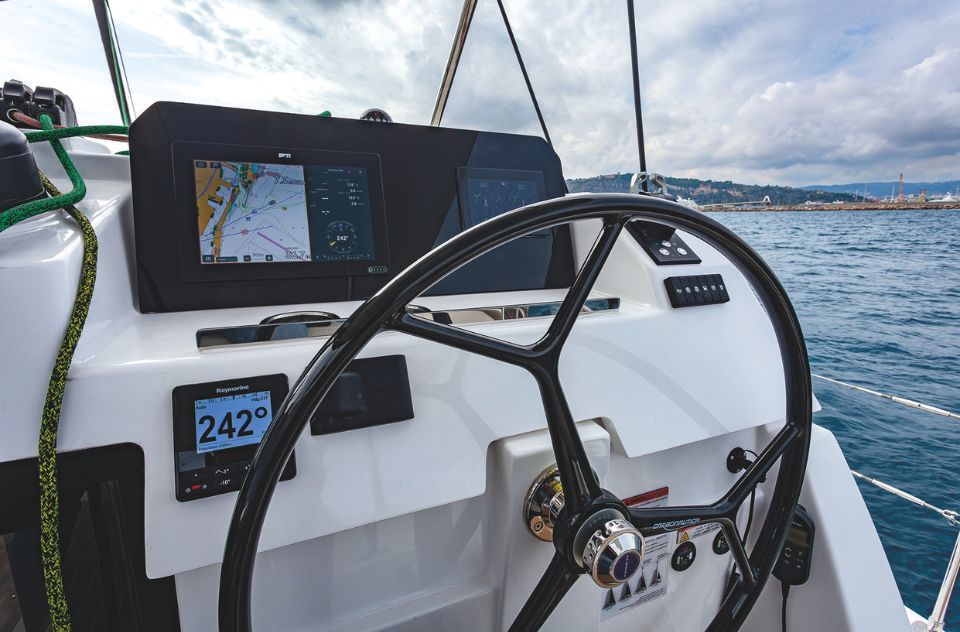
An automated system manages onboard energy, controlling consumption and charging so that the batteries power all electrical needs: from the air conditioning to the electric propulsion system, including refrigerators, the galley, and washing machines, among other appliances. This system also manages the power generated by the solar panels and hydro-generation while sailing, and only uses the generator as a last resort. During the test day in Barcelona, for example, we left the port under engine power, sailed while generating electricity from hydrogen, and returned with more energy than we had when we set sail.
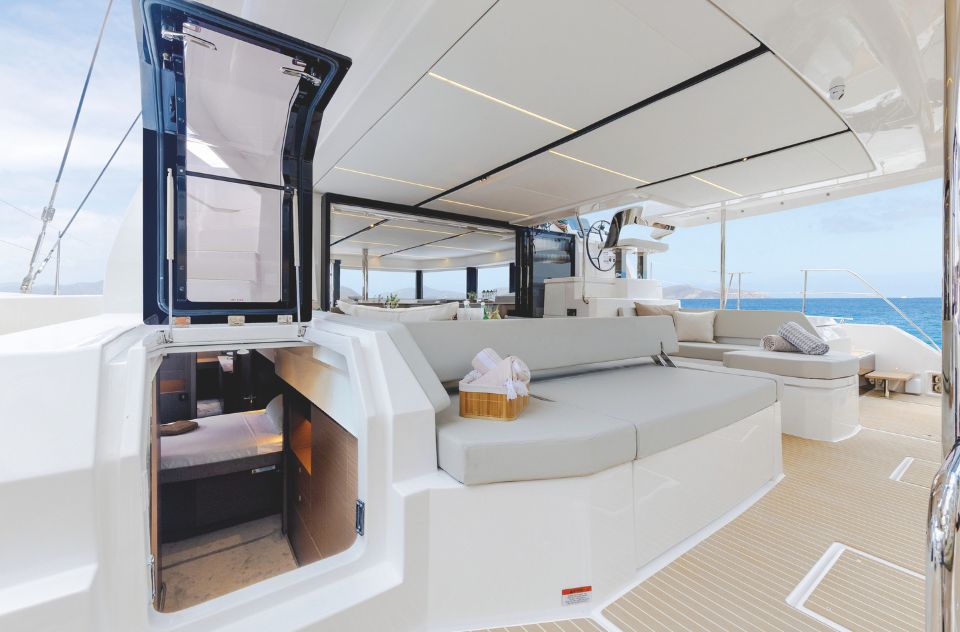
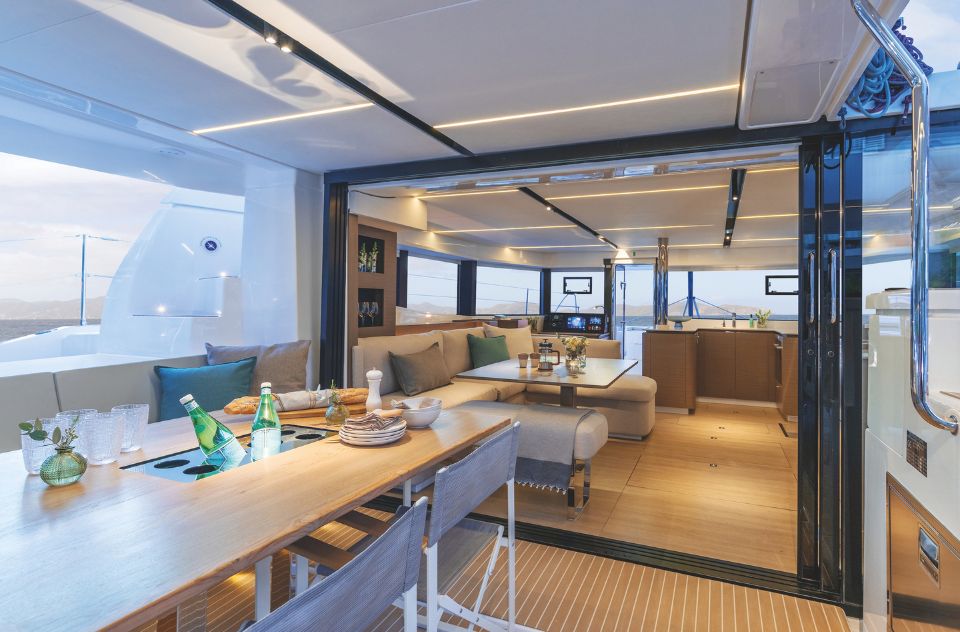
During normal cruising, the cockpit blends seamlessly with the salon thanks to the sliding doors, which eliminate the physical barrier. In the cockpit, the sofas with reversible backrests allow you to choose between gazing out at the miles still ahead or joining the social area around a table that comfortably seats eight people. Just as many can sit at the saloon table, and, if necessary, both areas function as a single large space.
The Leopard 52 offers more space, better fuel efficiency, and superior performance for ocean cruising.
Toward the bow, the door providing direct access to the foredeck is a welcome feature, and it also improves ventilation while at anchor. The chart table, located at the bow on the port side, enjoys the best views. The galley, located on the starboard side, has enough space to cater to a large crew, although it doesn’t take that many hands or that much energy to handle this boat.
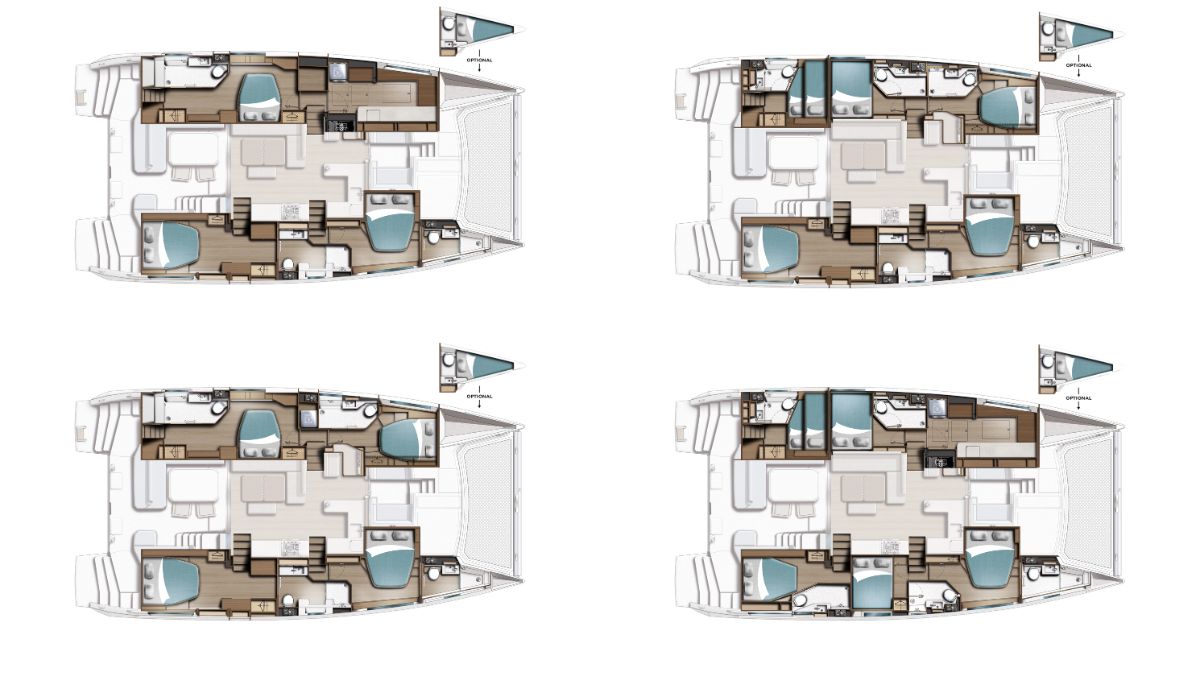
The shipyard offers several interior layouts, ranging from a maximum of six cabins plus a double crew cabin in the charter version—which is more profit-oriented—to the version we sailed, which is equipped with three cabins. In this layout, the entire port side of the hull is reserved as the owner’s private area, with the unique feature of having direct access from both the cockpit and the salon.
When it comes to the various interior layouts, the key factor is the intended use: private or charter. The owner’s versions, with three or even four cabins, can be equipped more efficiently in terms of power-to-weight ratio. The boat itself is relatively light for its size, but adding a larger square-top and a Code 0 significantly improves its performance.
Compared to its predecessor, the Leopard 52 has undergone extensive CFD analysis, which has made it possible to optimize the hull lines using a variable volume that increases toward the stern, improving wave-cutting performance and reducing pitch.
Technical specifications
Overall length: 15.75 m
Length overall: 15.31 m
Maximum beam: 8.16 m
Draft at full load: 1.77 m
Height of the mast above the waterline: 24.715 m
Displacement at full load: 26,353 kg
Standard upwind sail area: 168.3 m²
Standard size: 98 m²
Largest square-top: 106 m²
Genoa: 70.3 sq m
Spinnaker: 240 m²
Code 0: 88.5 m²
Code D: 149 m²
Freshwater capacity: 700 L
Fuel capacity: 900 L
Sewage capacity: 230 L
Living room area: 23.6 m²
Double cabins: 3, 4, 5, and 6
Electric propulsion system: 25 kW
Batteries: 2 x 27 kW
Generator: 24 kW
Shipyard: Leopard Catamarans
Design: Simonis Voogd Design – Leopard Catamarans
Price of the test boat: €1,249,167