








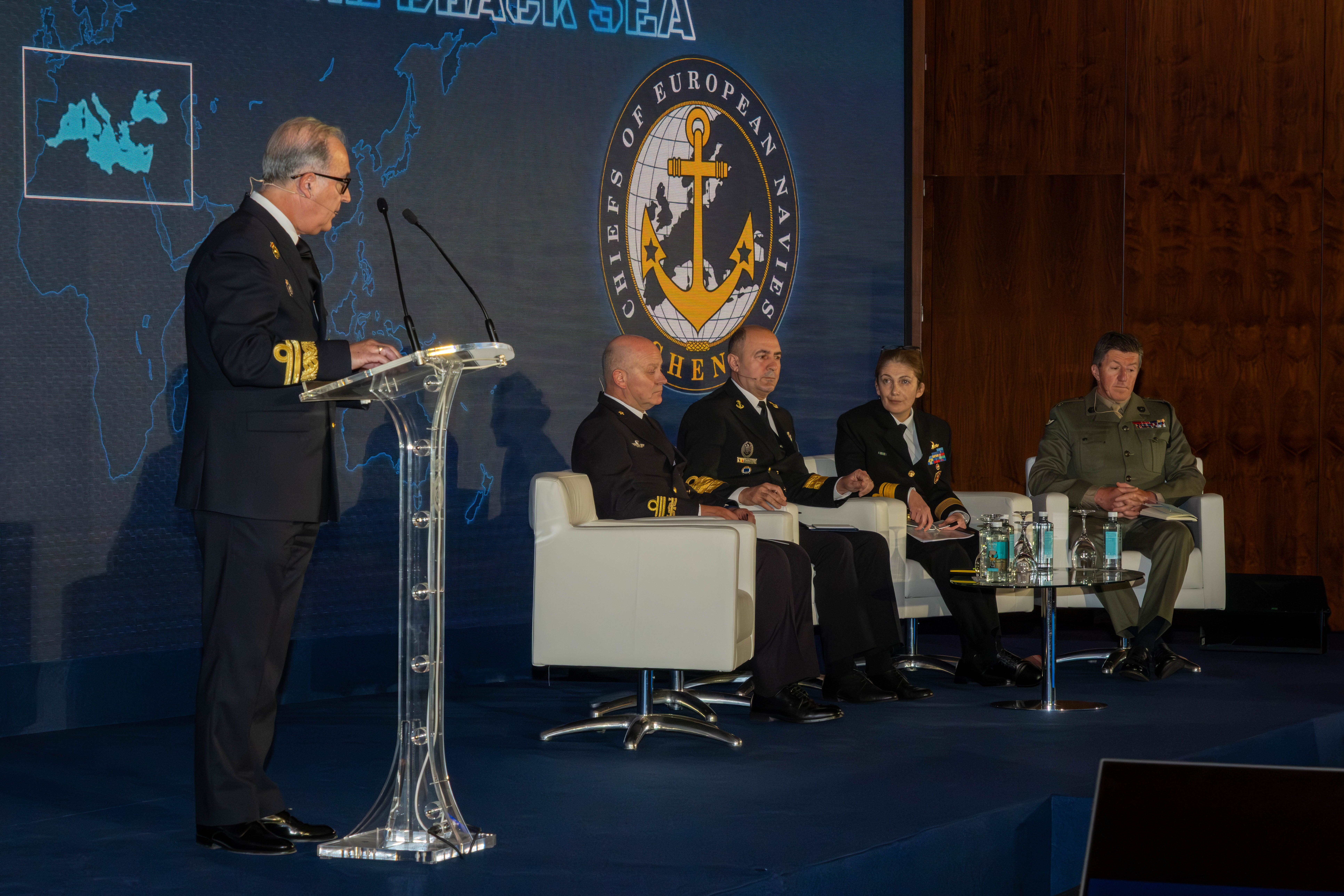
This week, Madrid has become the epicenter of European strategic naval dialogue with the convening of the Chiefs of European Navies Meeting (CHENS 2026), the leading forum for cooperation among European navies. Over the course of two days, representatives from 35 navies and international organizations such as the European Union and NATO discussed the maritime challenges arising from the new global geopolitical landscape and the need to strengthen allied naval cooperation.
The Spanish Navy hosted the annual CHENS conference, held on May 6 and 7 in Madrid, against an international backdrop marked by the growing strategic importance of maritime dominance.
The meeting brought together 35 European naval chiefs, as well as representatives from allied countries and international organizations, establishing itself as one of the leading forums for naval reflection and coordination in Europe. The event provided an opportunity to strengthen the exchange of strategic perspectives and make progress on joint initiatives related to interoperability, deterrence, and shared maritime security.
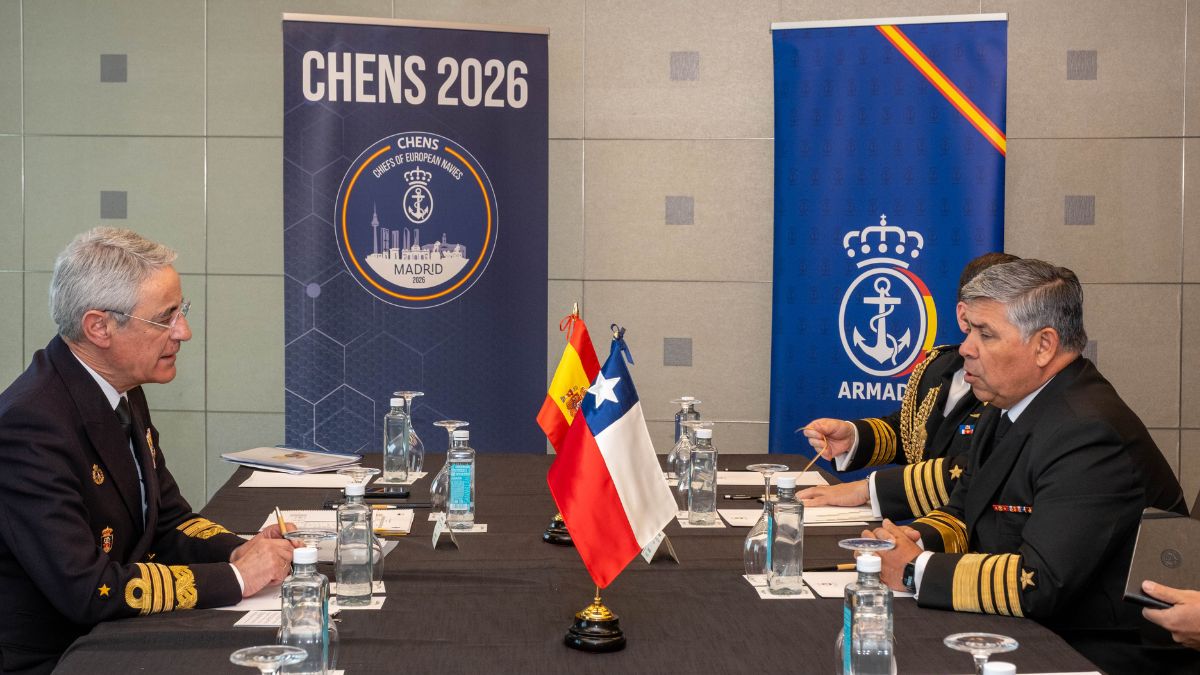
The conference kicked off with more than 60 bilateral meetings between delegations, aimed at strengthening naval cooperation and strategic coordination among allies and international partners.
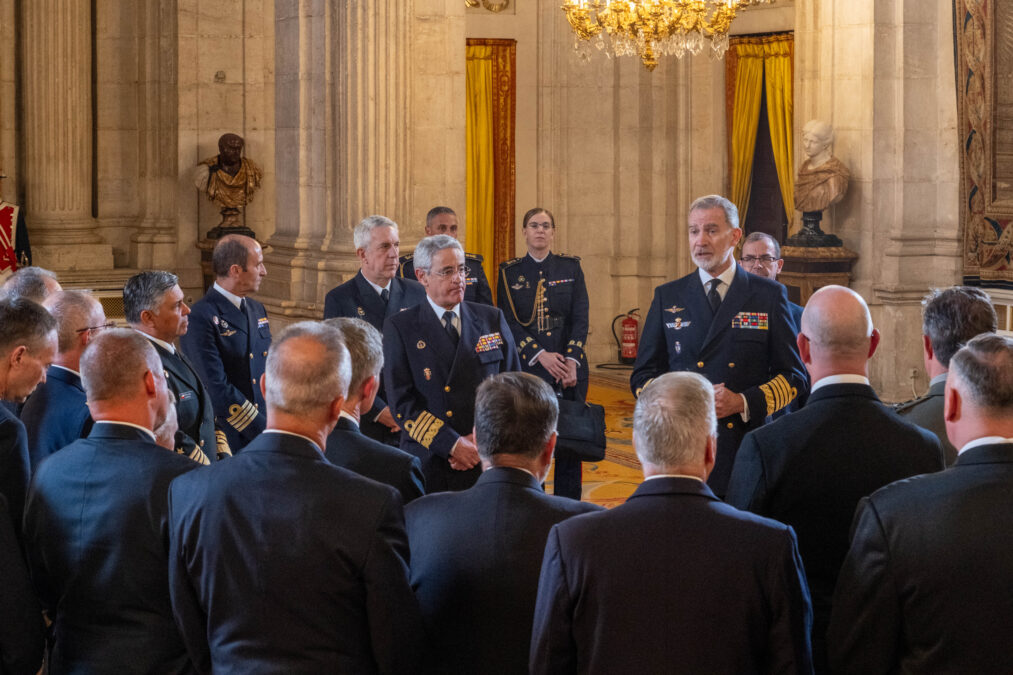
Maritime safety, the central theme of the meeting
The plenary session was chaired by Admiral General Antonio Piñeiro, Chief of Naval Staff (AJEMA), accompanied by the dean of the CHENS forum, Polish Rear Admiral Jarosław Ziemiański.
During his remarks, Piñeiro emphasized the importance of maintaining coordinated action among allied navies in the face of “increasingly complex and interconnected maritime challenges.”
The forum’s conclusions emphasized the need to strengthen European naval cooperation in order to respond to an international landscape characterized by strategic uncertainty and high maritime interdependence. Participants agreed that CHENS is a key tool for coordinating initiatives, sharing analysis, and building mutual trust among navies.
They also emphasized the need to avoid duplication in the field of European defense and to move toward a stronger and more coordinated deterrent capability.
Freedom of navigation and hybrid threats
The various regional panels addressed the strategic situation in areas such as the Baltic Sea, the Mediterranean and Black Seas, the Red Sea, and the Indo-Pacific.
All of them emphasized the importance of preserving freedom of navigation and ensuring the security of maritime shipping lanes, which are considered essential to global trade and international stability.
The attendees also agreed that the naval domain offers a rapid and flexible response capability in the face of crises and conflicts, enabling immediate strategic impact across various operational scenarios.
The forum also highlighted hybrid threats, vulnerabilities in critical infrastructure, and the need to strengthen both military and civilian resilience in the face of potential disruptions arising from the global interconnectedness of the maritime environment.
Ukraine and the New Dynamics of Naval Combat
Another key topic was the analysis of lessons learned from the war in Ukraine, particularly regarding the use of unmanned systems and the evolution of modern naval warfare.
The participants reiterated the need to maintain support for Ukraine and to continue assessing how new technologies are transforming maritime operations and naval strategy.
During her remarks, Defense Minister Margarita Robles noted that the maritime domain “is no longer merely a space for naval operations” but has become an environment where economic stability, energy, security, digital connectivity, and geopolitical competition converge.
For his part, the Chief of the Defense Staff (JEMAD), Admiral General Teodoro López Calderón, emphasized that international cooperation “is not merely an option, but an urgent and strategic necessity.”
Spain hands over the baton to Lithuania for CHENS 2027
The closing ceremony of the event included a symbolic handover of the forum’s organizing presidency from Spain to Lithuania, which will host the next edition of CHENS in 2027.
The meeting held in Madrid also reinforces the role of Spain and the Spanish Navy as key players in promoting European naval cooperation and international maritime security.

