








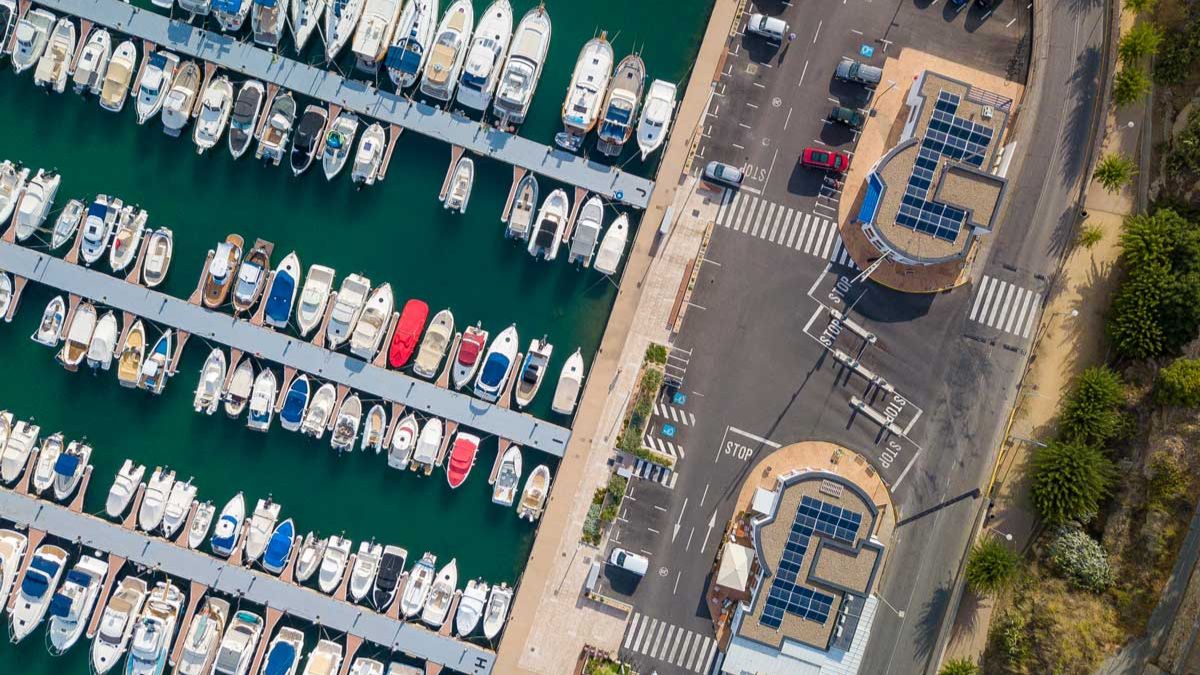
The Costa Brava marina achieves up to eight months of self-sufficiency in electricity thanks to a hybrid solution combining solar power and smart storage developed in partnership with Ampere Energy.
The energy transition is gaining ground in the Mediterranean port sector. Marina Palamós has launched a hybrid system combining solar power generation and smart storage, which already enables it to achieve up to eight months of energy self-sufficiency per year, reduce its electricity bill by 66%, and significantly decrease its reliance on the conventional grid.
A more self-sufficient and efficient energy model
The Costa Brava’s marine sports infrastructure has taken another step forward in its sustainability strategy with the implementation of an energy system based on solar self-consumption and smart energy management. The project, developed in partnership with Ampere Energy, aims to optimize electricity consumption, strengthen the port’s operational resilience, and move toward a more efficient and decarbonized management model.
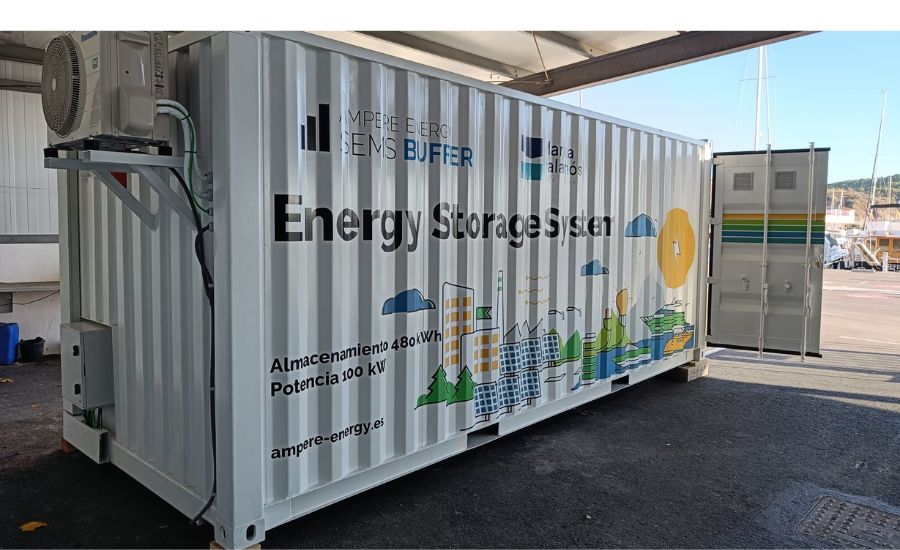
The solution integrates a photovoltaic system with a 100 kW, 480 kWh SEMS Buffer Outdoor energy storage system, designed to maximize the use of the renewable energy generated and reduce exposure to electricity market volatility.
Over the past year, the facility has managed more than 415 MWh of renewable energy, achieving 62% grid independence. These results cement Marina Palamós’s position as one of the most advanced examples of the energy transition applied to port infrastructure in the Mediterranean.
Smart storage is gaining prominence in ports
One of the key elements of the project is the SEMS Buffer system, a smart storage technology designed for environments with high energy demand and continuous consumption, such as marinas, industrial facilities, or projects related to electromobility.
The system incorporates AI-powered energy monitoring and optimization tools capable of managing solar production, storage, and electricity consumption in real time to improve the overall efficiency of the facility.
In addition, the solution includes backup power capabilities to address power outages or micro-outages, as well as advanced security and fire protection systems. It also operates in real time with the Spanish electricity market, including the four-hourly pricing model, to optimize energy procurement and management.
A success story at the Ports de Catalunya Technical Conference
The initiative was presented as one of the featured success stories at the 22nd Ports of Catalonia Technical Conference, held on May 7 and 8 in Roses (Girona). The event brought together representatives from the port and maritime sectors to address the main challenges related to sustainability, technological innovation, and energy efficiency.
During the event, Álvaro Navarro, director of Marina Palamós, emphasized that the project “marks a turning point in the facility’s energy model,” highlighting both the reduction in operating costs and the progress toward a port that is “more self-sufficient, resilient, and aligned with the maritime sector’s decarbonization goals.”
For his part, Gonzalo Ubieto, commercial director at Ampere Energy, noted that the combination of smart storage and solar energy “makes it possible to maximize self-consumption and reduce exposure to energy price volatility.”
Energy sustainability is gaining a foothold in the marine industry
The evolution of port infrastructure toward more self-sufficient and efficient energy models has become one of the main trends in the European maritime sector. In this context, projects such as the one in Marina Palamós demonstrate how the integration of renewable energy, energy storage, and artificial intelligence can accelerate the decarbonization of high-energy-demand facilities without compromising their operational capabilities.
The initiative also highlights the growing role of energy digitization in marinas, which are increasingly focused on reducing emissions, optimizing resources, and boosting their competitiveness through advanced technological solutions.