








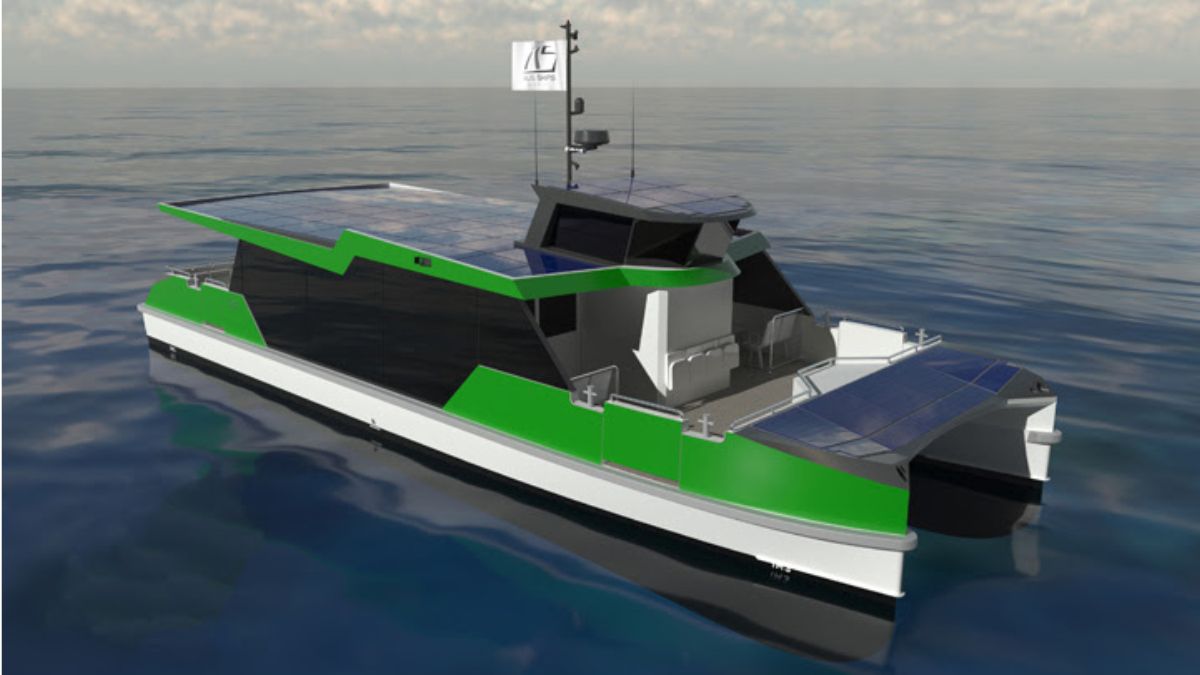
Australia is making progress toward decarbonizing its maritime transport with the construction of the country’s first all-electric passenger ferry. The project, currently under development and scheduled to enter service in 2026, combines state-of-the-art electric propulsion, battery energy storage, and solar power to validate a scalable model for sustainable maritime mobility.
Volvo Penta sets a new standard in marine electric propulsion
The Australian shipbuilding industry is preparing to take a strategic step toward electrification with the development of a passenger ferry powered entirely by electricity. The vessel, initially conceived as a technology demonstrator, will enable the evaluation of the real-world performance of zero-emission propulsion solutions in commercial passenger operations.
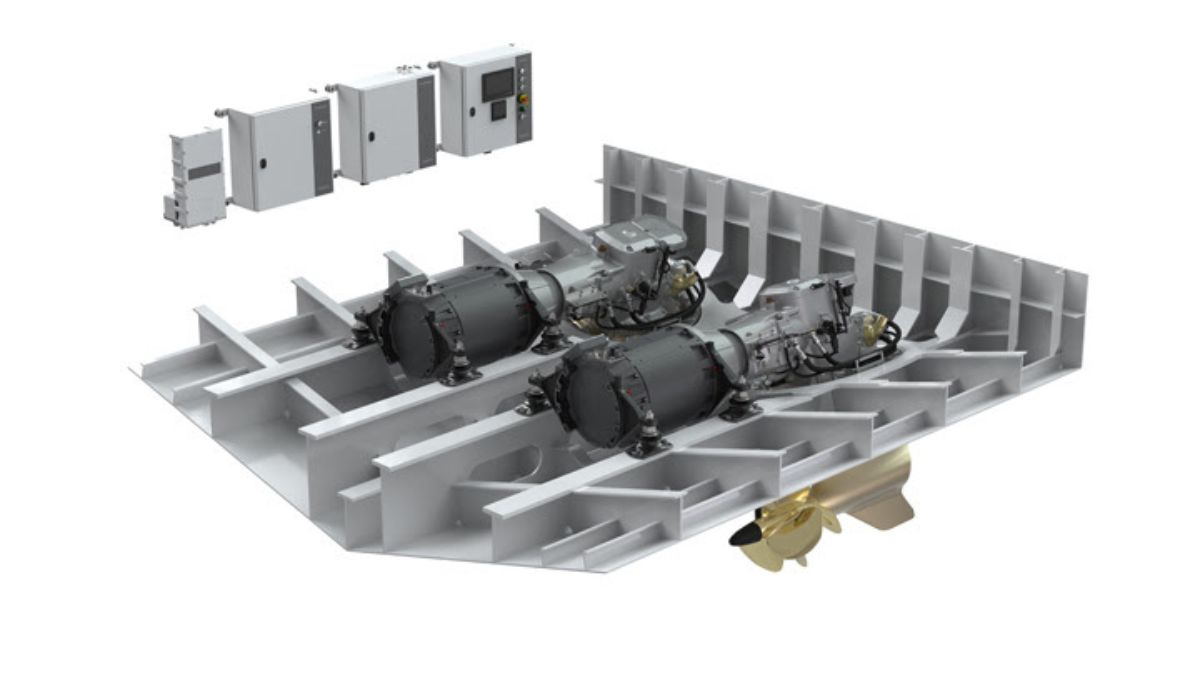
The vessel will feature a pioneering configuration based on two Volvo Penta IPS450E electric propulsion systems, each capable of delivering 250 kW per drive line. This design makes the project the first in the world to adopt this specific configuration on a commercial passenger ferry.
The power system will be supplemented by a 460-kWh battery pack and onboard solar panels, creating a hybrid platform for power generation and management designed to maximize operational efficiency and reduce the environmental footprint.
Focus on maneuverability, efficiency, and range
One of the project’s most notable features is the incorporation of an integrated propulsion and control platform designed to improve both the vessel’s energy efficiency and its operational performance.
Volvo Penta Electric IPS technology uses bow thrusters and an advanced electronic control system that optimizes energy consumption and extends the vessel’s range. It also offers advanced maneuvering capabilities typical of state-of-the-art systems, such as low-speed navigation, joystick docking, and dynamic positioning.
The combination of quiet operation, reduced vibration, and precise control also significantly enhances the passenger experience, especially on urban and short-haul routes.
During the initial demonstration phase, the ferry will also be equipped with a Volvo Penta D4 variable-speed auxiliary generator designed to extend its range and ensure greater operational flexibility under real-world operating conditions.
Aus Ships plans to launch a fleet of electric ferries in Australia
Beyond the construction of a single vessel, the project was designed with scalability in mind. The medium- and long-term goal is to develop a future network of electric ferries operating on various strategic routes along Australia’s east coast, including urban connections in cities such as Brisbane and Sydney.
Aus Ships, an Australian shipyard specializing in high-speed catamarans and responsible for projects such as Brisbane’s CityCats, brings solid experience in commercial shipbuilding to the program. The company currently has fleet renewal contracts in place through 2029, reinforcing its position as a key player in the future electrification of Australian maritime transport.
The initiative also has the financial backing of the Australia-Singapore Low-Emission Technologies (ASLET) program, which has awarded a grant of two million Australian dollars to promote maritime decarbonization solutions and accelerate the energy transition in the regional shipping sector.
Volvo Penta and Aus Ships are accelerating the transition to sustainable shipping
The development of this ferry underscores the accelerating pace of electrification in the international maritime sector. Advances in energy storage technologies, combined with regulatory pressure to reduce emissions and the need for more sustainable operations, are driving new models of urban maritime mobility.
The ship’s construction also reflects the interest of shipyards and manufacturers in validating electric platforms that can be replicated across different markets and vessel types.
With the vessel scheduled to enter service by the end of 2026, Volvo Penta and Aus Ships aim to position Australia as one of the emerging leaders in the deployment of electric passenger ferries in the Asia-Pacific region.