







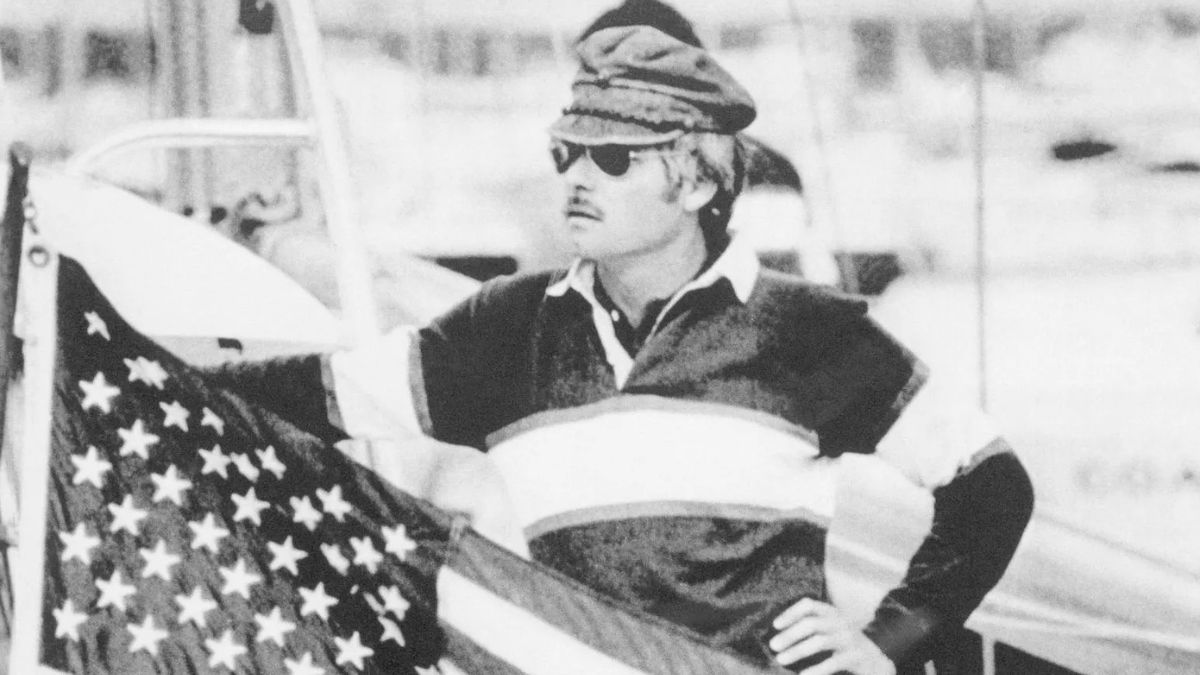
You could say that the modern America’s Cup really began with the late Ted Turner. But the truth is, I wasn’t there when Turner made his mark on the world of sailing. However, America’s Cup legend and co-chairman of the Sailing Museum & National Sailing Hall of Fame, Gary Jobson, was there. And he has been kind enough to share some of his memories with me here.
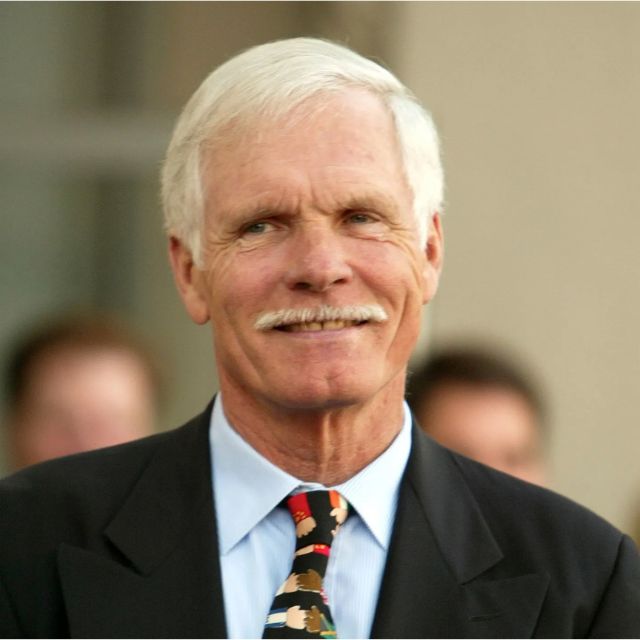
“Ted Turner was one of the most influential and transformative figures in the history of modern sailing and global media,” he writes alongside Tom Stark, who is also co-chair of the Sailing Museum & National Sailing Hall of Fame. “As the founder of CNN, the world’s first 24-hour news network, he radically changed the way people access information and forever reshaped the international media landscape. But long before he revolutionized television, he had already established himself as a fierce competitor, a visionary leader, and an unforgettable presence both on and off the water.”
“Turner started sailing at the age of eight in Savannah, Georgia,” Jobson continues. “He used to say that his early years didn’t yield great results. ‘I wasn’t losing; I was just learning how to win,’ he would say.”
“Turner’s virtues were rooted in hard work, loyalty, and kindness. Anyone who knew Ted will always speak highly of him. He was approachable and truly cared about making the world a better place. Turner had a sticker on all his vehicles that read: ‘Save Everything’.”
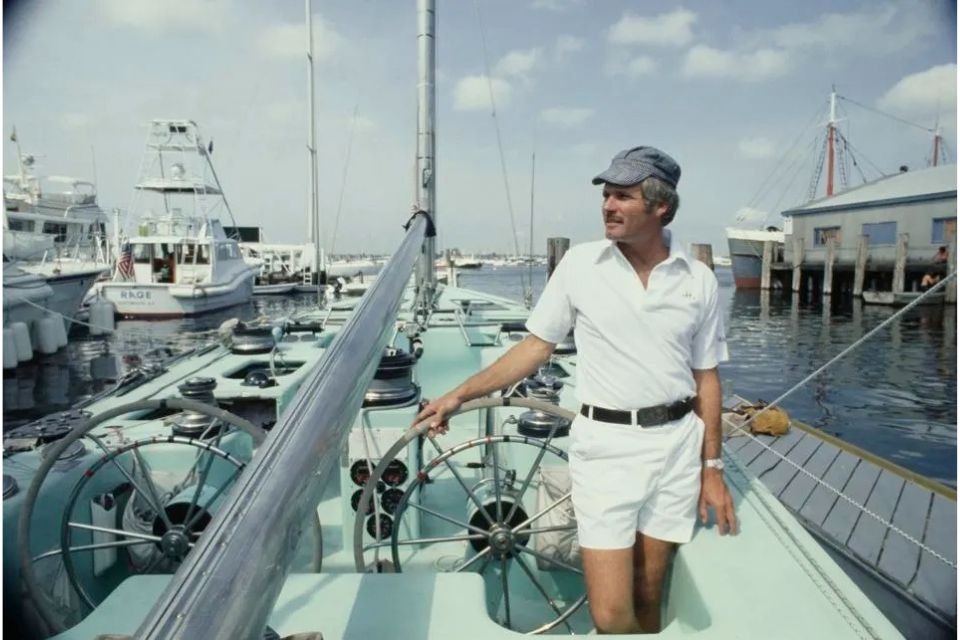
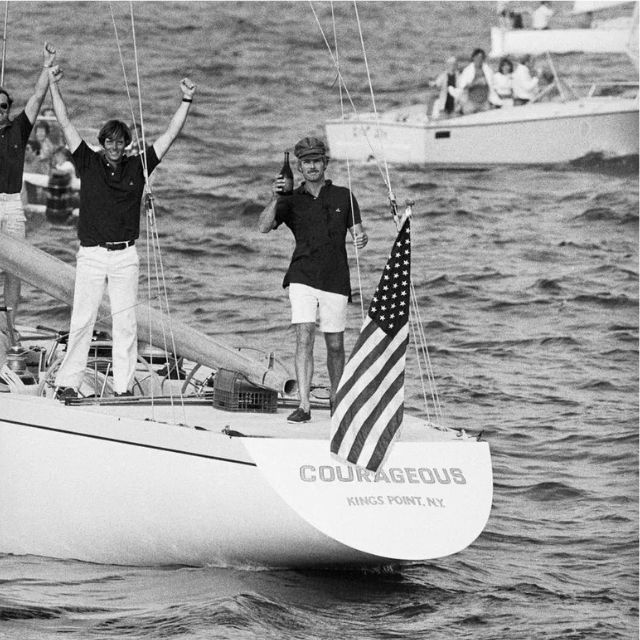
“For the sailors who competed alongside Turner, the friendship lasted a lifetime. He was charismatic and always drew people in. As an example of how he demonstrated leadership and earned the loyalty of others, I recall a race on the ‘Courageous’ that had gone really well. After the race, Turner invited his tactician and the mainsail trimmer—Robbie Doyle and me—to the post-race press conference.
“John Ahern, a 58-year-old reporter for The Boston Globe, asked, ‘What was the key to your victory?’ Without hesitation, Turner replied, ‘With a tactician like Gary reading the wind and a trimmer like Robbie keeping us moving fast, it was easy. I was at the helm, but these guys and the rest of the crew are the reason we won.’”
“The next day we had a terrible race. I misjudged a wind shift, and Robbie chose the wrong jib. Ted invited us to the post-race press conference again. And I really didn’t feel like going.”
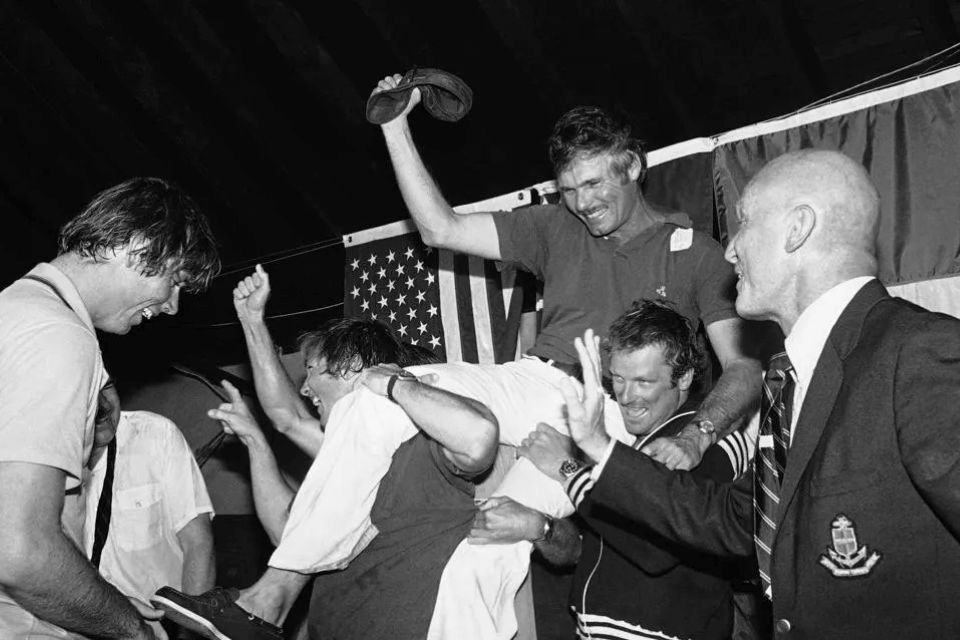
“Once again, John Ahern asked, ‘After yesterday’s great race, what happened today, Ted?’ Turner looked straight at Ahern and replied, ‘I had a bad race today. It was my fault. We’ll try to do better next time.’”
“I stood there listening and really came to understand what Ted was like: when we won, he shared the credit with everyone. But when we lost, he took the blame. That lesson has stayed with me my whole life.”
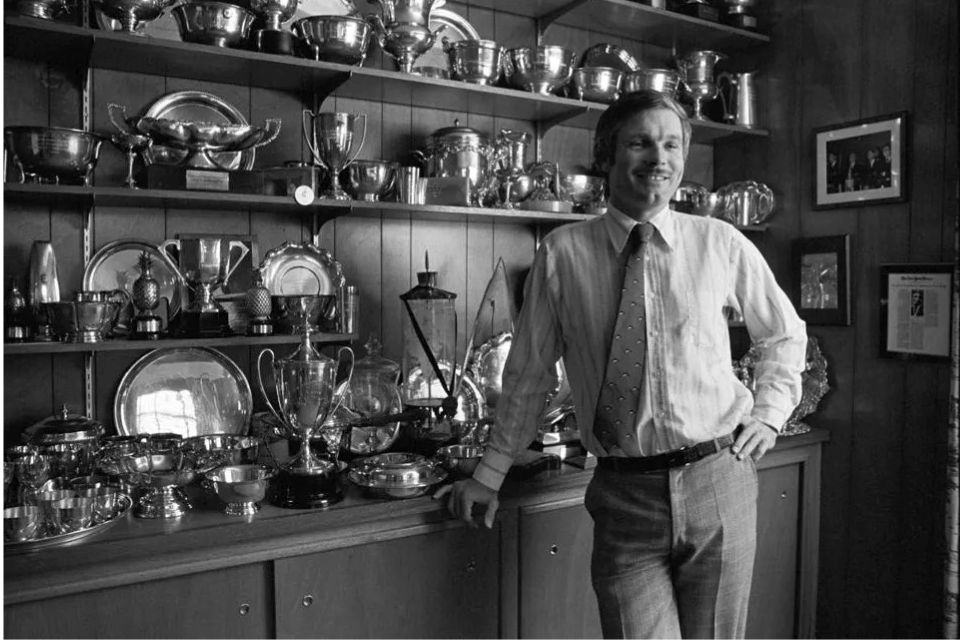
“Turner was quite a character. Immediately after winning the fourth race of the 1977 America’s Cup, he was required to attend the post-race press conference, but he took his time as he walked down Thames Street in Newport toward the massive Armory building, which was packed with reporters.
“We all knew Ted couldn’t hold his liquor. Someone handed him a bottle of Swedish aquavit. He took several generous swigs, and by the time he arrived at the Armory, he was completely out of control: provocative, flamboyant, and utterly unpredictable.”
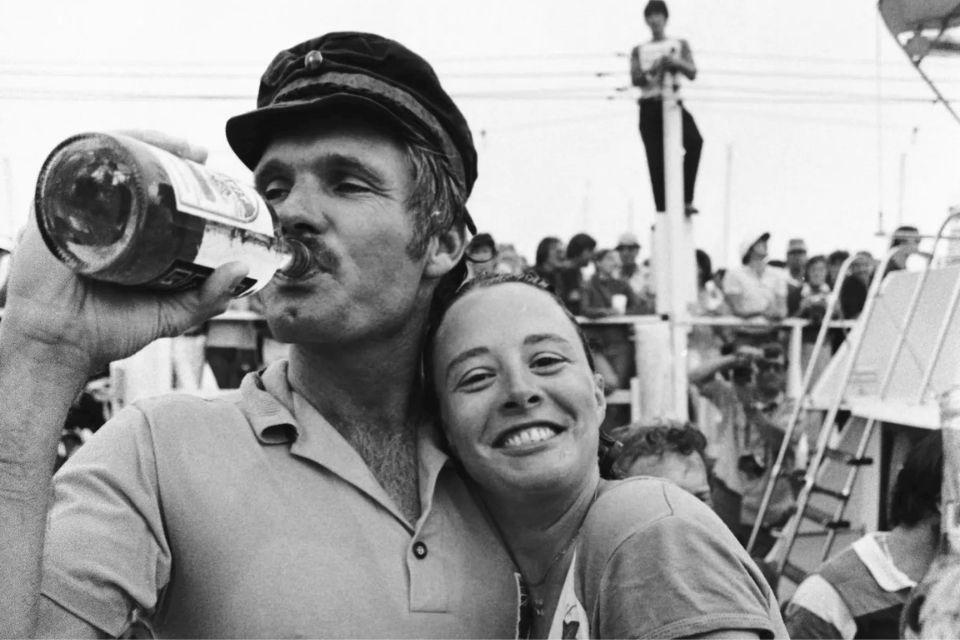
“The press loved that moment. All summer long, they’d been telling him to behave himself, and now he could finally let loose… and boy, did he ever.
“Thirty-three years later, at a 12-Meter class gathering in Newport, someone asked him about that famous press conference. Ted lowered his head, paused, and, with a half-smile, said, ‘I’d like to apologize, once again, for my behavior that afternoon.’ The remark sent the room into fits of laughter.”
“During the celebration of the 30th anniversary of the ‘Courageous’ victory in the America’s Cup, Turner recalled: ‘The ’77 Cup was one of the highlights of our lives. It will be hard to top that. We all had a great time together. We stuck together. We knew that if we wanted any chance of winning, we all had to perform at an absolutely extraordinary level. It was a crew made up entirely of winners. There wasn’t a single loser among us. We all rose to the occasion; otherwise, we wouldn’t have won.’”
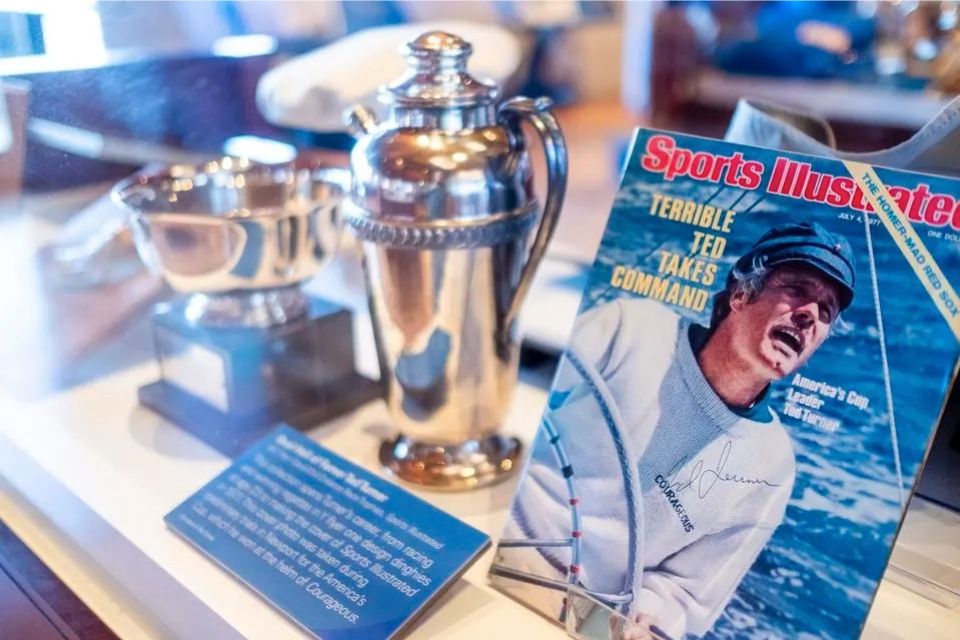
“Over the years, I’ve given nearly 3,000 lectures. The topics have been quite varied, but there’s always one that comes up: the America’s Cup. And the question I’m asked most often is, ‘What was it like sailing with Ted Turner?’”
“I always take my time to respond. Ted was an extraordinary navigator and knew how to surround himself with the best sailors. He always said that decisions should be made at the lowest possible level. He was very methodical when working with tacticians and navigators. He asked incisive questions that forced you to think deeply. He valued people capable of analyzing all available options. Many times he surprised me with alternatives I hadn’t even thought of.”
“In short, Ted excelled at three things in particular during ocean races: he was a superb helmsman; he had an exceptional talent for trimming spinnakers and could spend hours constantly adjusting the sail; and, above all, he was a great leader. When Ted made a decision, the entire crew accepted it and carried it out without reservation.
“And when asked what the highlight of his extraordinary career had been, Ted Turner replied, ‘Competing in regattas was the best time of my life.’”
Thank you, Gary. And thank you, Ted Turner.