








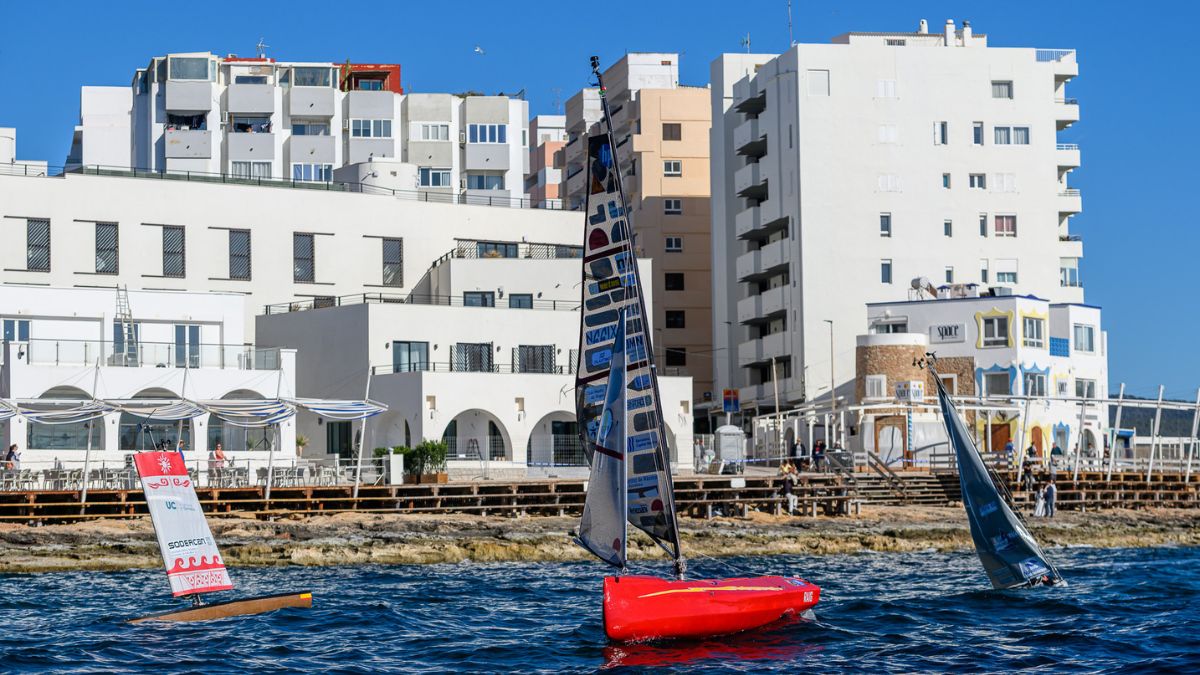
The bay of Sant Antoni de Portmany served as the setting for the first real-world test of the autonomous sailboats that will compete in the 2027 Micro Ruta de la Sal, a technological challenge that is redefining long-distance sailing.
Ibiza, a testing ground for autonomous sailing
On April 5, the bay of Sant Antoni de Portmany hosted the first sea trial of prototype unmanned sailboats developed by Spanish universities. The initiative is part of the preparations for the upcoming Micro Ruta de la Sal, scheduled for 2027, which is considered the first offshore race for autonomous sailing vessels.
Over the course of two days of testing, the teams fine-tuned their systems in a real-world racing environment, evaluating both the performance of the platforms and the effectiveness of their technological solutions.
University prototypes in the advanced stages
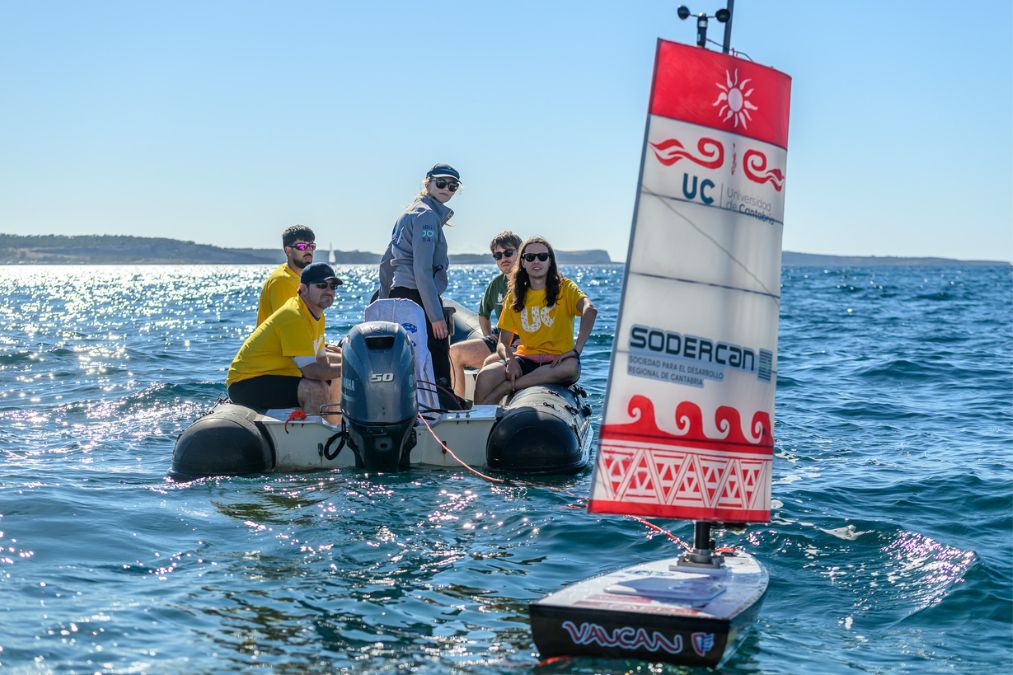
Four teams actively participated in the event with their respective projects: the “Vaucan” from the University of Cantabria, the “Saluca” from the University of Cádiz, the “Raig FNB” from the Polytechnic University of Catalonia, and the “Mam,” a project led by three educational institutions in Ibiza. They were joined by representatives from the ‘Navy Sails’ team from the University of Cartagena, whose sailboat was unable to participate on the water as it was in the final stages of construction.
The teams’ interaction in the days leading up to the event fostered knowledge sharing and technical collaboration, a key aspect in a discipline that is still evolving.
Racing Tests: Speed vs. Reliability
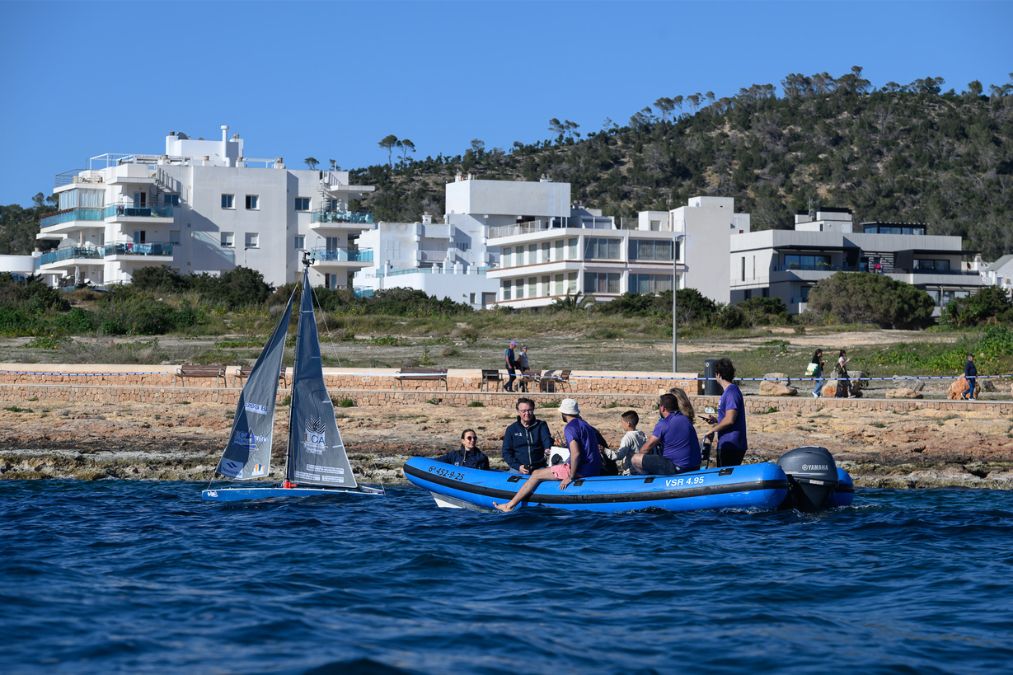
The highlight of the event was the exhibition race held in the bay off Ibiza, designed as a functional test under conditions similar to those of a competition.
The ‘Raid FNB’ emerged as the fastest prototype, followed by the ‘Saluca’ and the ‘Vaucan’—a result consistent with the different sail areas of each boat. However, beyond speed, the teams agree that the real challenge lies in ensuring the reliability and robustness of the systems during extended voyages.
One of the most significant aspects of the tests was the degree of autonomy of the control systems. The ‘Vaucan’ was the only prototype that sailed completely autonomously, without any external intervention.
For their part, the ‘Raid FNB’ and the ‘Saluca’ were operated via radio control, with the focus on progressively validating their systems before moving on to fully autonomous navigation in future development phases.
Synergies with the Salt Route
The timing of the event, which coincided with the La Ruta de la Sal Rumbo Ibiza regatta, allowed more than 800 sailors to experience these technological advancements firsthand. This exchange between traditional sailing and new autonomous solutions added significant value to the event.
The Sant Antoni Yacht Club played a key role in the organization, providing facilities, logistics, and on-water support for monitoring the boats.
With this first demonstration, the final phase of preparation for the Micro Ruta de la Sal officially begins; the event will take place on March 28, 2027. The challenge: to complete a 54-nautical-mile route from Ibiza to the mainland while carrying a symbolic sack of salt.
A challenge that will require not only energy efficiency and precise navigation, but also complete system reliability under real open-sea conditions.