








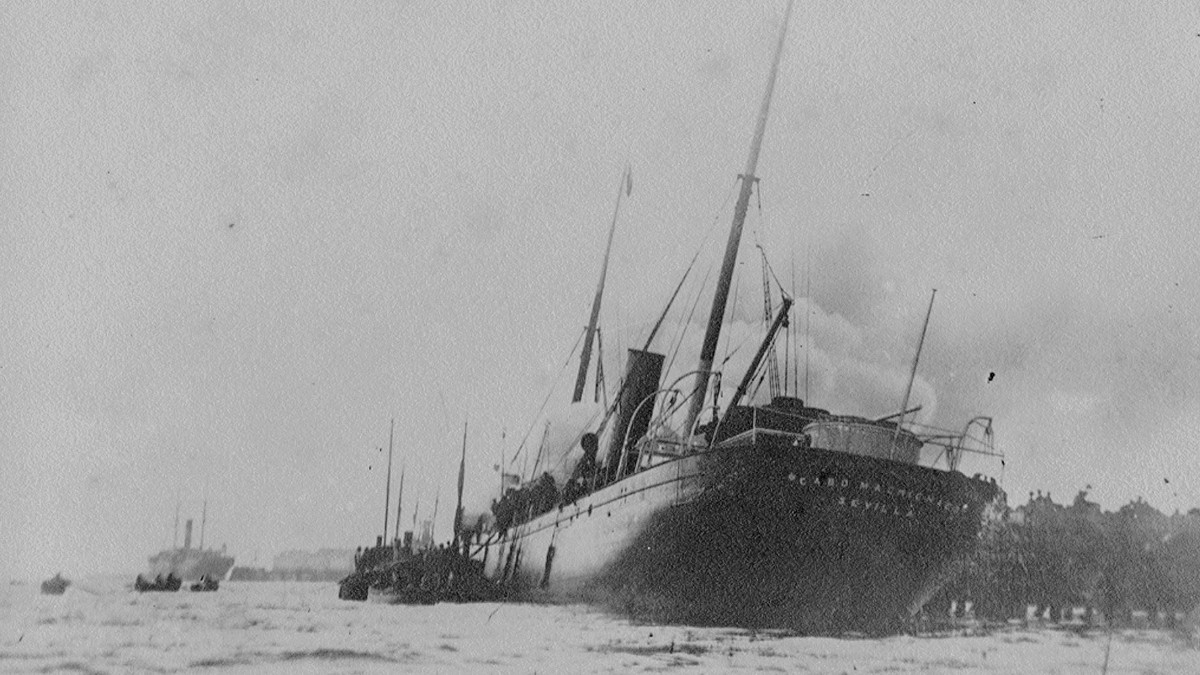
On November 3, 1893, the port of Santander was the scene of one of the greatest civilian disasters in modern Spanish history. That day, a fire on the steamship Cabo Machichaco, docked at the Maliaño pier, eventually led to an explosion that would claim hundreds of lives.
To understand what happened, we must look back to Santander in the late 19th century—a city whose economic development was directly tied to the sea, as the growth in maritime traffic, driven by the trade in steel products and the export of minerals, had turned its docks into one of the city’s main economic engines.
That intense activity also involved the transport of hazardous materials, including dynamite, whose use had become widespread in mining operations and public works projects. For this reason, since 1889, the Cantabrian capital had had a regulation restricting the docking of ships carrying explosives at the docks near the city. Unfortunately, these provisions were not followed in the case of the Cabo Machichaco.
Built in Newcastle in 1882, the steamship had belonged to the Ybarra shipping company since 1885 and regularly sailed the route between Bilbao and Seville, calling at various ports along the Cantabrian coast. Its arrival in Santander on November 3 was nothing out of the ordinary. What was exceptional was its cargo: in addition to steel products, flour, and paper, it was carrying around 1,700 boxes of dynamite and twenty containers of sulfuric acid. Most of the explosives were destined for other Spanish ports, while only twenty boxes were listed as bound for Santander.
Before arriving at the port, the ship had been quarantined at the isolation station on the island of Pedrosa due to reported cases of cholera in Bilbao, where it had come from. Once this isolation period had ended, it received authorization to proceed to the Maliaño pier—located right in the heart of the city—where it docked early in the morning, and unloading operations then began.
The Fire and the First Explosion
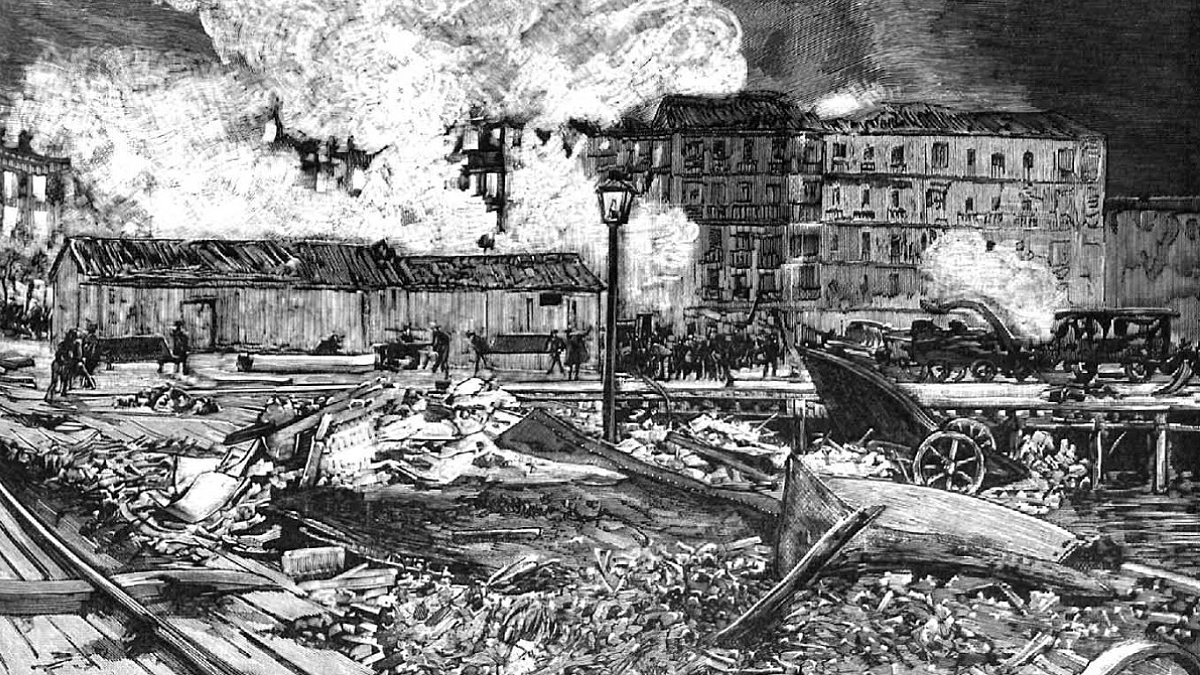
Around 2:00 p.m., while work was underway to unload hold number 2, smoke began to pour out from inside the ship. These were the first signs of a fire of unknown origin that would eventually spread rapidly through the bow area and reach the cargo stored in the holds.
The plume of smoke was visible from various points in Santander, and firefighters, local authorities, and numerous residents soon gathered at the port, heading to the docks to watch the fire. The area around the ship gradually filled with dockworkers, sailors, officials, and onlookers.
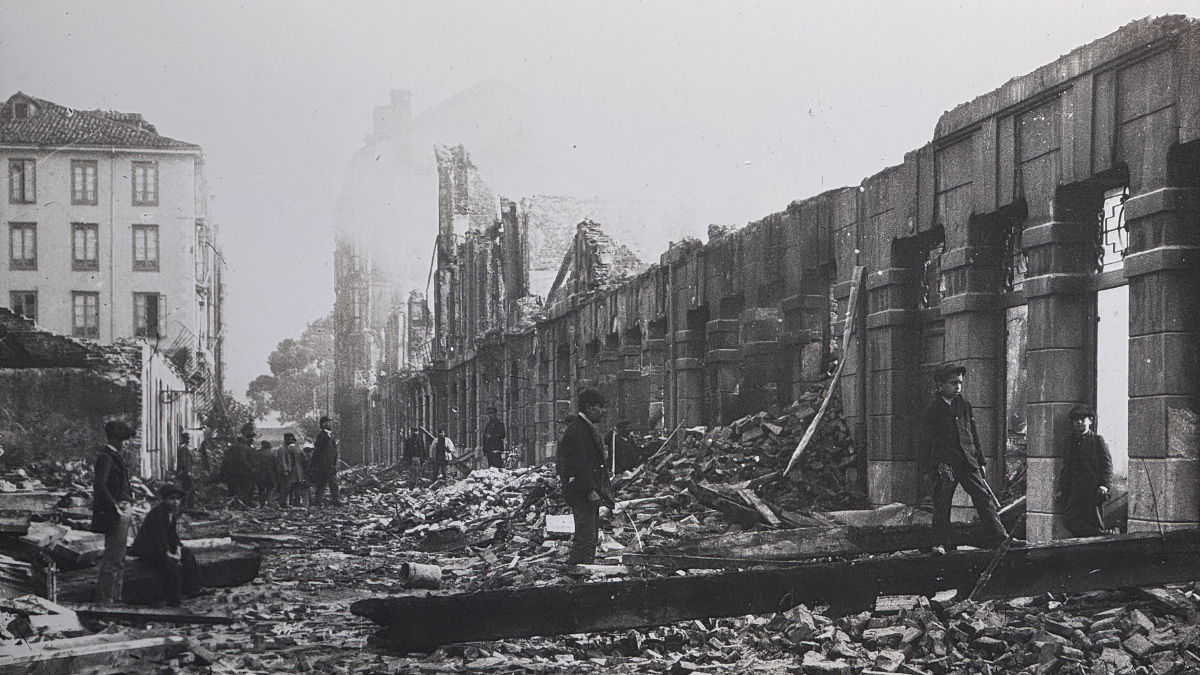
At 4:45 p.m., with the docks crowded with people, the first explosion occurred. The blast destroyed much of the ship’s structure and sent the materials it was carrying flying into the air. Among them was a large shipment of iron—including rails, beams, and other metal parts—that were hurled through the air like projectiles. The fragments struck the docks, nearby streets, and numerous buildings. The shock wave was felt throughout the city, while a cloud of smoke and dust covered much of the bay.
The number of victims varies depending on the source, particularly due to the difficulty of accounting for those who went missing and those who died later as a result of their injuries, although the most common estimates put the death toll at between 550 and 600, in addition to several thousand injured. It was an unprecedented catastrophe in the history of Santander, which at that time had a population of nearly 50,000.
The property damage was equally significant. Shrapnel caused fires on various streets, as well as in wooden warehouses and the tobacco warehouse. However, a large portion of the fire department had perished in the explosion, which hindered the organization of emergency response efforts. They had to wait for the arrival of military personnel and volunteers from various parts of the province to assist, alongside local residents, in extinguishing the fires, clearing debris, and tending to the injured.
The scale of the tragedy was such that the news quickly spread beyond Spain’s borders, and major international media outlets reported on the event, placing the Cantabrian capital at the center of the news cycle at that time.
The Second Explosion
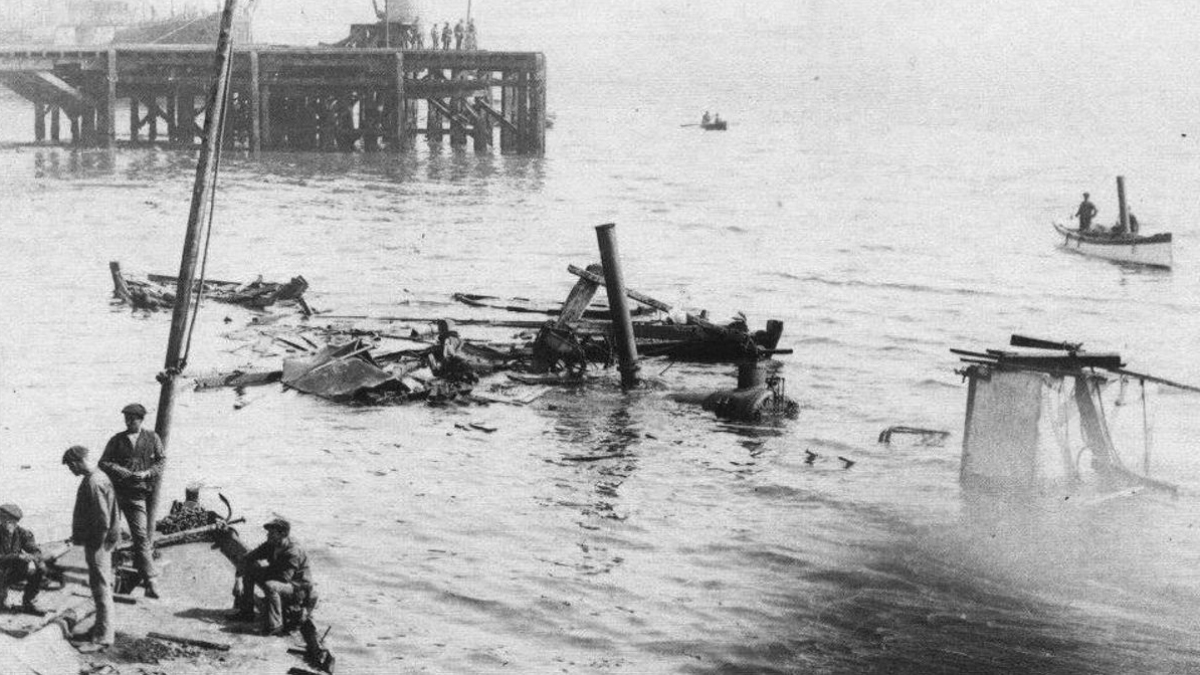
After the first explosion, the wreck of the steamship sank in the harbor, still carrying 463 boxes of dynamite—equivalent to more than eleven metric tons of explosives. Its presence at the bottom of the bay posed a clear danger, so recovering that cargo became a priority.
In mid-March 1894, experts and technicians met to assess how to proceed with the work, which had become extremely complicated due to the condition of the ship. This brings us to the night of March 21, when a diver descended into one of the holds to continue the recovery operations. Shortly thereafter, a second explosion occurred, destroying what remained of the stern and also striking the vessels involved in the operation. Fifteen people lost their lives, and others were injured.
Finally, it was decided to destroy what remained of the steamship by means of a controlled demolition. On March 30, 1894, the Navy gunboat Cóndor carried out the operation, blowing up what was left of the Cabo Machichaco.
Santander After the Battle of Machichaco
The consequences of the two explosions went far beyond the loss of life and the destruction of the port facilities. Amid the shock caused by the events, Santander had to undertake urban reconstruction and reorganize some of its municipal services. Among them was the fire department, whose virtual disappearance led to the creation of the Santander Volunteer Fire Department.
The disaster also highlighted deficiencies in the regulation of the maritime transport of dangerous goods. The fact that a ship carrying such a large quantity of dynamite was able to dock and conduct its operations right next to the city center highlighted the consequences of noncompliance with port regulations and the lack of adequate safety measures.
More than a century later, the memory of the tragedy remains alive in the city’s collective memory. The monument dedicated to the victims, the silhouette of the ship traced at the exact spot where it docked on November 3, and a small exhibition located at the nearby Maritime Station bear witness to the mark left by a tragedy that is essential to understanding the contemporary history of Santander.